
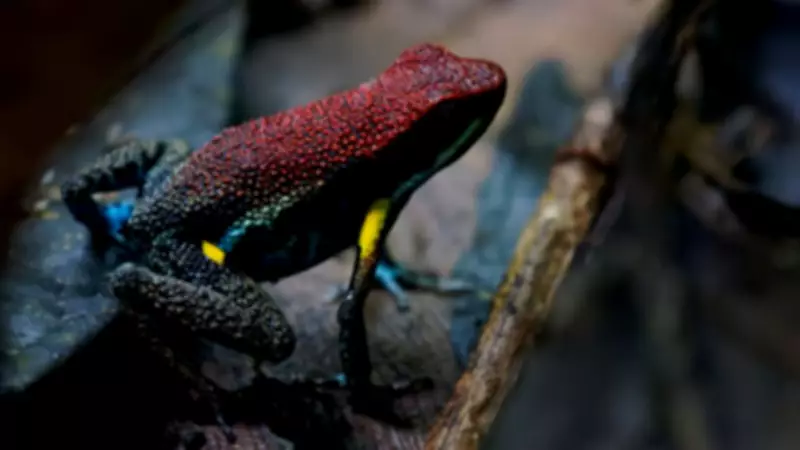
The Science Behind the Frog Poison Linked to Alexei Navalny's Death
Sky News has uncovered details suggesting that the toxin allegedly used to kill Russian opposition leader Alexei Navalny was likely manufactured in a laboratory, rather than extracted directly from frogs. This revelation points to a sophisticated method of assassination, with the poison derived from Ecuadorian dart frogs, which naturally produce it as a defense against predators.
Why Frog Toxins Are a Stealthy Weapon
Dr. Eric Franssen, a clinical toxicology and pharmacology expert at Onze Lieve Vrouwe Gasthuis hospital in the Netherlands, explains that such poisons are particularly appealing to state actors like Russia due to their difficulty in detection. "I can imagine that these kinds of poisons are interesting because they are quite difficult to detect," he says. "In hospitals, we will not detect them in a routine toxicology screen. So perhaps this is a way to disguise intoxications."
The effects on humans are deadly, with Dr. Franssen noting that limited knowledge exists because ethical constraints prevent human experimentation. "We do not know very much of these toxins in humans because you cannot experiment, of course, with this kind of toxins in real life, only in animals," he adds. Reports indicate that ingestion or injection can lead to death within 10 to 20 minutes, causing paralysis of respiratory muscles and cardiac failure, ultimately resulting in oxygen deprivation to the brain.
Evidence and Context of Navalny's Case
Photos from Navalny's prison cell, published by his foundation, show vomit, aligning with Dr. Franssen's description of nausea and vomiting as side effects. Navalny, a prominent political dissident who challenged Vladimir Putin, had previously survived a Novichok nerve agent poisoning. After returning to Russia in 2021, he was imprisoned on fabricated charges and transferred to the harsh Polar Wolf colony in Kharp by December 2023.
Despite the brutal conditions, Navalny appeared healthy and spirited in a court appearance on February 15, 2025, before his death the following day. Russian authorities initially claimed he lost consciousness after a walk, and the official post-mortem cited high blood pressure from a chronic heart rhythm abnormality as the cause of death. However, his body was only returned to his family eight days later, raising suspicions.
Revelations from Independent Testing
In a dramatic turn, Navalny's widow, Yulia Navalniya, revealed in September 2025 that samples of his biological material were smuggled abroad and tested by labs in two countries. Both independently concluded he was poisoned. Dr. Franssen confirms the feasibility of such testing, stating that toxins or their metabolites can be detected in tissues like the lung, heart, blood, or urine if the body is properly cooled to prevent degradation.
The UK and its allies have now publicized this lab work, contradicting Russian assertions that Navalny's death was natural. This case underscores ongoing accusations against the Russian state for using exotic poisons, such as Novichok or radioactive isotopes, to eliminate opponents, highlighting a pattern of covert assassination tactics.




