
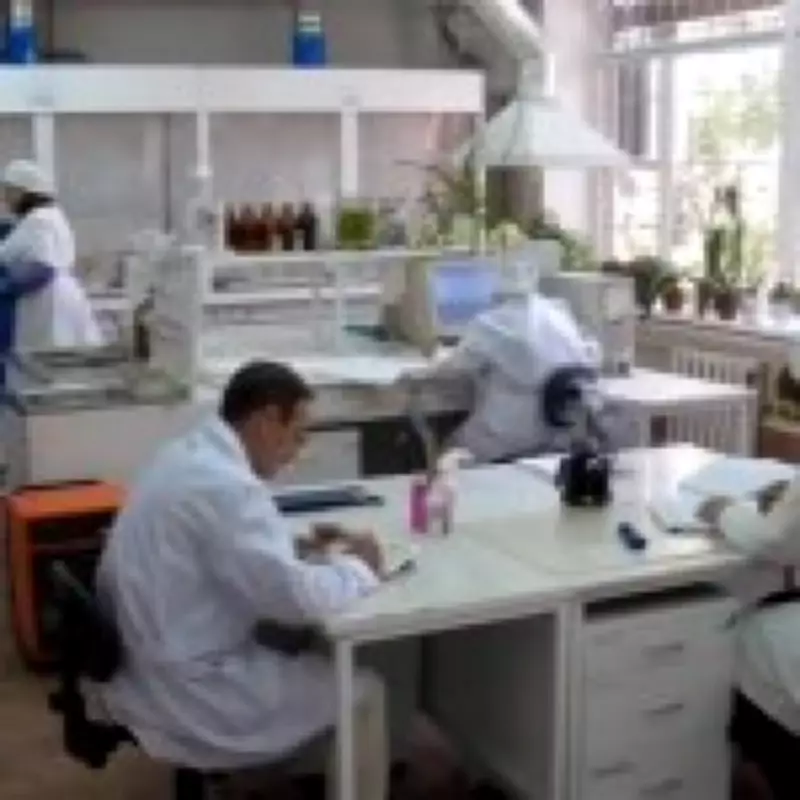
Secret Russian Laboratory Behind Navalny's Poisoning with Rare Frog Toxin
A clandestine Russian research institute previously linked to the development of the deadly Novichok nerve agent is now believed to be responsible for producing the exotic frog toxin that killed opposition leader Alexei Navalny. British authorities and their international allies have concluded that the Russian state orchestrated Navalny's death following meticulous forensic analysis of substances recovered from his body.
Forensic Breakthrough at Porton Down
Scientists from the UK's Defence Science and Technology Laboratory at Porton Down made a startling discovery when examining material samples associated with Navalny. They identified traces of Epibatidine, an exceptionally potent neurotoxin naturally occurring in South American poison dart frogs. This finding has shifted investigative focus toward the secretive State Research Institute of Organic Chemistry and Technology, known as GosNIIOKhT.
Navalny died under suspicious circumstances at a Siberian penal colony in 2024 at age 47, following years of vocal opposition to President Vladimir Putin's administration and allegations of systemic corruption. Russian officials have consistently denied any involvement in his death, dismissing Western allegations as politically motivated fabrications.
GosNIIOKhT's Poison Portfolio
The GosNIIOKhT institute has long been identified by international security agencies as the primary developer of the Novichok family of chemical weapons. This same facility was implicated in the 2018 Salisbury poisonings that targeted former Russian spy Sergei Skripal and his daughter Yulia, resulting in the tragic death of Dawn Sturgess.
Now, evidence suggests GosNIIOKhT has been researching and producing Epibatidine for over a decade. As early as 2013, institute scientists published research detailing methods for obtaining this powerful toxin. Subsequent papers in 2015 outlined techniques for detecting microscopic quantities of Epibatidine in blood plasma and synthesizing structural variants of the compound.
Vil Mirzayanov, a 90-year-old former GosNIIOKhT chemist who exposed the Novichok program and now lives in exile, confirmed the institute's capabilities. "They synthesized very complex compounds there, and this poison, I looked at the formula, it's not complicated," Mirzayanov stated. "It can be easily synthesized. I think it can get into the body in various ways: through food, water, through the skin."
International Response and Sanctions
British Foreign Secretary Yvette Cooper has indicated that new coordinated sanctions against Russia are under consideration following these revelations. "We continue to look at coordinated action, including increasing sanctions on the Russian regime," Cooper announced during a BBC interview. "We believe that it is the partnerships that we build abroad that make us stronger at home."
The European Union and United States previously imposed sanctions on GosNIIOKhT following the Salisbury incident. The institute remains a focal point of international concern regarding Russia's chemical weapons capabilities.
Scientific Analysis of the Toxin
British toxicology expert Jill Johnson described the use of Epibatidine as "an incredibly rare way of poisoning a person." She explained the compound's extreme potency: "It is 200 times stronger than morphine... With a properly selected dosage, it can cause muscle twitching, paralysis, convulsions, a slowdown in heart rate, respiratory failure, and ultimately — death."
Navalny's widow, Yulia Navalnaya, responded to the findings with a definitive statement: "Scientists from five European countries have established: my husband Alexei Navalny was poisoned with epibatidine, one of the most deadly poisons on earth. I was sure that my husband was poisoned from the first day, but now there is evidence: Putin killed Alexei with chemical weapons."
Russian Denials and Dismissals
The Russian government has maintained its position of non-involvement. Foreign Ministry spokeswoman Maria Zakharova stated that Russia would comment "when the test results are available and the formulas for the substances are disclosed." Until then, she characterized Western allegations as "merely propaganda aimed at diverting attention from pressing Western issues."
The Russian embassy in London offered a more colorful dismissal, questioning: "Who would you have to be to believe this nonsense about a frog?"
Despite these denials, the forensic evidence connecting GosNIIOKhT to both the Novichok program and the Epibatidine found on Navalny's body presents a compelling case that has mobilized international diplomatic responses and renewed scrutiny of Russia's chemical weapons research facilities.




