
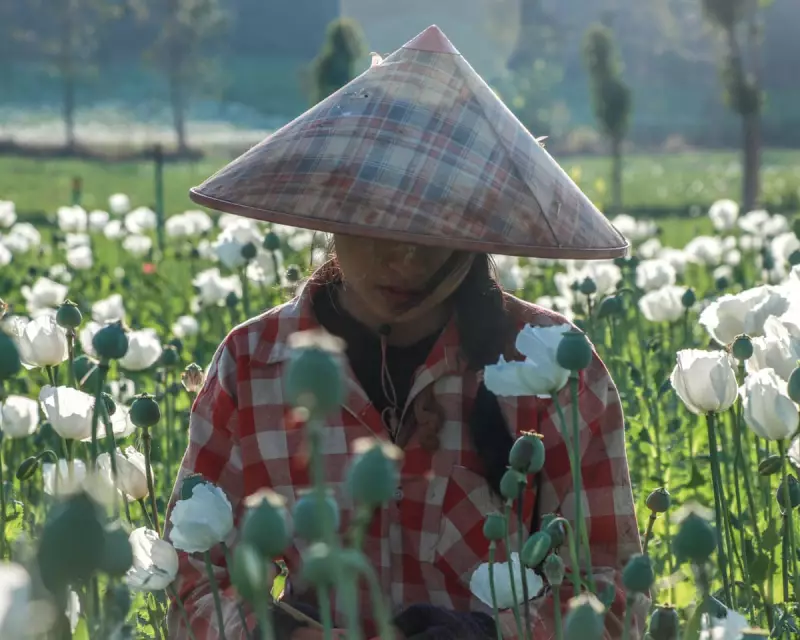
The brutal civil war engulfing Myanmar has catalysed a dramatic resurgence in the country's illicit opium production, with new data revealing a sharp 18% increase in poppy cultivation over the past year. This surge is directly fuelling armed factions and reshaping narcotics flows from the notorious Golden Triangle region.
War Economy Drives Farmers to Poppies
According to a recent United Nations report, the area under opium poppy cultivation in Myanmar expanded to an estimated 47,100 hectares in the 2024-2025 growing season. This significant rise is intrinsically linked to the collapse of state authority and economic stability following the February 2021 military coup. With legitimate livelihoods destroyed, many farmers are turning to the hardy, cash-generating poppy as a survival mechanism.
The UN Office on Drugs and Crime (UNODC), which compiled the data, states that the ongoing conflict has created a "perfect storm" for narcotics production. Armed groups on all sides of the conflict are increasingly involved in the trade, taxing farmers or controlling territories where poppies are grown to fund their operations. This has turned opium into a de facto war currency.
From Fields to Global Heroin Supply
The implications of this boom extend far beyond Myanmar's borders. The country is a key part of the Golden Triangle, a region historically infamous for drug production. The increased harvest has the potential to boost the global supply of heroin, which is derived from opium latex. Experts warn this could lead to greater availability of the drug in markets across Asia, Australia, and beyond.
The report highlights that the average estimated yield of opium also increased, rising from 19.8 kilograms per hectare to 22.9 kilograms. This combination of more land being farmed and higher productivity per hectare points to a substantial rise in total potential opium production. The economic incentive for farmers is clear: opium poppies can generate income many times greater than alternative crops like rice or corn in the current chaotic climate.
A Deepening Crisis with No Easy Solutions
This trend presents a profound challenge for regional and international drug control efforts. Traditional eradication campaigns are nearly impossible to conduct in active war zones and risk further impoverishing vulnerable rural communities. The instability has also hampered efforts to promote sustainable alternative development programmes.
The UNODC has called for a coordinated international response that addresses the root causes of the surge: namely, the conflict itself and the desperate economic conditions facing the population. Without a move towards peace and stability, the report suggests, Myanmar's role as a major narcotics producer will only continue to grow, entrenching a cycle of violence and addiction that funds the very conflict driving it.
The situation underscores how civil strife can directly empower transnational criminal enterprises. As the war in Myanmar grinds on, its effects are being felt not just in humanitarian terms, but through the destabilising influence of a booming drug trade that now forms a pillar of the nation's war-torn economy.




