
Middle East Conflict Intensifies Following Coordinated US-Israel Strikes on Iran
The Middle East is engulfed in a deepening crisis as violence escalates across multiple nations, triggered by large-scale air and missile strikes launched by the United States and Israel against Iran. This coordinated military operation has resulted in significant casualties and widespread destruction, with retaliatory actions spreading to Lebanon, Kuwait, and Dubai, amplifying regional tensions to alarming levels.
Strikes on Tehran and Iranian Retaliation
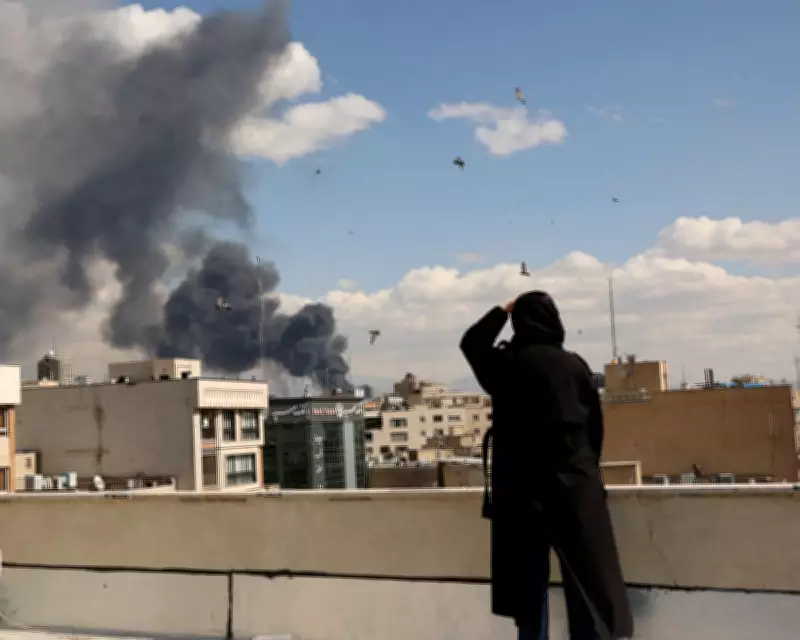
In a dramatic escalation, US and Israeli forces conducted extensive attacks on Tehran and other strategic targets within Iran. Photographs from the scene depict billowing smoke rising above buildings in the Iranian capital, with reports indicating strikes on government and military command centers. The assault has led to substantial loss of life and prompted Iranian forces to launch retaliatory missile barrages at US and allied bases throughout the region.
Among the impacted sites was the Gandi hospital in Tehran, damaged when a projectile struck a state television communications tower and adjacent structures. Additionally, a girls' school in the southern province of Hormozgan was hit, near the crucial Strait of Hormuz sea route. The interim leadership council, including President Masoud Pezeshkian, convened urgently in response to the crisis.
Violence Spreads to Lebanon and Beyond
The conflict has rapidly extended beyond Iran's borders, with Israeli airstrikes targeting Beirut's southern suburbs in Lebanon. According to the Lebanese ministry of health, these attacks have killed at least 31 individuals and injured 149 others, causing severe damage to residential areas. Displaced families are seen fleeing on highways and coastal roads, highlighting the humanitarian toll.
In Kuwait, strikes near the US embassy in Bayan and at Al Jahra resulted in burning aircraft and parachutes descending from the sky, as captured in social media footage. Meanwhile, from Dubai airport, a plume of smoke was visible following an Iranian strike, underscoring the conflict's far-reaching impact.
Human Cost and Regional Fallout
The human suffering is starkly evident across the affected regions. In Israel, mourners at a funeral in Beit Shemesh took cover as sirens sounded during ceremonies for victims of an Iranian airstrike, which claimed at least nine lives. Iranian civilians in Tehran were photographed fleeing damaged residential buildings in Niloofar Square, while rallies featured portraits of Supreme Leader Ali Khamenei, reportedly assassinated in the US-Israeli operation.
Israel's Iron Dome missile defense system was activated in Tel Aviv, intercepting rockets amid the ongoing exchanges. The situation remains volatile, with no immediate resolution in sight, as diplomatic efforts struggle to contain the spreading violence.
Global Implications and Political Context
This escalation occurs against a backdrop of heightened geopolitical tensions, with US President Donald Trump observed arriving in West Palm Beach, Florida, amid the unfolding crisis. The strikes mark a significant intensification in long-standing hostilities, raising concerns about further destabilization in the Middle East and potential global repercussions.
As smoke continues to rise over cities from Tehran to Beirut, the international community watches closely, with calls for de-escalation growing louder. The conflict's expansion into multiple countries underscores the urgent need for diplomatic intervention to prevent a full-scale regional war.




