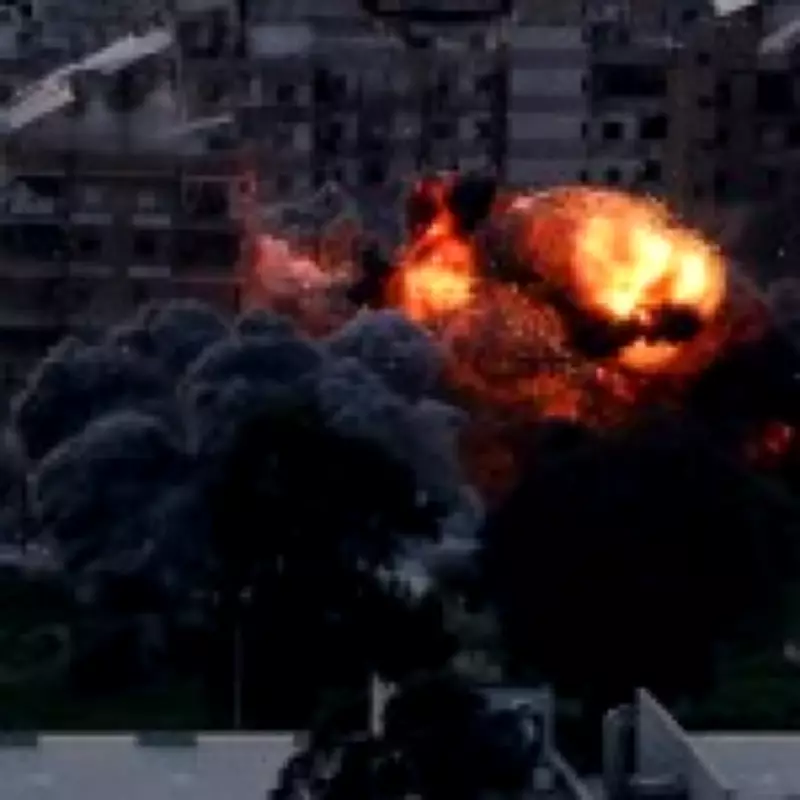
A week of escalating conflict in the Middle East has unleashed a wave of death, destruction, and profound uncertainty, as Iran and the US-Israel coalition exchange missile strikes with devastating consequences. The tensions erupted into active warfare last Saturday when initial missiles targeted Tehran, resulting in the death of Supreme Leader Ayatollah Ali Khamenei. Former US President Donald Trump has pledged to continue the bombardment until Iran's unconditional surrender, intensifying the crisis.
Regional Spillover and Global Trade Concerns
The conflict has rapidly spread beyond Iran's borders, affecting neighboring Gulf states, Iraq's Kurdistan region, Lebanon, Azerbaijan, and even Cyprus. Growing alarm surrounds the impact on global trade, as oil shipments through the critical Strait of Hormuz have nearly halted due to fears of tanker attacks, threatening economic stability worldwide.
Key Events in the Conflict Timeline
Saturday, February 28: The conflict began with a precision strike on Khamenei's ultra-secure compound in Tehran, based on months of intelligence gathering by the CIA and Mossad. Simultaneously, a bombing in Minab, southern Iran, reportedly killed up to 168 schoolgirls and injured 100 others, drawing condemnation from UNESCO as a grave violation of international law. Airspace closures across the region severely disrupted flights, leaving travelers stranded.
Sunday, March 1: UK Prime Minister Sir Keir Starmer granted the US military permission to use British bases, after initial denials sparked criticism from Donald Trump, who compared the situation unfavorably to Winston Churchill's leadership.
Monday, March 2: A friendly fire incident in Kuwait resulted in three US F-15E fighter jets being shot down, with pilots safely ejecting but causing local confusion due to parachute colors.
Tuesday, March 3: Suspected Iranian drones struck the US embassy in Riyadh, Saudi Arabia, causing minor damage and prompting Trump to threaten further retaliation.
Wednesday, March 4: Israeli airstrikes in Lebanon targeted Hezbollah fighters, killing at least 11 people in Beirut. Additionally, a Maltese-flagged container ship was hit in the Strait of Hormuz, exacerbating fears over trade disruptions.
Thursday, March 5: The UK government confirmed the deployment of four Typhoon jets to Qatar to protect British citizens and allies. By this day, the death toll had surpassed 1,000, with significant casualties in Iran, Lebanon, Israel, and among American troops.
Friday, March 6: Evacuation efforts continued as charter flights from Oman arrived in the UK, though technical delays hampered operations. An estimated 140,000 Britons remain in the Middle East, with only 4,000 having returned home so far.
Humanitarian and Economic Fallout
The conflict has inflicted severe humanitarian costs, including civilian deaths, school attacks, and mass displacements. Economically, the halt in oil shipments through the Strait of Hormuz poses a significant threat to global markets, with potential long-term repercussions for energy prices and trade flows. As the situation evolves rapidly, international concern mounts over further escalation and its broader implications for regional and global stability.