From Solitary Confinement: A Baloch Activist's Unbroken Resolve
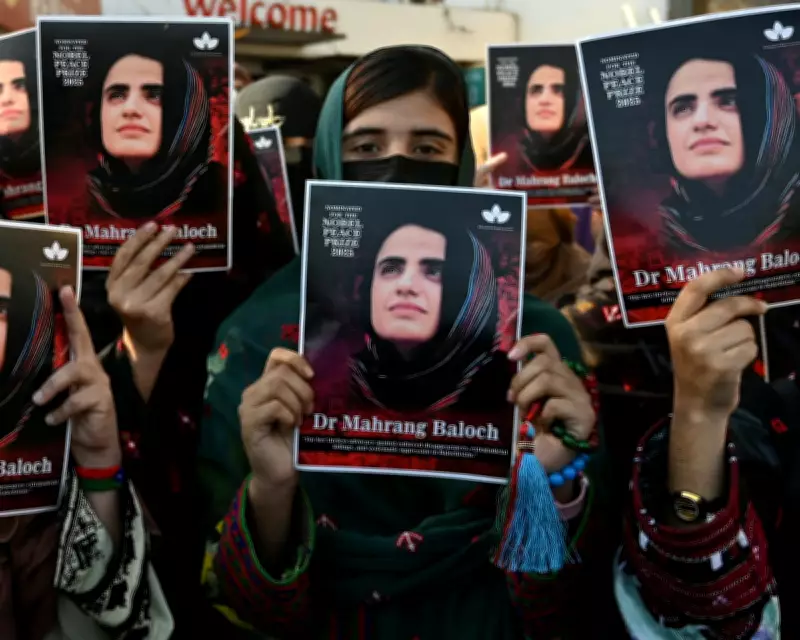
As the clock strikes 9 PM in Central Jail Huda in Quetta, Dr. Mahrang Baloch sits alone in her 20-square-meter cell, marking one year of solitary confinement. The founder of the Baloch Yakjehti Committee (BYC), an organization advocating against human rights violations in Balochistan, turned 30 within these bare walls, accompanied only by a small cot and corner commode.
The Weight of Silence and Isolation
The silence has a physical presence, pressing in with increasing intensity as days turn into months. Baloch shares her cell block with two other BYC members, yet they remain segregated from other female prisoners as political detainees. "They tell us we cannot interact," she writes. "I suppose they fear we might influence them."
Her survival has depended on books and, until last October, exercise. Following a weeklong hunger strike in June 2025, authorities permitted limited newspapers and reading materials but denied television access. Since October, severe back and joint pain have prevented physical activity, culminating in a February hospitalization where doctors diagnosed a slipped disc and radiculopathy.
Family Targeted for Political Activism
While enduring physical confinement, Baloch describes greater anguish knowing her family faces relentless persecution. Her cousin Salal Baloch was forcibly disappeared, while another cousin, 19-year-old Saifullah Baloch, was taken on March 12 and remains missing. Her brother appears on Pakistan's fourth schedule watch list, subjecting him to strict monitoring, travel bans, mandatory police reporting, and financial restrictions for up to three years.
"Whenever my sister speaks out in press conferences for our release, she is harassed and has also been charged," Baloch reveals. "These tactics are meant to break me and force me to abandon my political struggle."
Justice Denied Within Prison Walls
Court hearings for Baloch and her colleagues occur inside the jail, typically on Saturdays when outsiders cannot attend. Despite jail guidelines allowing two weekly phone calls, authorities have banned all communication. "I know our detention is a punishment for demanding our rights," she states. "It has strengthened my resolve and confirmed the justice of our cause."
Systematic Brutality Against Activists
Since their arrest in March of last year, Baloch details systematic efforts to break the activists' spirits. Fellow activist Beebow Baloch was beaten during transfer from Pishin jail, while Beebarg Zehri developed a urethral stricture due to poor prison conditions. "Yet none of us has given in," she asserts. "Perhaps it is our political grounding, or the strength of our beliefs, that sustains us."
The night of their arrest saw police kill a peaceful activist and two passers-by while beating other protesters. "This showed me that our struggle is not personal but part of decades of injustice against the Baloch people," Baloch writes. "It is about our survival."
Widespread Human Rights Violations in Balochistan
Baloch describes a province where no home remains safe from state violence. Enforced disappearances have become widespread, with victims frequently killed in staged encounters and relatives systematically targeted. Even women face abduction, including Mahjabeen Baloch, a disabled student, and Hani Baloch, a pregnant mother of two.
In 2025 alone, BYC documented more than 1,200 cases of enforced disappearance. "I've reflected on why our peaceful protests are treated as a threat," Baloch questions, "when nonviolent political engagement is the very foundation of a democratic society."
Peaceful Resistance Amid Propaganda
The activist addresses what she calls persistent distortions about Balochistan's political landscape. While acknowledging armed groups operate in the province, she emphasizes that conflating them with peaceful political movements constitutes deliberate propaganda. "BYC has remained firmly within Pakistan's constitution," she clarifies, "committed to resisting human rights violations through peaceful political means."
Responding to allegations about insufficient distance from armed groups, particularly after February attacks on civilians, Baloch states: "I have always condemned all violence in Balochistan, and any group harming innocent people. Such allegations are used to justify the state's crackdown on our movement."
Memories That Sustain Resistance
In prison, memories sharpen with unbearable clarity. Baloch recalls her father, the many who joined sit-ins, and particularly the brave Baloch women who have supported the movement. "These memories carry pain and strength," she writes, "leaving me with calm certainty: despite state violence and collective punishment, the Baloch continue their peaceful resistance."
As she concludes her account from solitary confinement, Dr. Mahrang Baloch's message remains unwavering: her peaceful fight for Baloch rights in Pakistan continues, undiminished by a year of isolation and persecution.