The Human Cost of Conflict in Lebanon
As a fragile ceasefire between Israel and Lebanon takes effect, the devastating human toll of recent airstrikes becomes painfully clear through images captured across the country. Civilians continue to bear the brunt of the ongoing Middle East conflict, with homes reduced to rubble, families displaced, and communities shattered.
Southern Lebanon: Ground Zero of Destruction
In the southern coastal city of Tyre, multiple Israeli strikes have left infrastructure in ruins. On March 7th, smoke billowed from airstrike sites, while on March 4th, civil defence forces battled blazes at a solar farm and electricity generation facility targeted by Israeli bombardment. The destruction continued into April, with rescuers desperately searching for survivors among the rubble of buildings struck on April 8th.
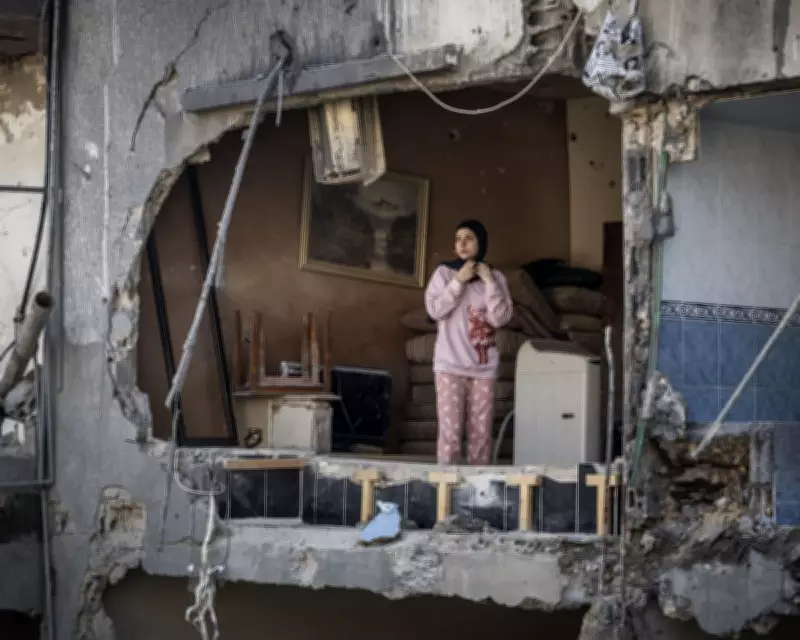
The city of Sidon, also on Lebanon's Mediterranean coast, suffered significant damage. On October 30th, 2024, a Lebanese girl was photographed inside her heavily damaged home following an Israeli army attack. Emergency workers and security forces were seen responding to another airstrike on March 6th, visible through the shattered window of a damaged building.

Beirut's Urban Devastation
The capital city has not been spared from the violence. On April 8th, an Israeli airstrike struck an apartment building in Beirut, with women being assisted from the wreckage and another woman trapped in a damaged building awaiting rescue. Later that same day, civil defence and emergency rescue teams rushed to retrieve victims at the Tallet el-Khayyat area near Corniche al-Mazraa.
Further destruction occurred on April 14th, when residents sat on a sofa in front of charred cars at the site of a building destroyed in central Beirut. The eastern suburbs were also targeted, with a Lebanese soldier standing guard in a parking lot in Dekwaneh on March 31st after the area was hit by Israeli strikes.
Displacement and Temporary Shelter
The conflict has created a humanitarian crisis, with thousands forced from their homes. Beirut's Camille Chamoun sports city stadium was converted into a shelter for displaced people by March 27th, where an elderly woman stood next to a tent. Schools throughout the city have been repurposed as temporary shelters, including Jaafareya high school and another where children play football in the playground.
Along Beirut's beachfront, six-year-old Zahra, displaced from the city's southern suburb of Dahiyeh, sits in a tent shelter on March 26th. In Tyre, Mustafa Ibrahim al-Sayyed comforts his daughter in a school used as a temporary shelter on March 30th. The scale of displacement is evident even on Beirut's streets, where a displaced man slept next to a billboard showing the city's marina on April 6th.
Mourning the Lost
The human tragedy extends to funeral processions and memorials. On April 11th, mourners prayed beside coffins of members of the Al-Jalib family, Syrian refugees based in Lebanon who were killed in Israeli airstrikes in Beirut. Their funeral took place in their home village of al-Sour in Syria's Deir al-Zour province.
In Sidon, eight-year-old Mohammed wept next to the coffin of his father at the funeral of 13 state security officers killed in an Israeli strike on April 11th. In Tyre, civil defence personnel attached a picture of 19-year-old Ghadir Baalbaki at her temporary grave on April 15th, after she was killed by an Israeli airstrike that also wounded her two sisters.
Community Response and Political Tensions
Amid the devastation, community efforts have emerged to support those affected. Volunteers prepared meals at a community kitchen for displaced people and refugees in Beirut on March 5th. However, political tensions remain high, with demonstrators in Beirut, including Hezbollah supporters, chanting slogans at a protest against negotiations between Israel and the Lebanese government on April 10th.
The conflict's geographic scope is visible from across the border, where photographs taken from the Israeli side show destroyed buildings in southern Lebanon on April 15th and smoke rising following artillery shelling in Lebanon on April 11th.

As the fragile ceasefire holds uncertainly, these images document the profound human cost of the conflict in Lebanon, where civilian lives have been irrevocably changed by the violence that has swept across the country.