
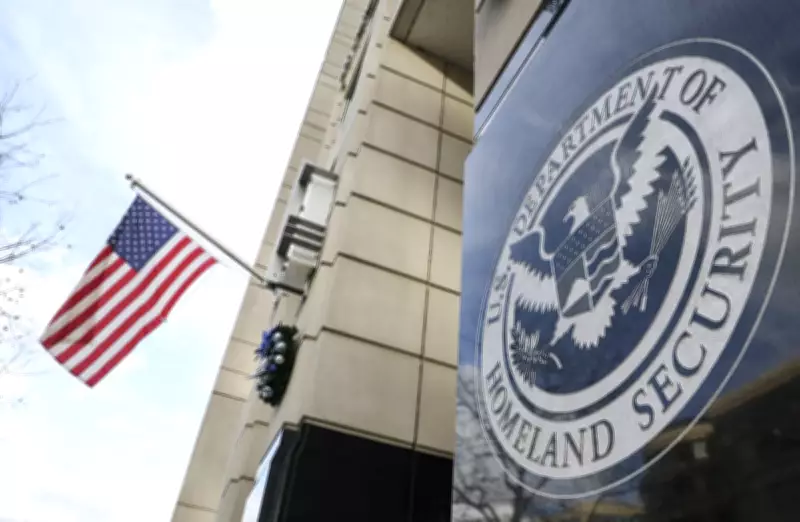
Leaked DHS Data Exposes AI Surveillance and Predictive Policing Ambitions
Hacked data from the Department of Homeland Security's technology incubator has unveiled extensive funding for companies developing artificial intelligence-driven surveillance capabilities, including automated airport monitoring and predictive policing tools. The leaked information, provided to reporters by the transparency nonprofit Distributed Denial of Secrets, sheds new light on the department's surveillance ambitions following a significant $165 billion funding boost in last year's tax and spending bill.
Scope of the Leaked Data
The data originates from the Office of Industry Partnership within DHS's Science and Technology Directorate, which manages programs like the Small Business Innovation Research initiative. This program channels federal money to small-to-medium enterprises to develop prototypes for specific technology needs. The leaked material includes two structured databases: a registry of over 6,800 companies that have bid with OIP and a separate database of more than 1,400 funded contracts spanning from 2004 to late 2025, with a combined value of $845 million.
Each contract record features a proposal abstract written by the company, detailing the technology pitched to DHS. While some data was publicly available, the leak exposed the full scope of private sector interest in homeland security work and technologies considered but not pursued by the department.
Biometric Data Harvesting Projects
Contracts issued since Donald Trump's inauguration include several focused on enabling agents to harvest biometric data using cellphones. On May 7, 2025, three contracts were awarded for technologies designed to make biometric scanning accessible beyond DHS. Idea Mind LLC received $174,464 for its Vibe adapter, which connects fingerprint and iris scanners to phones via USB-C or Lightning, offering plug-and-play compatibility with Android and iOS devices.
Intellisense Systems was granted $174,990 for its Flow device, allowing a phone and biometric scanner to be handheld as a single unit, supporting fingerprint, iris, and facial capture. Integrated Biometrics received $167,627 for its Bios Link technology, intended to serve DHS components, interagency stakeholders, and international partners. These projects highlight DHS's push to expand biometric data collection, amid controversies over agents gathering visual and biometric data on protesters in Minneapolis.
Airport Surveillance Initiatives
Four additional contracts awarded on May 7, totaling $699,000, funded technologies for surveilling passengers approaching TSA airport security checkpoints. All four use AI to analyze existing airport CCTV feeds and automatically catalog passengers' physical characteristics, such as anthropometric traits, clothing, and accessories. Intellisense's Ossca system, for example, detects and tracks individuals, alerting operators with flags and detailed reports for adjudication, with commercial applications including retail analytics and public space surveillance.
Other companies involved include Synthetik Applied Technologies, AnalyticalAI, and Toyon Research Corporation, all established DHS contractors. This move comes despite DHS's troubled history with airport behavioral screening, such as the TSA's Spot program, which was criticized for inefficacy and racial profiling before being quietly eliminated in 2016-2017.
Predictive Policing Platforms
Three contracts totaling $524,000 were awarded on May 7 for AI platforms that ingest 911 call data, with one promising to predict crime patterns. These were awarded under a DHS topic seeking tools to centralize and analyze data from over 5,000 911 call centers nationwide. The most far-reaching is Cimas, the Consolidated Incident Management Analytics System, built by Cassius LLC, a newly registered firm based in Bangor, Maine.
Its proposal describes a high-availability data lake integrated with AI-driven analytics that collects and anonymizes 911 call data, generating geospatial heat maps to predict incident trends and deliver insights to responders. However, predictive policing has faced criticism from groups like the Brennan Center for Justice, which labels it as "tech-washing" that masks racially biased policing methods, leading cities like Los Angeles and Chicago to abandon such programs in 2019-2020.
Privacy and Ethical Concerns
Jeramie Scott, senior counsel and director of the Surveillance Oversight Project at the Electronic Privacy Information Center, expressed alarm over these developments. He compared the initiatives to dystopian science fiction, warning that they risk disproportionate impacts, waste of money, and potential undermining of democracy by targeting individuals who have not committed crimes. The Guardian contacted DHS and the involved companies for comment, with responses ranging from detailed requests to dismissive remarks, such as from Cassius LLC's partner, Zachary Canders.
This leaked data underscores the growing intersection of AI and surveillance within homeland security, raising significant questions about privacy, efficacy, and ethical implications in an era of expanding technological capabilities.




