
US Jewish Communities Demand Enhanced Security After Michigan Synagogue Attack
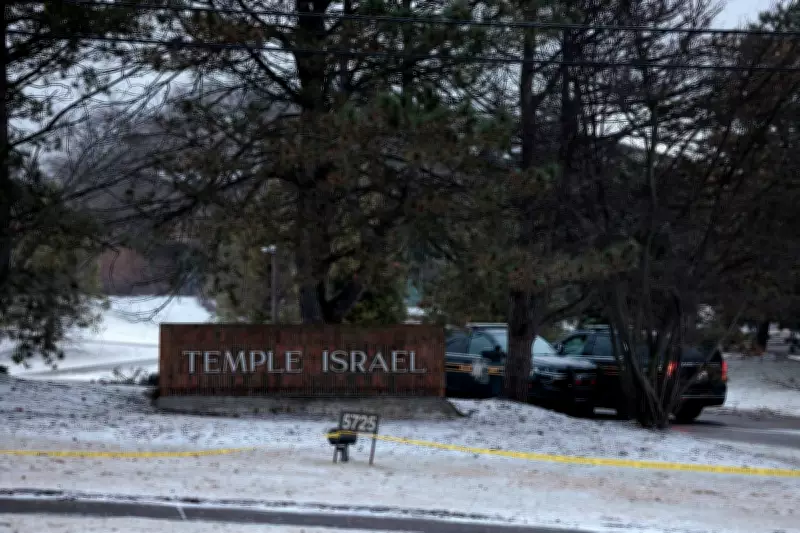
Jewish communities throughout the United States have issued urgent warnings about the need for heightened security at places of worship following a violent attack on a Detroit-area synagogue. The incident, which involved a truck containing explosives being rammed into Temple Israel in West Bloomfield, Michigan, has intensified fears of escalating violence against Jewish targets amid the ongoing US-Israeli conflict with Iran.
Details of the Michigan Attack
On March 13, 2026, security personnel at Temple Israel responded swiftly when a vehicle was driven into the temple building. The assailant, identified as Ayman Mohamad Ghazali, a 41-year-old naturalized citizen originally from Lebanon, was killed during an exchange of gunfire. One security guard sustained minor injuries, while staff, teachers, and 140 young children from the temple's early learning center were safely evacuated. The FBI has classified the event as an act of terrorism.
Temple Israel released a statement confirming the safety of their security team and condemning the violence. This attack has sparked widespread concern among Jewish American organizations, which are now calling for increased funding and resources to bolster security at vulnerable locations across the nation.
Rising Antisemitism and Security Measures
In recent years, security at synagogues and Jewish centers has been significantly enhanced, with many institutions hiring private, armed guards and providing specialized training to address potential threats. This trend accelerated after the 2018 mass shooting at the Tree of Life synagogue in Pittsburgh, which resulted in 11 deaths, and following Israel's military response in Gaza after the Hamas-led attack on October 7, 2023.
The Orthodox Union emphasized the persistent threats facing Jewish institutions, stating, "This incident is a stark and frightening reminder that Jewish institutions across the US continue to face serious and persistent threats." They urged elected officials to take action, including allocating sufficient funds for security.
Calls for Action and Funding
Ted Deutch, former US representative and CEO of the American Jewish Committee, highlighted a recent report showing that 91% of American Jews feel less safe due to previous violent incidents. He stated, "Once again, this time in Detroit, Jews were targeted at their place of worship. Once again, Jews faced mortal danger simply because of who they are." Deutch called for clear condemnation of antisemitism and concrete steps to ensure community safety.
The Jewish Federations of North America reported that security costs for the Jewish community amount to $765 million annually. Eric Fingerhut, the organization's chief executive, described this figure as "prohibitive" and requested congressional assistance to protect faith-based communities. He noted that measures such as adding police, security guards, and fortifying buildings help Jewish individuals feel safer.
Global Context and Recent Incidents
The Michigan attack is part of a broader pattern of violence against Jewish targets worldwide. Recent incidents include:
- An alleged antisemitic assault on two shoppers in California who were speaking Hebrew.
- Shootings at synagogues in Toronto, Canada.
- A fire at a synagogue in Rotterdam, Netherlands, currently under investigation.
- The bombing of a temple in Liège, Belgium, condemned as a "despicable antisemitic act" by Interior Minister Bernard Quintin.
The Israeli-American Council expressed horror at these events, linking them to antisemitic indoctrination in schools and on social media. They called on elected leaders to unequivocally condemn antisemitism, including anti-Zionism, and to implement immediate measures to safeguard Jewish communities.
As tensions continue to rise, Jewish organizations are emphasizing the critical need for proactive security strategies and robust support from government and community leaders to prevent future acts of violence and ensure the safety of all worshippers.




