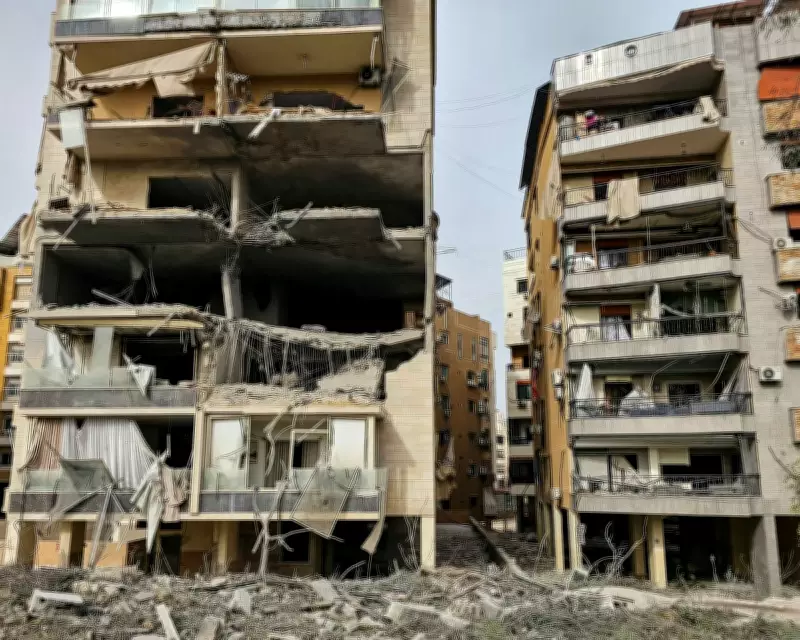
Israel Intensifies Military Campaign with Tehran Strikes and Hezbollah Commander Death
Israel unleashed two significant waves of attacks on Tehran on Wednesday, simultaneously announcing the death of a top Hezbollah commander in a Beirut airstrike. The military escalation shows no signs of abating, despite former US President Donald Trump asserting that Iranian leadership had requested a ceasefire, a claim promptly denied by Tehran.
Trump's Ceasefire Claims and Iranian Denials
Donald Trump took to social media to declare that Iran's president had "just asked" for a ceasefire, adding that American troops would withdraw from Iran "pretty quickly." He further suggested that the US could monitor Iran's stockpile of highly enriched uranium via satellite, dismissing concerns about its underground storage. However, Iran's foreign ministry spokesperson immediately refuted these statements, labeling them "false and baseless."
Trump appeared confused about Iran's leadership, referencing a "New Regime President" he described as less radical and more intelligent. In reality, President Masoud Pezeshkian has been in office since 2024, preceding the current conflict. The country's former supreme leader, Ali Khamenei, was killed in the initial attacks, succeeded by his son Mojtaba, who has adopted a hardline stance.
Hezbollah Commander Killed in Beirut Strike
An Israeli navy strike on Beirut resulted in the death of seven individuals, including Youssef Hashem, commander of Hezbollah's southern front. Israeli military officials stated that Hashem, with over 40 years of experience, represented a significant loss for Hezbollah, potentially hindering their resistance against Israel's ground campaign in southern Lebanon.
Hezbollah acknowledged Hashem's death, honoring him as a "beacon of the Islamic Resistance." The conflict has claimed 1,260 lives in Lebanon, predominantly civilians, with Hezbollah estimating around 400 fighter casualties. Israel reported 10 soldier deaths since hostilities began on the Lebanese front in early March.
Regional Attacks and Civilian Casualties
Iran launched approximately 10 missiles into central Israel hours before the Jewish Passover festival, coinciding with rocket and missile attacks from Hezbollah and Yemen's Houthis. In Israel, an 11-year-old girl sustained critical injuries from shrapnel in Bnei Brak, with 13 others wounded less severely. The Magen David Adom emergency service reported 19 deaths and 515 injuries from missile fire since the war's inception.
Israeli military spokesperson Brig Gen Effie Defrin warned that Iran and Hezbollah might target Israeli civilians during the Passover holiday. The Houthis claimed a missile attack on southern Israel, intercepted without casualties.
Humanitarian Toll and Global Economic Impact
The International Federation of Red Cross and Red Crescent societies estimated at least 1,900 fatalities and 20,000 injuries in Iran, though precise numbers remain elusive. The closure of the Strait of Hormuz to oil and gas tankers has driven up oil prices and caused critical global shortages. While 10 vessels transited the strait on Wednesday, shipping volumes have plummeted by over 90% compared to pre-conflict levels.
Trump's Regime Change Assertions and Uranium Stance
Trump persisted in claiming "full regime change" in Iran, linking a potential ceasefire to the reopening of the Strait of Hormuz. He downplayed concerns about Iran's 440kg stockpile of highly enriched uranium, stating, "That's so far underground, I don't care about that. We'll always be watching it by satellite." Experts have previously rejected Trump's assertions about Iran's nuclear capabilities as unfounded.
Trump hinted at occasional US airstrikes post-withdrawal, calling them "spot hits." Iranian parliament official Ebrahim Azizi mocked Trump's boasts, suggesting the strait would reopen under Iran's new laws, not for the US.
Iranian President's Appeal and Regional Dynamics
President Pezeshkian posted a letter on social media questioning the war's justification and affirming Iran's lack of enmity toward other nations. Meanwhile, Qatar reported an Iranian missile strike on a fuel oil tanker, though no casualties or environmental damage occurred.
Israel's military claimed strikes on 400 Iranian targets over two days, with Iranian media confirming attacks in Tehran. The conflict's ripple effects, including oil price spikes and resource shortages, continue to strain the global economy, as Trump seeks to extricate the US from the battlefield.