
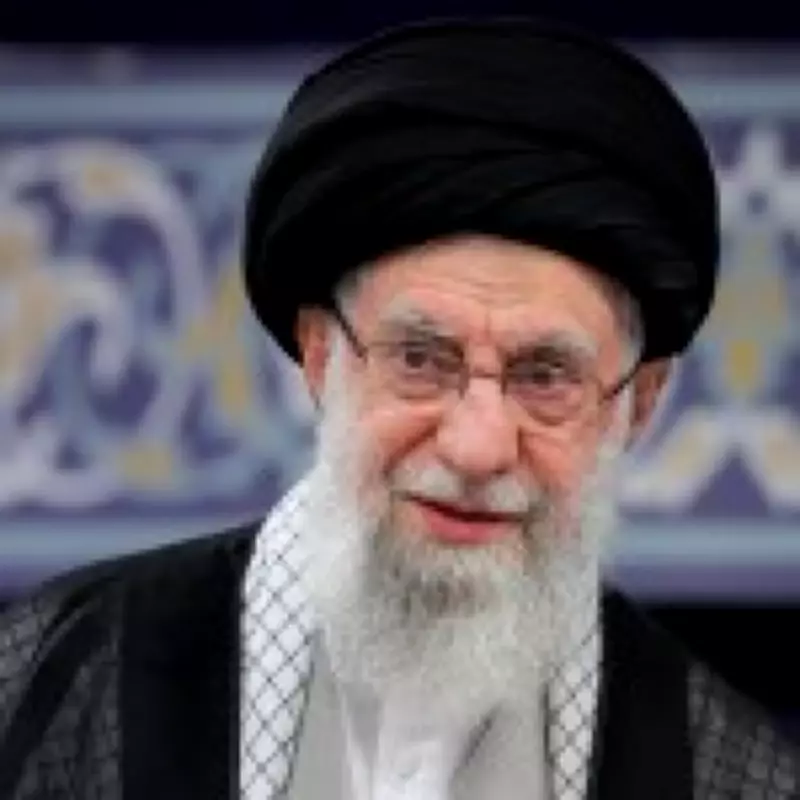
Iran's Revolutionary Guard Poised to Consolidate Power Following Khamenei's Death
News of the death of Ayatollah Ali Khamenei, Iran's hard-line Supreme Leader, has reportedly sparked celebrations in Tehran. However, analysts caution that the feared Islamic Revolutionary Guard Corps (IRGC) represents a formidable obstacle to any meaningful government reform, with thousands of soldiers prepared to defend the regime at all costs.
Institutional Power Versus Personal Authority
Dr. Katayoun Shahandeh from SOAS at the University of London emphasized that the fate of the IRGC in the coming weeks is "far more complex" than the removal of Khamenei. "Although Khamenei was a central ideological and political authority, the IRGC is not merely loyal to a person – it is an entrenched institutional, economic, and military power structure," she explained.
"Over decades, it has embedded itself deeply into Iran’s political system, intelligence networks, judiciary influence, and vast economic enterprises. It functions as both a military force and a state-within-a-state."
Survival Strategy and Internal Recalibration
Institutional continuity mechanisms are already woven into the fabric of the Islamic Republic, with succession planning forming a critical part of its survival strategy. "The death of the Supreme Leader would trigger internal recalibration, not collapse," Dr. Shahandeh added. "The more likely scenario is one of consolidation rather than dissolution. In moments of uncertainty, security institutions often tighten control."
Following the Ayatollah's demise, the IRGC could strategically position itself as the guarantor of national stability, exploiting the resulting power vacuum to reinforce its dominance.
Guardians of the Regime's Core
Dr. Andreas Krieg, Associate Professor of Middle Eastern Studies at King’s College London, concurred with this assessment. He noted that if a new, opposition-led government attempts to emerge in the aftermath, the IRGC would actively work to undermine it.
"The Guards are the backbone of coercion and a central economic actor, and they are well placed to veto outcomes they see as existential," he elaborated. "If a 'new government' is instead a reconfigured version of the current system, then the IRGC is likely to be one of its main architects."
A Shift Toward Securitized Governance
Should the IRGC successfully maintain control, a more "securitized" governance model could emerge. In this scenario, a religious figurehead might provide symbolic legitimacy while genuine authority shifts to a collective security-political center dominated by the Guard, according to Dr. Krieg.
Internal Fractures and External Uncertainties
Nevertheless, internal divisions within the IRGC cannot be entirely dismissed. The organization is not monolithic; it harbors competing factions with differing ideological fervor, economic interests, and political ambitions.
While many Iranians openly celebrate Khamenei's death, this public sentiment does not guarantee an immediate political transformation. "The key certainty is this: the IRGC will not relinquish power voluntarily," Dr. Shahandeh asserted. "It has too much institutional, economic, and ideological investment in the current system. Whether it strikes back externally, tightens repression internally, or negotiates behind the scenes will depend on how secure it feels in the immediate aftermath."




