Iran's Leadership Crisis: Who's in Charge Now and Who Could Be Next Supreme Leader?
Iran is navigating a profound political transition following the death of its long-serving supreme leader, Ayatollah Ali Khamenei, and several other senior officials in recent airstrikes. This marks a pivotal moment for the Islamic Republic, established in April 1979, as Khamenei was only the second leader since its founding figurehead, Ayatollah Ruhollah Khomeini, who died in June 1989. With the supreme leader holding ultimate authority over all state matters, his passing after nearly 37 years in power signals a critical juncture for the nation.
Which Senior Leaders Have Been Killed?
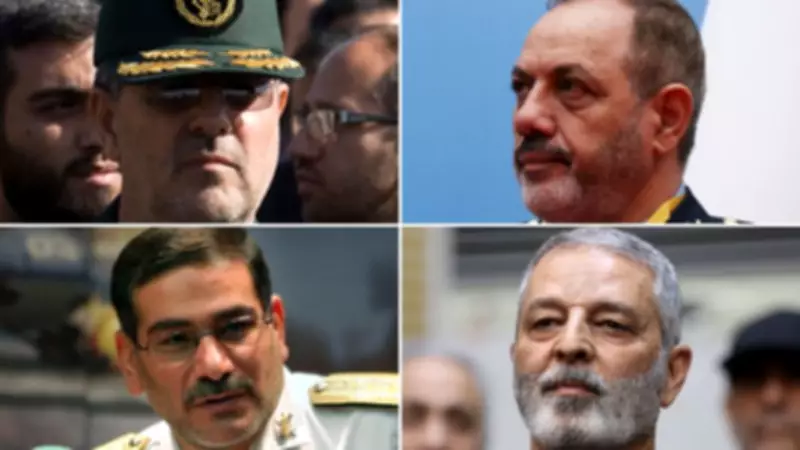
In addition to Khamenei, the airstrikes claimed the lives of key military and security figures. Among the casualties are General Abdol Rahim Mousavi, Iran's army chief of staff, and General Aziz Nasirzadeh, the defence minister. Major General Mohammad Pakpour, who assumed command of the Revolutionary Guard after Israel eliminated its previous leader last June, was also killed, along with Ali Shamkhani, a top security adviser to Khamenei. Iranian media reports indicate that Khamenei's daughter, grandchild, son-in-law, and daughter-in-law perished as well, compounding the tragedy.
What Happens Now in Iran?
In accordance with Islamic Republic law, a three-person temporary leadership council has been established to govern the country during this interim period. The council includes Iran's reformist president, Masoud Pezeshkian, and the hard-line head of the judiciary, Gholamhossein Mohseni Ejei. Completing the trio is Alireza Arafi, a jurist who serves as a member of Iran's Guardian Council and heads the Basij, a volunteer paramilitary force. Ali Larijani, Iran's head of security, confirmed the council's formation on Sunday, with parliamentary speaker Mohammad Bagher Qalibaf emphasizing that plans were in place for such scenarios, ensuring stability and continuity.
Who Chooses the New Supreme Leader?
While the leadership council manages day-to-day governance, the responsibility for selecting a new supreme leader falls to an 88-member panel known as the Assembly of Experts. Composed of Shiite clerics elected every eight years, with candidacies approved by the Guardian Council, this body must act swiftly under Iranian law. The Guardian Council, notorious for disqualifying candidates, previously barred former president Hassan Rouhani from election to the Assembly of Experts in March 2024. Rouhani, a relative moderate, was instrumental in negotiating the 2015 JCPOA nuclear deal, which the U.S. later abandoned under Donald Trump.
Who Could Be the New Supreme Leader?
Under Iran's system of vilayat-e faqih, or guardianship of the Islamic jurist, the supreme leader must be a cleric. Khamenei's son, Mojtaba Khamenei, a 56-year-old cleric who has never held government office, is widely considered a potential successor. However, Khamenei never publicly designated a heir, and it remains unclear how many of his close advisers survived the airstrikes. Another possible candidate, former president Ebrahim Raisi, died in a helicopter crash in May 2024, further complicating the succession landscape.
Regime Change and International Reactions
Donald Trump has seized on this moment, urging Iranians to overthrow the Islamic Republic, which he claims has murdered tens of thousands of its citizens in recent weeks. The U.S. president described Khamenei's death as the "single greatest chance for the Iranian people to take back their country", asserting that many within the Revolutionary Guard and security forces are reluctant to continue fighting. Reza Pahlavi, the U.S.-based son of the deposed shah from the 1979 revolution, argues that the Islamic Republic is effectively at its end, with any successor doomed to fail due to lack of legitimacy and longevity. He calls on Iran's military and security forces to align with the populace in this critical period.