
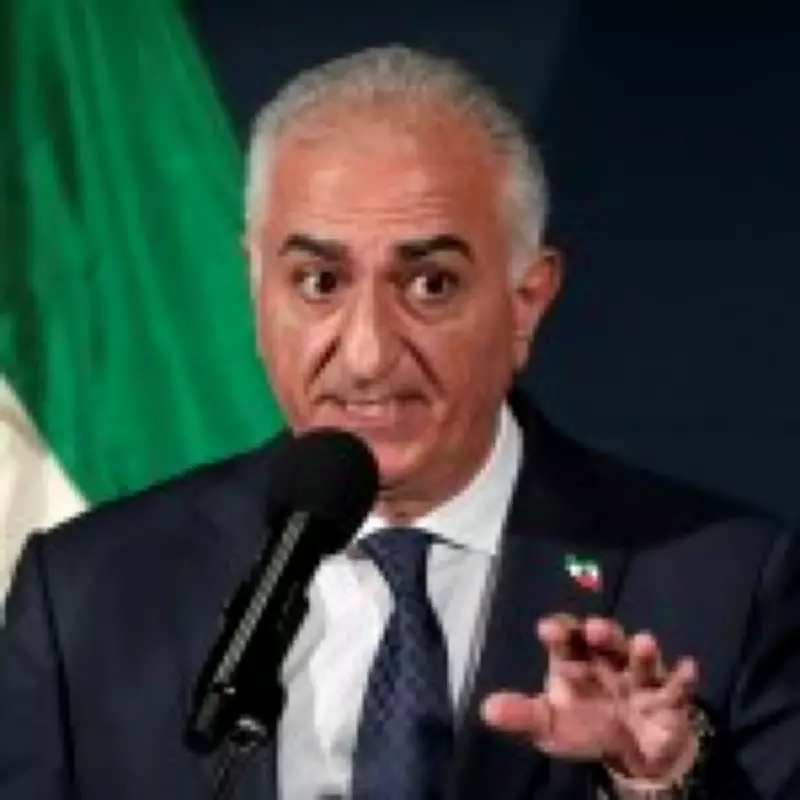
Exiled Iranian Crown Prince Makes Urgent Plea for UK Support of US Military Action
Reza Pahlavi, the exiled crown prince of Iran and son of the country's last shah, has issued a direct appeal to the British government to support potential United States military intervention against Iran's clerical regime. This plea comes amid reports that Prime Minister Sir Keir Starmer is blocking former US President Donald Trump from utilizing UK military bases for any offensive operations against Tehran.
Military Buildup and Diplomatic Tensions Escalate
The exiled prince, who now resides in the United States after fleeing during the 1979 Iranian Revolution, spoke exclusively to Metro about the deteriorating situation. His intervention coincides with a significant US military buildup in the Middle East region, where American naval and air forces have amassed substantial assets in preparation for potential conflict.
According to Pahlavi, the Iranian people themselves are calling for military action to stop what he describes as systematic killing by the regime. 'The people of Iran want the US to militarily act,' Pahlavi stated emphatically. 'This humanitarian intervention would save lives. I urge the UK government to support the US action.'
UK Resistance to Base Access Creates Diplomatic Friction
Reports indicate that Sir Keir Starmer's government has refused permission for American aircraft to utilize key UK bases at Diego Garcia and RAF Fairford in Gloucestershire for potential strikes against Iranian targets. This resistance has reportedly frustrated Trump administration officials, who view UK support as crucial for any military operation.
The Times newspaper first revealed the diplomatic friction, noting that Trump has been particularly vocal about the strategic importance of British bases. In a previous Truth Social post, the former president wrote that 'it may be necessary for the United States to use Diego Garcia, and the Airfield located in Fairford, in order to eradicate a potential attack by a highly unstable and dangerous Regime.'
Human Rights Crisis and Regime Crackdown
Pahlavi provided alarming statistics about the human cost of the Iranian regime's crackdown on protesters, claiming that as many as 40,000 people may have been killed during nationwide unrest last month. 'The killing has not stopped,' he warned. 'Protests continue and they are expanding.'
Independent verification from human rights organizations supports these concerns. The US-based Human Rights Activists News Agency (HRANA) has confirmed more than 6,000 deaths, with another 17,000 recorded fatalities currently under investigation.
Nuclear Negotiations and Security Threats
The military tensions occur against a backdrop of contentious nuclear negotiations between the United States and Iran. Trump has repeatedly threatened military action to prevent Iran from developing nuclear weapons, stating during his recent State of the Union address that negotiators still haven't heard 'those secret words: "We will never have a nuclear weapon."'
Conservative Shadow Defence Secretary James Cartlidge has publicly backed Pahlavi's position, urging the UK government to grant US access to military bases if American strikes become necessary. 'Iran's nuclear programme has been a grave threat to Britain and our allies,' Cartlidge told Metro. 'That is why the Conservatives supported the US strikes on Iran's nuclear facilities last summer. Iran must never obtain a nuclear bomb.'
Call for IRGC Terrorist Designation
Beyond military concerns, Pahlavi has called on the British government to formally proscribe the Iranian Revolutionary Guard Corps (IRGC) as a terrorist organization. This designation would make it illegal to support the group within the UK, aligning British policy with the European Union, which has already added the IRGC to its terrorist list.
The exiled prince also demanded that British authorities seize assets belonging to Iranian regime elites who have moved substantial wealth to London. Recent reports have linked figures close to Supreme Leader Ayatollah Ali Khamenei with significant UK property holdings, including luxury mansions worth over £100 million allegedly owned by Khamenei's son, Mojtaba.
Activist Support and International Response
Leading anti-regime activists in the UK have welcomed Pahlavi's call for action. Ellie Borhan, founder of the Stage of Freedom activist group, told Metro: 'Surely it is time to take action against the regime enabling and committing atrocities as well. The Islamic Republic is not only a threat to the Iranian people, but also to regional stability and the safety of the UK and British citizens.'
A government spokesperson responded cautiously to the escalating situation, stating: 'As routine, we do not comment on operational matters. There is a political process ongoing between the US and Iran, which the UK supports. Iran must never be able to develop a nuclear weapon, and our priority is security in the region.'
The spokesperson emphasized existing UK sanctions against the IRGC, which include asset freezes, travel bans, and director bans affecting more than 500 Iranian individuals and entities connected with the regime.
Historical Context and Future Implications
Pahlavi has emerged as a prominent figure in nationwide demonstrations against Iran's clerical leadership, with thousands of protesters chanting his name and waving flags associated with his father's reign. His appeal represents a significant development in the international response to Iran's internal crackdown and nuclear ambitions.
The diplomatic standoff continues as both sides prepare for additional talks in Geneva this week, while military assets remain positioned for potential conflict. The UK's decision regarding base access could prove pivotal in determining the international community's response to Iran's nuclear program and human rights record.




