
Iran's Strategic Preparations for Potential US Military Action
As diplomatic negotiations between the United States and Iran persist, new satellite imagery analysis reveals extensive defensive fortifications at Iran's critical nuclear and military installations. The Sky News Data and Forensics team has documented significant hardening of facilities alongside coordinated military exercises with Russian forces, indicating Tehran's preparations for potential conflict escalation.
Nuclear Facility Defensive Enhancements
Following strikes by Israel and the United States in June 2025 that damaged three key nuclear sites, Iran has undertaken substantial repair and reinforcement efforts. The affected facilities include the Fordow Fuel Enrichment Plant, Natanz enrichment facility, and Isfahan Nuclear Fuel Complex—all central to Iran's nuclear infrastructure.
Satellite images from December 2025 through January 2026 show structural repairs and new efforts to bury tunnel entrances at the Isfahan Complex, located 135 miles south of Tehran. This underground site is believed to store much of Iran's enriched uranium, despite Tehran's consistent denials of nuclear weapons development.
"We see clear preparation in anticipation for attack, trying to minimise potential weak points," said David Albright, founder and president of the Institute for Science and International Security. "Backfilling tunnel entrances would help dampen any potential airstrike and make ground access difficult for special forces."
Hardening of Underground Sites
At the Natanz nuclear facility, construction activity is visible at the Pilot Fuel Enrichment Plant, which sustained damage during the 2025 strikes. Approximately one mile from Natanz, the newly identified Pickaxe Mountain site (also known as Kolang Gaz La) shows construction and hardening of tunnel shafts, with satellite imagery from February 2026 revealing reinforced eastern tunnel entrances.
The Fordow fuel enrichment plant, located deep inside a mountain near Qom, was largely destroyed by US strikes and has shown minimal activity since its entrance was sealed. However, protective measures at Isfahan suggest valuable materials may still be housed within these fortified locations.
Military Site Fortifications and Activity
Beyond nuclear facilities, Iran has strengthened other critical military complexes. The Parchin military complex—one of Iran's most sensitive sites, where nuclear-related tests allegedly occurred two decades ago—now features extensive concrete covering. Analysis indicates construction of a "concrete sarcophagus" around a newly built facility, with imagery suggesting the presence of a high-explosives containment vessel measuring approximately 36 meters long and 12 meters in diameter.
At the Tabriz Missile Base in northwest Iran, satellite imagery confirms complete repair of buildings damaged during Israeli strikes in June 2025. Additionally, roofs have been constructed over destroyed facilities at the Pilot plant, potentially to conceal ongoing activities.
Joint Military Exercises and Naval Posturing
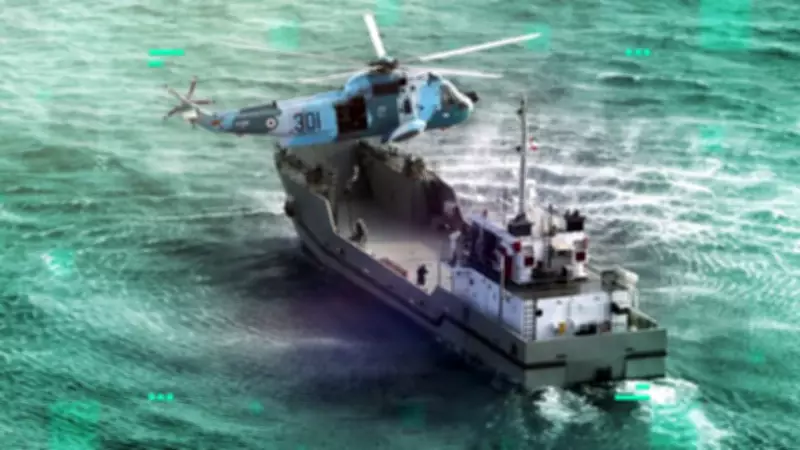
On January 19, Russian and Iranian forces conducted joint live drills in the Gulf of Oman and Indian Ocean, launched from strategic locations at Larak Island and Shahid Bahonar Port. These positions control access to the Strait of Hormuz, highlighting Iran's military readiness and influence over vital shipping routes.
"Russia is trying to help its partner, but its capabilities are extremely limited because it is totally consumed with the war in Ukraine," noted Mark Cancian, Senior Adviser at the Center for Strategic and International Studies.
Further Iranian exercises occurred on February 16-17, when the Islamic Revolutionary Guard Corps conducted naval and live-fire operations including missile launches across key shipping lanes. These drills coincided with renewed US-Iran nuclear negotiations and prompted temporary closure of the Strait of Hormuz after Iranian state media reported live missile fire toward the strategic waterway.
Naval Assets and Strategic Positioning
Satellite tracking data reveals Iranian Navy vessels, including the drone carrier IRIS Shahid Bagheri, positioned approximately 10 kilometers from shore near Bandar Abbas in January. This vessel can deploy approximately 60 drones in addition to helicopters and has been frequently observed in the Strait of Hormuz region.
Cancian described the Shahid Bagheri as a "clever innovation" and part of Iran's threat posture against the strait, noting its positioning relative to the USS Abraham Lincoln aircraft carrier. "The Iranian government is being aggressive rhetorically, and the naval movements, along with the joint exercise with the Russians, are meant to reinforce that," he stated.
While Iran maintains it is not pursuing nuclear weapons, these extensive defensive preparations and military demonstrations occur against a backdrop of escalating regional tensions and ongoing diplomatic discussions about Iran's nuclear program.




