Guatemala has been plunged into a nationwide state of emergency following a deadly wave of gang violence that left eight police officers dead and dozens held hostage in a coordinated prison uprising.
Hostage Crisis and Deadly Retaliation
President Bernardo Arévalo decreed the 30-day emergency measure on Sunday, suspending constitutional rights including freedom of assembly and allowing arrests without a court order. The drastic action came in direct response to a series of brutal attacks authorities have attributed to the country's powerful criminal gangs.
The crisis began on Saturday when gang-affiliated inmates seized 46 people, including prison guards and a psychiatrist, across three separate prisons. Their key demand was the transfer of incarcerated gang leaders from maximum-security facilities.
In a retaliatory strike, gunmen believed to be linked to the same gangs targeted police officers in Guatemala City and surrounding areas. The national police force confirmed that eight officers were killed "in the line of duty", with ten others wounded. One suspected gang member also died in the clashes.
Security Forces Retake Prisons
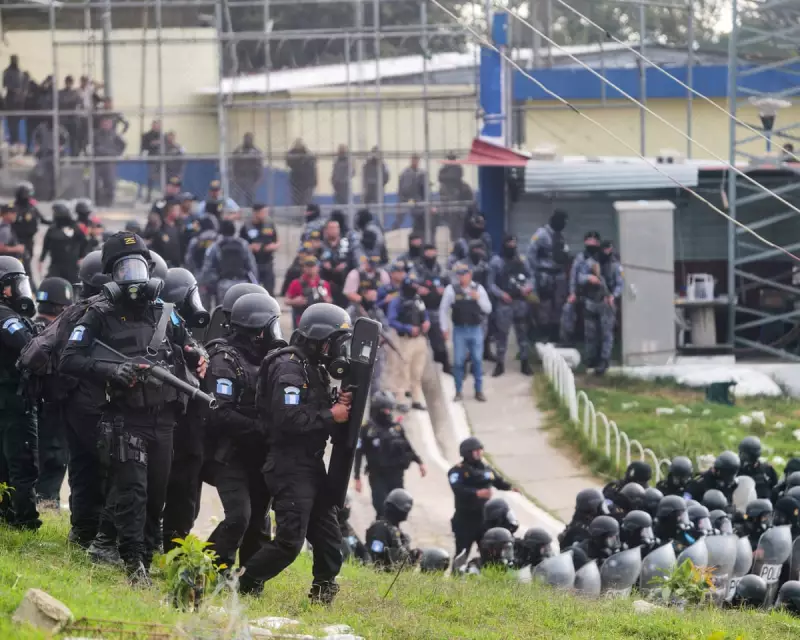
In a major operation at dawn on Sunday, Guatemalan security forces, supported by the army, moved to retake control of the prisons. Using armoured vehicles and tear gas, they stormed the Renovacion I maximum-security prison in Escuintla, located about 75 kilometres south of the capital.
Interior Minister Marco Antonio Villeda reported that the operation was a success, with authorities regaining control within 15 minutes and freeing nine hostages without casualties. He described the perpetrators as "terrorists" acting against the state.
Similar operations freed 28 hostages at the Fraijanes II prison and nine more at the Preventivo facility on the outskirts of Guatemala City. President Arévalo stated there was "not a single casualty" during these security interventions.
Gang Leaders and National Fallout
During the raids, security forces captured a key figure identified as Aldo Dupie, alias "El Lobo" (The Wolf), the alleged leader of the notorious Barrio 18 gang. His arrest, shown in ministry-released footage, is a significant blow to the organisation.
Barrio 18 and its rival, Mara Salvatrucha (MS-13), are held responsible for much of the drug trafficking and violent crime that afflicts Guatemala. Both groups are designated as terrorist organisations by the United States.
The emergency decree now requires approval from Guatemala's opposition-controlled Congress. Opposition leader and Congress President Luís Contreras called for national unity during what he termed "one of the most painful and challenging moments" in the country's history.
The immediate fallout has been severe. The US embassy advised its personnel to shelter in place, and the Guatemalan government ordered all schools to close on Monday. Defence Minister Henry Saenz vowed the army would remain on the streets to continue "dismantling" the criminal groups.
This crisis highlights the profound security challenges facing Guatemala, which recorded a homicide rate of 16.1 per 100,000 inhabitants in 2025—more than double the global average.