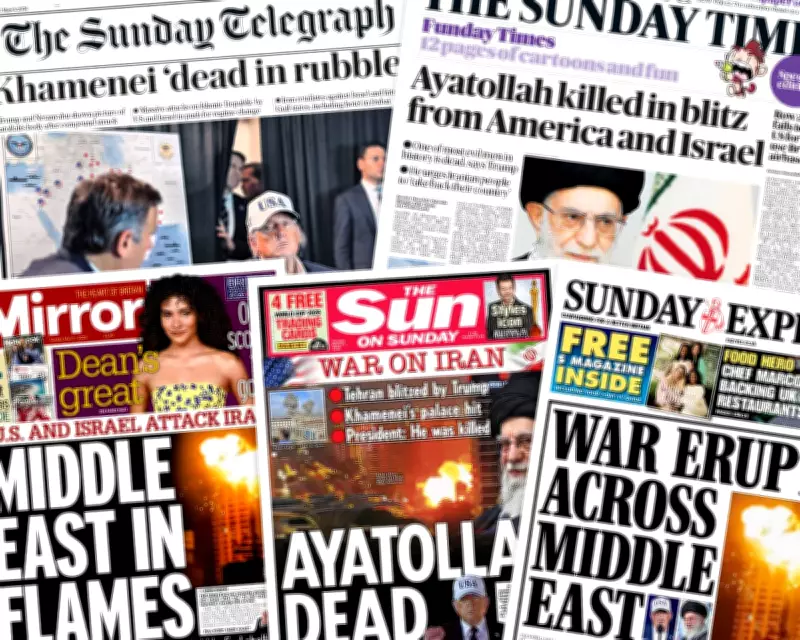
Global Media Reacts to US-Israel War on Iran and Khamenei Death Claim
Front pages across the world were dominated on Sunday by the dramatic escalation in the Middle East, as the United States and Israel launched coordinated military strikes against Iran. The news was compounded by former President Donald Trump's extraordinary claim that Supreme Leader Ayatollah Ali Khamenei had been killed, a statement later corroborated by Iranian state media outlets. This dual development sent shockwaves through international newsrooms, with coverage reflecting a potent mix of apprehension, outrage, and, in some quarters, cautious optimism.
International Headlines Capture a Region in Turmoil
From Ankara to Zurich, editorial boards grappled with the implications of the unprecedented daytime attack. The recurring theme in global reporting was a profound uncertainty about what comes next for the volatile region. The Sunday Telegraph led with a stark headline, "Khamenei 'dead in rubble'," accompanied by analysis from former Trump adviser John Bolton. Similarly, The Sunday Times declared, "Ayatollah killed in blitz from America and Israel," noting Trump's call for Iranians to "take back their country."
The Sunday Mirror captured the scale of the crisis with a simple, powerful front page: "Middle East in flames." This sentiment was echoed in varied forms internationally. Turkey's Hürriyet emphasized, "Israel incited it, the US attacked," and pointedly stated Turkey's lack of support for the offensive. Switzerland's Blick labeled it "Trump's biggest war," while France's La Tribune pondered, "The end of the Mullahs?"
Editorial Reactions: Recklessness Versus Resolve
The editorial response highlighted a deep ideological divide. The New York Times opinion board published a piece headlined "Trump's attack on Iran is reckless," arguing that the action lacked clear goals, international support, and legal justification. Conversely, the New York Post hailed "Trump's bold move to rid the world of Iran's evil regime once and for all," calling it potentially the most significant action in the region in centuries.
In Israel, The Jerusalem Post front page simply stated "Khamenei dead" above an image of a protester, with a sub-head acknowledging the expectation of Iranian reprisals: "Israelis willing to suffer Tehran's worst." Hong Kong's South China Morning Post led with "Trump calls on Iranian people to rise up."
British Focus on Regional Fallout and Citizen Safety
Several UK publications shifted focus to the immediate dangers for British nationals abroad. The Mail on Sunday warned of "British tourists blitzed and Iran's leader 'dead' as Middle East erupts." The Star highlighted "Brits Dubai missile terror," and The Sunday People advised tourists to "Get to shelter," reflecting concerns over the conflict's spillover effects across the Gulf.
The collective media portrait is one of a region at a critical, dangerous juncture. The confirmed military action, paired with the seismic claim regarding Iran's leadership, has not only reshaped the Middle Eastern geopolitical landscape but has also framed a global narrative consumed by the potential for further escalation and the uncertain path toward stability.