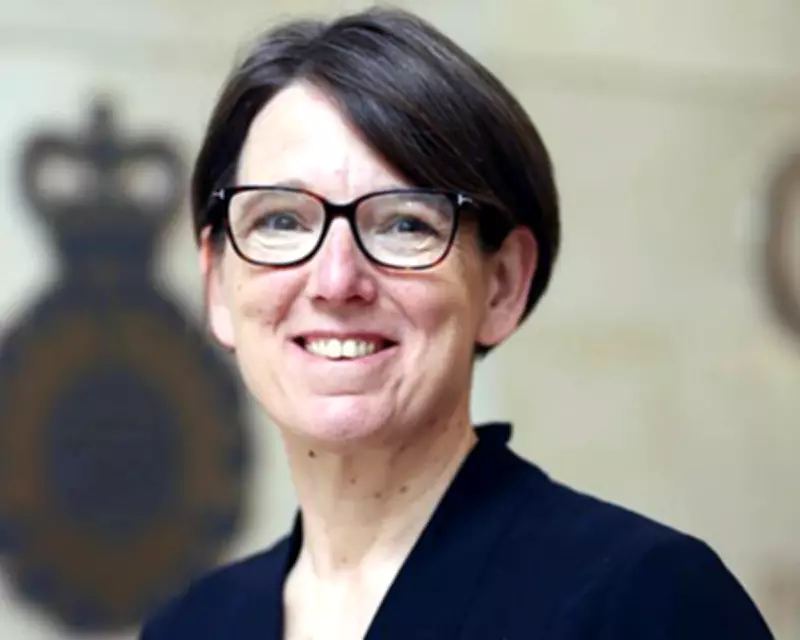
Anne Keast-Butler, the head of GCHQ, will deliver a stark warning on Wednesday that Britain faces a 'moment of consequence' as adversaries become increasingly brazen. In her inaugural annual lecture at Bletchley Park, the historic home of the spy agency, she will outline how Russia is relentlessly targeting the UK's critical infrastructure, democratic processes, supply chains, and public trust. Meanwhile, the window to stay ahead of China's rapid technological advancements is narrowing.
Russia's Relentless Campaign
Keast-Butler will emphasize that the UK is caught in a 'new era of radical uncertainty,' with the risk of miscalculation at its highest in her experience. Moscow's activities include cyber-attacks, sabotage, and assassination attempts. She will cite an example where firebombs were placed in DHL parcels, one igniting in Leipzig, Germany, and another at a warehouse in Birmingham after traveling from the continent by plane. GCHQ's role is to fend off these threats while supporting Ukraine and Western allies.
China's Growing Capabilities
Despite recent espionage scandals, the language on China is more measured, reflecting the UK's desire to maintain trade ties after Prime Minister Keir Starmer's January visit. Keast-Butler will state that China is now a science and tech superpower with sophisticated intelligence, cyber, and military capabilities. The rapid development of artificial intelligence means there is a 'narrowing window for the UK and allies to stay ahead.'
Scale of Cyber Threats
Figures from the National Cyber Security Centre show Britain faces four major cybersecurity incidents weekly, with China, Russia, and Iran behind the most serious attacks. MI6 head Blaise Metreweli has warned that the UK is in a 'space between peace and war,' with information and technology increasingly weaponized by Russia.
Historical Context and Future Preparedness
Keast-Butler will reference GCHQ's first director, Alastair Denniston, who in January 1939 discreetly sought to recruit six language-proficient students from Cambridge's Newnham College, eight months before World War II. This demonstrates the agency's ability to plan ahead of major crises.
UK Sanctions on Russian Networks
On Tuesday, the UK targeted Russia-linked cryptocurrency platforms, banks, and financial networks used to bypass sanctions. Assets were frozen, and UK firms barred from processing payments. The measures targeted the Kremlin-backed A7 network, which routed funds and exploited foreign banking systems to evade restrictions after the Ukraine invasion. Crypto exchanges and entities in Kyrgyzstan, Georgia, and the UAE were also sanctioned.
Foreign Secretary Yvette Cooper stated: 'We will continue to act fast and decisively, alongside our allies, to expose, disrupt and dismantle these networks, and ensure those enabling Russia's aggression face consequences.'