Explosions Rock Dubai, Bahrain, Kuwait, Jordan as War Spreads Across Middle East
The war launched by the United States and Israel against Iran has rapidly escalated, triggering explosions across multiple Middle Eastern countries on Saturday. Iranian retaliatory strikes targeted luxury hotels, government buildings, and airports, spreading conflict to previously stable Gulf regions and prompting widespread anxiety.
Dubai's Luxury Hotel Targeted in Missile Attack
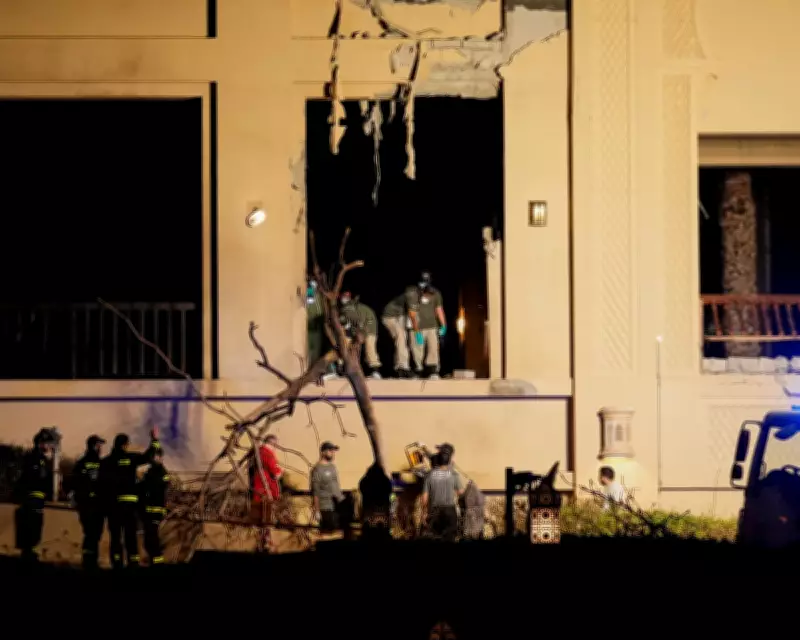
An Iranian missile struck the world-famous Fairmont the Palm Hotel in Dubai's luxurious Palm Jumeirah area, setting the five-star property alight and injuring four people. Firefighters and rescue workers rushed to inspect the damage as social media videos showed flames erupting near the hotel entrance.
"Everyone is very scared," said one Dubai resident as the situation deteriorated. "There is footage of missile interceptions all over the city. I am packing a suitcase just in case... not that we can leave, because airspace is closed. It is the thing we have all been frightened about happening, and now it has."
Gulf States Drawn into Widening Conflict
Within hours of the initial US and Israeli strikes, Iran responded with a wide-ranging attack targeting more than six countries, pulling in places previously untouched by the escalating crisis.
In Bahrain, an Iranian drone flew into a high-rise building in what appeared to be a targeted attack, exploding and engulfing the skyscraper in flames. Earlier, the country's national security agency was also struck by an Iranian missile. Social media footage also appeared to show a missile hitting the massive US naval base in Bahrain.
In Kuwait, a drone crashed into the country's main airport, wounding several employees and damaging critical infrastructure. The attacks marked a significant escalation, as Iran had previously avoided targeting Gulf states during past conflicts.
Regional Anxiety and Preparations
Across the Middle East, citizens responded to the escalating war with mounting concern. In Lebanon, gas stations developed lines ten cars deep within an hour of the strikes. Beirut airport canceled commercial flights as anxious travelers watched developments unfold.
Grocery stores filled with cautious residents stocking up on essential goods, their memories of the 2024 war with Israel still fresh. All eyes turned to Hezbollah, the Iran-backed group that previously declared the killing of Iranian supreme leader Ayatollah Ali Khamenei a red line.
A statement from Hezbollah on Saturday afternoon condemned what it described as a violation of the UN charter by the US and Israel, but made no mention of whether it would directly assist Iran. Many Lebanese feared Hezbollah's entry into the conflict could trigger a devastating Israeli response against Lebanon.
Jordan and Wider Regional Impact
Explosions rocked additional Middle Eastern countries as Israel intercepted incoming Iranian ballistic missiles above other nations. In Jordan, fires blazed in the northern city of Irbid as missile shrapnel fell from the sky and ignited buildings.
The attacks drew condemnation from Arab states across the region, who called the Iranian strikes a violation of their sovereignty. Qatar labeled the attacks on its territory a "direct assault on national security," while Gulf states collectively warned they reserved the right to respond.
Iranian foreign minister Abbas Araghchi told NBC in an interview that he had informed Gulf states "we have no intention to attack them but we are actually attacking the American bases in the act of self-defence."
Strategic Calculations and Potential Backlash
Analysts suggested that imposing material costs on Gulf states—stable kingdoms unaccustomed to wars in their territories—could pressure them to urge the Trump administration to halt the bombing campaign. Some ruling families, including Qatar's al-Thani family and Saudi Arabia's Crown Prince Mohammed bin Salman, maintain close relationships with Jared Kushner, who significantly influences President Trump's Middle East policy.
However, other analysts warned that targeting Gulf kingdoms could backfire, alienating voices that previously lobbied the US to reconsider its military campaign against Iran. The conflict, dubbed Operation Epic Fury by Washington, had already expanded far beyond the geographic scope of the previous war in June 2025, which remained largely confined to Israel and Iran.
As Iran's proxies joined the fray, with Kataib Hezbollah and Yemen's Houthis warning they would strike US military bases across the region, the Middle East faced its most widespread conflict in recent memory, with no clear end in sight.