El Mencho, Infamous Mexican Cartel Leader, Killed in Security Forces Raid
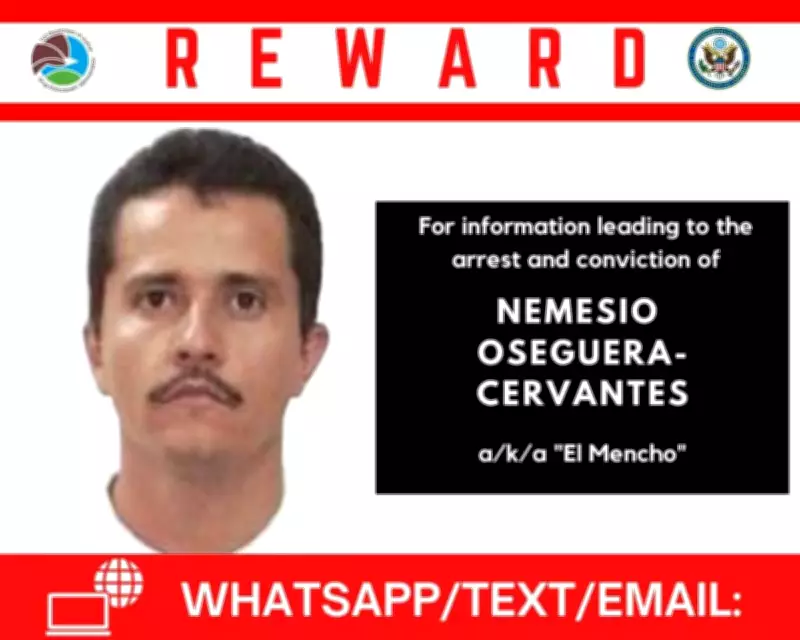
Nemesio Rubén Oseguera Cervantes, widely known by his alias El Mencho, was killed by Mexican security forces in a targeted operation on Sunday. The 59-year-old former police officer was the co-founder and leader of the Jalisco New Generation Cartel (CJNG), a criminal organization that has risen to become one of Mexico's most powerful and violent drug trafficking groups.
The Rise of a Notorious Drug Lord
El Mencho's criminal career spanned decades, beginning in the 1990s with drug trafficking activities. After migrating to the United States in his youth, he was convicted in 1994 for conspiracy to distribute heroin in the Northern District of California, serving nearly three years in prison. Upon his release, he returned to Mexico and re-entered the drug trade, initially working under the drug lord Ignacio Coronel Villareal, alias "Nacho Coronel."
Following Villareal's death, El Mencho partnered with Erik Valencia Salazar, alias "El 85," to establish the CJNG around 2007. Initially aligned with the Sinaloa cartel, the group eventually split, leading to years of brutal territorial conflicts across Mexico. One underworld anecdote suggests the rift was triggered by a seemingly trivial incident—a spilled glass of hibiscus tea at a gathering in Guadalajara—that escalated into a series of betrayals and violent clashes.
The CJNG: A Force of Ultraviolence and Military Power
The Jalisco New Generation Cartel, based in the state of Jalisco, has gained notoriety for its aggressive tactics and military-style arsenal. Unlike the more internationally recognized Sinaloa cartel, led by the imprisoned Joaquín "El Chapo" Guzmán, the CJNG is a household name in Mexico, feared for its displays of extreme violence. The cartel has been a pioneer in using explosives launched from drones and installing mines, and it has repeatedly attacked military forces, including shooting down an army helicopter with a rocket launcher in 2015 during a failed attempt to capture El Mencho.
In 2020, the CJNG carried out a brazen assassination attempt in Mexico City against the then-head of the capital's police force, who now serves as the federal security secretary, using grenades and high-powered rifles. Security expert Eduardo Guerrero noted in 2021 that authorities on both sides of the U.S. border view the CJNG as a national security threat, citing its vast financial resources, advanced weaponry, and paramilitary capabilities that overwhelm local police forces in smaller cities.
International Reach and Legal Charges
The U.S. Drug Enforcement Administration (DEA) considers the CJNG as powerful as the Sinaloa cartel, with operations extending across all 50 U.S. states. The cartel is a major supplier of cocaine to the U.S. market and generates billions from the production of fentanyl and methamphetamines. While the Sinaloa cartel has been weakened by infighting after the capture of its leaders, the CJNG under El Mencho continued to expand its influence.
El Mencho faced multiple indictments in the United States, with the most recent superseding indictment filed on April 5, 2022, in the District of Columbia. He was charged with conspiracy and distribution of controlled substances, including methamphetamine, cocaine, and fentanyl, for illegal importation into the U.S., as well as firearms offenses and directing a continuing criminal enterprise under the Drug Kingpin Enforcement Act.
A Shadowy Figure in the Drug Trade
Unlike El Chapo, who sought media attention and even collaborated with figures like Sean Penn for a Hollywood portrayal, El Mencho operated from the shadows. Few photographs of him exist, and he maintained a low profile despite his cartel's high-profile violence. His death marks a significant blow to the CJNG, but the cartel's legacy of terror and its sophisticated operations pose ongoing challenges for Mexican and international authorities.
In the aftermath of El Mencho's killing, crime groups set vehicles ablaze in Zapopan, highlighting the volatile situation. As Mexico grapples with the fallout, the elimination of this key figure raises questions about the future of the drug trade and security in the region.