US Defence Secretary Quotes Pulp Fiction Bible Verse in Pentagon Prayer
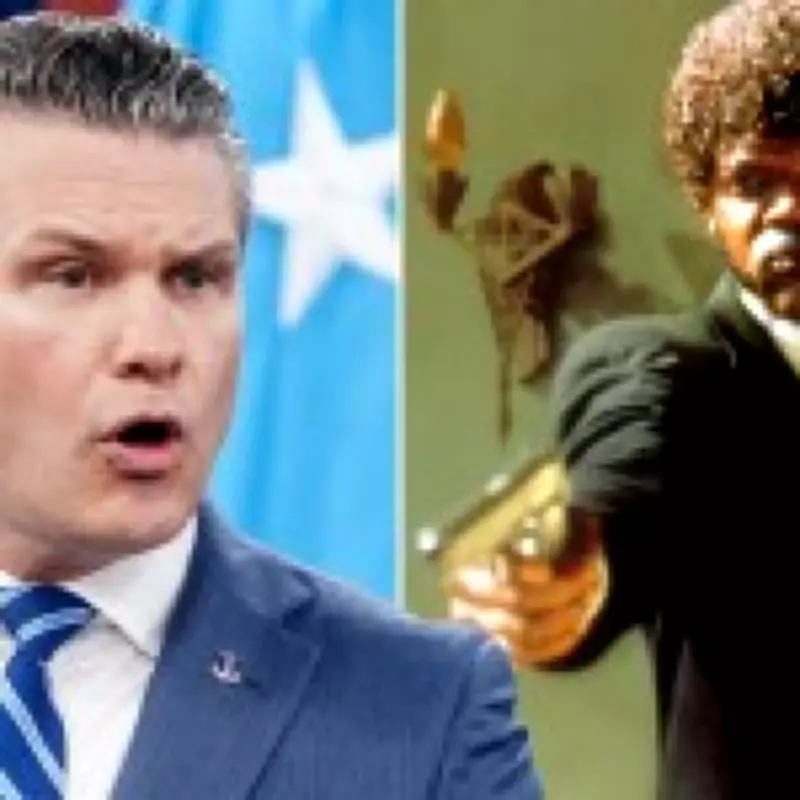
Pete Hegseth, the United States Secretary of Defence, has stirred controversy by quoting a fake Bible verse during a large prayer service at the Pentagon, which was actually taken from the 1994 film Pulp Fiction. The incident occurred as Hegseth led a prayer for a pilot rescued after crashing in Iran earlier this month, urging the audience to join him in a moment of reflection.
Prayer Echoes Samuel L. Jackson's Iconic Scene
During the service, Hegseth recited: 'Pray with me please. The path of the downed aviator is beset on all sides by the inequities of the selfish and the tyranny of evil men. Blessed is he who in the name of camaraderie and duty shepherds the lost through the valley of darkness, for he is truly his brother’s keeper and the finder of lost children. And I will strike down upon thee with great vengeance and furious anger those who attempt to capture and destroy my brother, and you will know my call sign is Sandy 1 when I lay my vengeance upon thee. Amen.'
Hegseth claimed the prayer was based on Ezekiel 25:17, which states: 'And I will execute great vengeance upon them with furious rebukes; and they shall know that I am the Lord, when I shall lay my vengeance upon them.' However, the wording closely mirrors Samuel L. Jackson's monologue in Pulp Fiction, where he says: 'The path of the righteous man is beset on all sides by the inequities of the selfish and the tyranny of evil men. Blessed is he who, in the name of charity and goodwill, shepherds the weak through the valley of darkness, for he is truly his brother’s keeper and the finder of lost children. And I will strike down upon thee with great vengeance and furious anger those who attempt to poison and destroy my brothers. And you will know my name is the Lord, when I lay my vengeance upon thee.'
Christian Nationalism and Aggressive Press Tactics
Hegseth, often referred to as the Secretary of War, has long advocated for a Christian nationalist approach to leadership. He is also known for his aggressive tactics towards journalists who question ongoing military operations in Iran. Last month, Hegseth told reporters that the entire world 'should be saying thank you' to former President Donald Trump, asserting that the Iran War has been a success.
Defending the conflict, Hegseth criticized those questioning its duration and widespread effects, stating: 'A regime like that refusing to abandon its nuclear ambitions is not just a regional problem, it’s a direct threat to America, to freedom and to civilisation in the world, the Middle East, our ungrateful allies in Europe. Even segments of our own press should be saying one thing to President Trump, 'Thank you'.'
Unpopular War and Religious Controversies
Trump's war in Iran is widely unpopular, both in the United States and internationally, including the UK. At the outset of the conflict, it was revealed that American soldiers were informed by officials that the Iran conflict was 'God’s plan' to bring about the end of the world. The Military Religious Freedom Foundation received more than 200 complaints from personnel across all branches of the armed forces regarding such religious impositions.
One complainant detailed how their commander began a combat readiness briefing by urging troops not to fear the looming threat of war, saying: 'He urged us to tell our troops that this was 'all part of God’s divine plan' and he specifically referenced numerous citations out of the Book of Revelation referring to Armageddon and the imminent return of Jesus Christ. He said that: 'President Trump has been anointed by Jesus to light the signal fire in Iran to cause Armageddon and mark his return to Earth.'' According to a copy of an email shared by journalist Jonathan Larsen, the commander delivered this message with a 'big grin on his face'.
Broader Implications and Public Reaction
This incident highlights ongoing tensions between military leadership, religious expression, and public accountability. Hegseth's use of a pop culture reference in a solemn prayer service has sparked debates about the appropriateness of blending entertainment with official duties, especially in a context as sensitive as national defence.
The controversy also underscores the divisive nature of the Iran War and the role of Christian nationalism in U.S. policy, raising questions about the separation of church and state in military operations. As criticisms mount, the episode serves as a reminder of the complex interplay between politics, religion, and media in contemporary governance.