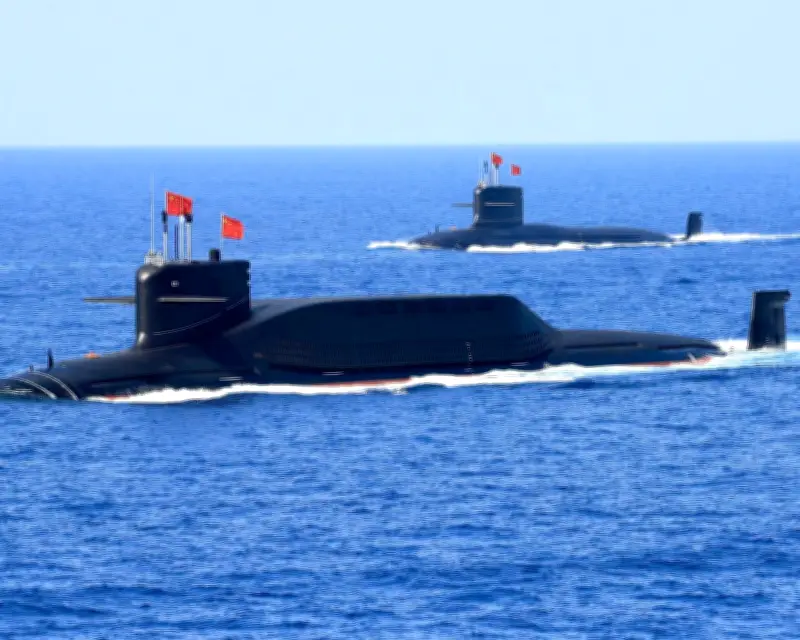
On Monday, a People's Liberation Army Navy submarine test fired a ballistic missile into the South Pacific nuclear-free zone, marking the second such test in two years. The timing coincided with Fiji becoming Australia's fourth formal treaty ally under the Ocean of Peace Alliance, a move that David Vallance, a research associate at the Lowy Institute, describes as 'provocation at best, outright coercion at worst.'
Test Details and Timing
The missile is believed to be a JL-3 submarine-launched ballistic missile (SLBM), capable of carrying multiple nuclear warheads and striking separate targets. With a range of approximately 10,000km, it could have been fired from a nuclear-powered ballistic missile submarine operating in the South China Sea. China operates six such submarines, with the capacity to build up to six per year at its Bohai shipyards, and a second shipyard in Shanghai has begun construction.
While China informed regional countries, including Australia and New Zealand, of the test, the notification came only hours beforehand, which Vallance argues 'hardly builds trust.' He notes that transparency about weapons testing should alleviate suspicion, but the lack of meaningful notice does the opposite.
Regional Implications
This test follows a Chinese naval task group's circumnavigation of Australia last year, which included live-fire exercises, and ongoing harassment of Australian patrol aircraft, helicopters, and naval personnel. Vallance asserts that these actions demonstrate China's increasing willingness to use military force to coerce states across the Indo-Pacific, aiming to stop Australia's legal passage operations in international waters and bolster China's South China Sea claims.
Since Mao Zedong's era, the PLA has carried out weishe (coercion), but under Xi Jinping, this strategy has expanded to preserve Beijing's 'period of strategic opportunities' and actively shape the region. This test is the latest evidence of more overt shows of force.
Official Responses
China's foreign ministry has asked regional countries not to 'overinterpret' the test, but Vallance calls this request 'hollow' given the lack of meaningful notification. He quotes China's ambassador to Australia: 'Rumours cease when people are truly well-informed, and facts speak louder than words.' However, he questions how demonstrating a nuclear-armed missile's reach illustrates Beijing's commitment to 'a path of peaceful development.'
Pacific nations, including Australia, have voiced their commitment to the Pacific as an ocean of peace. Vallance remarks, 'One wonders if China prefers pieces of shrapnel in the ocean.'