
Australia's Potential Military Contribution in Middle East Conflict
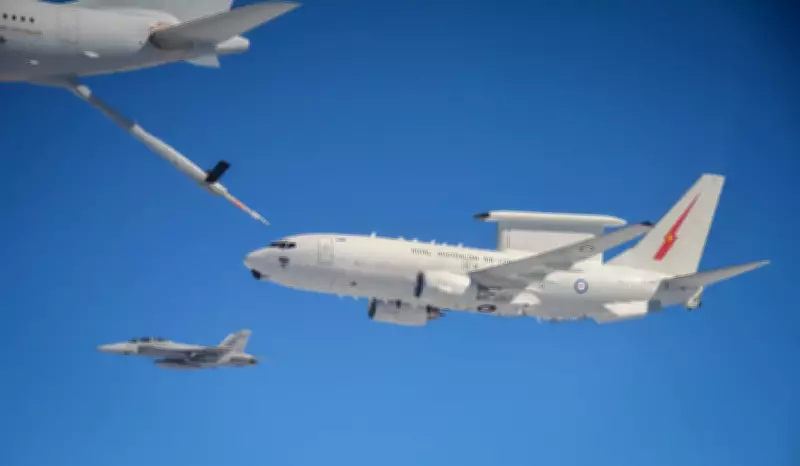
Australia's most probable military contribution to the ongoing US-Israel conflict with Iran would involve the deployment of the Royal Australian Air Force's Wedgetail airborne early warning and control aircraft. This advanced surveillance platform could provide critical support to Middle Eastern nations facing Iranian drone and missile attacks, according to defence analysts and government officials.
Government Confirms Assistance Requests
Foreign Minister Penny Wong has publicly confirmed that the Australian government has received formal requests to provide military assistance against Iranian attacks targeting neighboring countries. "Many countries which are non-participants have been attacked by Iran through this," Wong stated, adding that Australia is carefully considering how to respond to these assistance requests.
The national security committee of cabinet convened on Monday and is scheduled to meet again on Tuesday to deliberate on the specific nature of Australia's potential involvement. This comes amid growing regional tensions following Iranian attacks on various Middle Eastern nations.
Wedgetail's World-Class Capabilities
Retired Australian Army Major General Fergus McLachlan, who served in both Afghanistan and Iraq, identified the E-7A Wedgetail as Australia's most likely contribution. "It's a world-class capability," McLachlan emphasized, noting that the aircraft has previously demonstrated its effectiveness in Eastern Europe, where it monitored drone and missile movements heading toward Ukraine from bases in Poland.
The Royal Australian Air Force maintains six E-7A Wedgetail aircraft at Williamtown air force base near Newcastle. These sophisticated platforms could gather crucial intelligence about incoming Iranian drones, such as the Shahed models, and relay this information to interceptor aircraft for defensive operations.
Complications and Limitations
McLachlan highlighted a significant complicating factor for the Australian government: Wedgetail crews operating in the region would inevitably become aware of US and Israeli offensive operations against Iranian targets. "The government will be spending time making sure that the role of the Awacs is deconflicted from that offensive activity," he explained, referring to the need to separate defensive surveillance from offensive military actions.
While other RAAF aircraft like the EA-18G Growler, F/A-18F Super Hornet, or F-35A Joint Strike Fighter could theoretically assist with drone detection and interception, the government has not indicated these platforms are under consideration for deployment.
Clear Parameters of Engagement
Foreign Minister Wong has established firm boundaries for Australia's potential involvement, explicitly ruling out direct deployment of Australian Defence Force personnel into combat zones or contributions of ground troops. "This is not Iraq, and we are not the Howard government," Wong declared, emphasizing that the current administration would not ask Australians to accept deployment of military personnel into a ground war scenario.
Wong further clarified that the government has established clear parameters for any potential engagement, though specific details remain under cabinet discussion.
Current Australian Operations
The Australian Defence Force has already initiated Operation Beech as part of consular efforts to assist Australians stranded in the Middle East. This operation includes deployment of a RAAF C-17A Globemaster heavy transport aircraft and KC-30A Multi-Role Tanker Transport for contingency planning purposes.
Government officials continue to advise Australians to utilize commercial flight options for returning home, with dozens already evacuated from Qatar via bus transport to Saudi Arabia for regional departure. Prime Minister Anthony Albanese confirmed that three Australian sailors were aboard a US submarine involved in sinking an Iranian warship off the coast of Sri Lanka, resulting in significant casualties.
Domestic Political Reactions
The potential Australian involvement has sparked diverse political reactions domestically. Shadow Defence Minister James Paterson has requested official briefings on government plans, while the Greens party has expressed strong opposition to any military engagement.
Greens foreign affairs spokesperson David Shoebridge warned against "mission creep" and Australia becoming entangled in another prolonged conflict. The party has urged the Labor government to prevent intelligence from facilities like Pine Gap or other US bases in Australia from being utilized in the conflict.
Former Prime Minister Tony Abbott has taken a contrasting position, criticizing the government for what he perceives as insufficient support for US efforts. Abbott argued that destroying Iran's nuclear capabilities would make the world safer and expressed disappointment that Australia wasn't taking more practical action.
Broader Concerns and Opposition
International law scholars, former diplomats, and former intelligence officials have raised concerns that the war on Iran violates international law and risks escalating into broader regional confrontation with potential retaliatory attacks. Within the Labor party itself, grassroots activists from the Labor Against War group have publicly condemned the bombings and called for withdrawal of Australian support.
These activists have also pledged to advocate for immediate withdrawal from the AUKUS nuclear submarine agreement, reflecting significant internal debate about Australia's appropriate role in the conflict. The government continues to navigate these complex domestic and international considerations while determining its response to assistance requests from Middle Eastern nations.




