Australian Families Demand Restoration of Gaza War Cemetery Bulldozed by Israel
Relatives of Australian soldiers buried in the Gaza War Cemetery are demanding immediate restoration after the Israel Defense Forces bulldozed the site, causing what they describe as "industrial damage" to graves that have stood for over eight decades. The destruction has sparked international outrage and calls for accountability.
Historic Cemetery Flattened in Military Operation
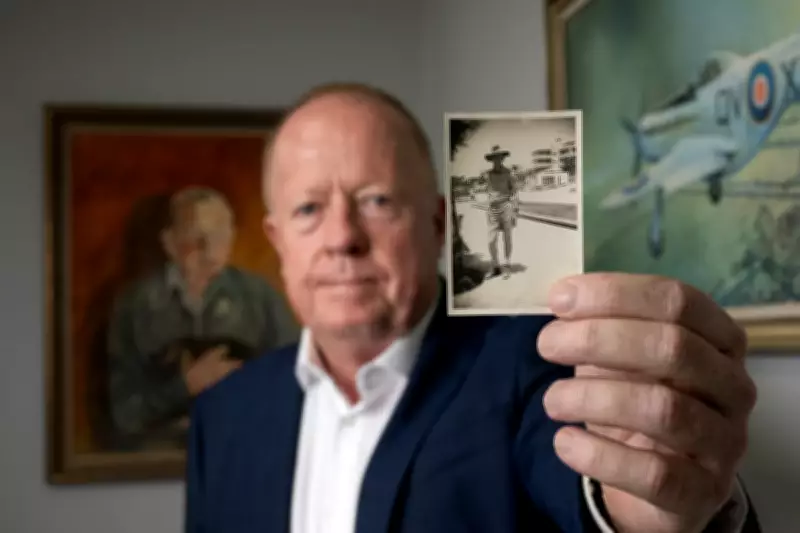
For 84 years, Acting Corporal Patrick William Cotterill rested peacefully in grave AD9 at the Gaza War Cemetery. The young Australian soldier drowned in July 1941 while attempting to save a fellow soldier struggling in the waters off Hirbiya beach in Gaza. He was buried alongside hundreds of other Australian, British, and Canadian troops in what Palestinian caretakers described as "one of the most beautiful archaeological sites in Gaza."
Satellite imagery obtained by The Guardian reveals systematic destruction of the cemetery, with the worst damage concentrated in the corner where Australian troops were interred. The Israel Defense Forces confirmed they excavated below graves to depths of 30 meters while targeting what they described as a Hamas tunnel, though they couldn't confirm whether any steps were taken to preserve human remains.
Families Speak Out Against Desecration
"It looks like it's flattened," said Daniel Cotterill, nephew of Patrick Cotterill. "It's a terrible thing, in the midst of lots of other terrible things." The Cotterill family has joined relatives of another Australian soldier, Albert Kemp, in demanding restoration and calling for Israel to provide safe passage for Australian officials to properly assess the damage.
Essam Jaradah, a Palestinian caretaker who tended the graves for generations, expressed profound sorrow: "I feel a sorrow like that of a child who has lost his mother. Pain and bitterness grip my heart over the cemetery, just as deeply as the pain of losing my home entirely."
International Pressure Mounts for Restoration
Australian Prime Minister Anthony Albanese raised the issue directly with Israeli President Isaac Herzog during recent diplomatic meetings. Herzog's office stated the president had "committed to checking the issue with the relevant officials and authorities upon his return to Israel."
The Returned and Services League of Australia confirmed through the Commonwealth War Graves Commission that the cemetery has suffered "significant damage." RSL Australia National President Peter Tinley stated they've received assurances that graves will be repaired as soon as safety permits, though ongoing conflict makes monitoring difficult.
A spokesperson for Australia's Department of Veterans' Affairs said the government was "deeply concerned" about "distressing" reports of the cemetery's destruction, emphasizing that "the Government has been clear with Israel about the importance these graves hold for Australians, and all Commonwealth veterans."
Calls for Immediate Action and Assessment
Daniel Cotterill articulated the families' demands clearly: "What I'd like to see, the moment it is safe enough to do so, I'd really like it to be restored to the way that it was." The families are pushing for concrete commitments from Israel regarding restoration timelines and access for Australian officials to conduct proper assessments of what Cotterill described as "industrial damage" to the historic site.
The Israel Defense Forces defended their actions, stating they were "forced to take defensive measures during military operations" when "terrorists attempted to attack IDF troops and took cover in structures close to the cemetery." They claimed operational measures were necessary "to neutralize identified threats" and ensure troop safety.