
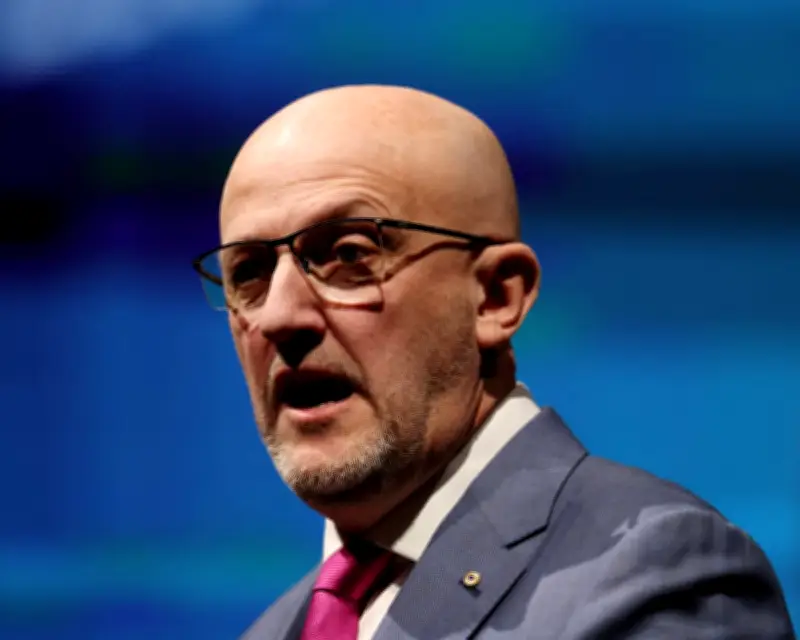
Australian Security Intelligence Organisation (ASIO) Director General Mike Burgess has revealed that an Australian citizen working as a senior intelligence officer for Iran orchestrated a firebombing in Bondi, while a former Australian resident in Iraq allegedly directed an attack on a Melbourne synagogue. The claims were made during Burgess's annual threat assessment speech on Wednesday night, which highlighted the escalating security threats facing Australia.
Homegrown Ties to Antisemitic Attacks
Burgess alleged that two attacks linked to the Islamic Revolutionary Guard Corps (IRGC) on Australia's Jewish community were directed by two individuals living offshore with strong ties to Australia. One, an Australian citizen based in Iran and a senior agent within a covert unit for the IRGC Quds Force, allegedly orchestrated the firebombing of Lewis' Continental Kitchen in Sydney's Bondi in October 2024. The other, a former Australian resident living in Iraq, was behind the attack on the Adass Israel synagogue in Melbourne in December 2024.
“I cannot name the two individuals tonight to protect ongoing investigations and related prosecutions, but I want them to understand this: we know who you are, we know what you've done, and we know who you work for,” Burgess said. “We assessed these individuals were seeking to covertly promote hatred, foster antisemitism and encourage violence against Iran's perceived enemies.”
Degrading Security Environment
Burgess warned that the anticipated crescendo of security threats by the end of the decade had already arrived, including December's terror attack at Bondi beach where 15 people died in an antisemitic shooting. “Our degrading security environment is characterised by concurrent, cascading and compounding threats,” he said. Among those threats were homegrown terrorists, foreign regimes targeting citizens, spies chasing details about the Aukus deal, and nation-states infiltrating critical infrastructure providers.
The underlying theme of Burgess's address was that social media is “amplifying and accelerating” an erosion of trust in institutions, promoting discord and heightening polarisation. “Whether online or in the real world, when intolerance is tolerated, when violent language and violent acts are left unchecked, they become normalised, reinforcing the impression they are acceptable and compounding the likelihood of further violence,” Burgess said.
Call for Tolerance and a 'Fair Go'
Burgess called on Australians who want a safer country to be more tolerant and give others a “fair go” to reduce tensions. “The tolerance of intolerance, the growth of grievance, the radicalisation of minors, the embrace of conspiracy … all these things require a whole of community response,” he said. He added that if more Australians embraced the ethos of a fair go, mutual respect and tolerance, the security environment would be several degrees lower.
Burgess also pointed to other examples of foreign interference, including coerced repatriations by at least five regimes. In one case, an individual faced a 10-year intimidation campaign by a foreign government to return and address unspecified corruption allegations, with family members detained and subjected to travel bans.
Espionage and Aukus Threats
Espionage remained a persistent threat, with foreign interest in gaining critical details of the Aukus pact. Burgess revealed that a foreign spy disguised as a consultant company employee obtained two reports from an Australian security clearance holder on Australia's relationship with Pacific neighbours before ASIO disrupted the operation. He said these examples occurred in just one week at ASIO, showing the agency's biggest challenge is cumulative. “I don't believe we can prioritise the major threats – you must deal with all of them,” Burgess said.




