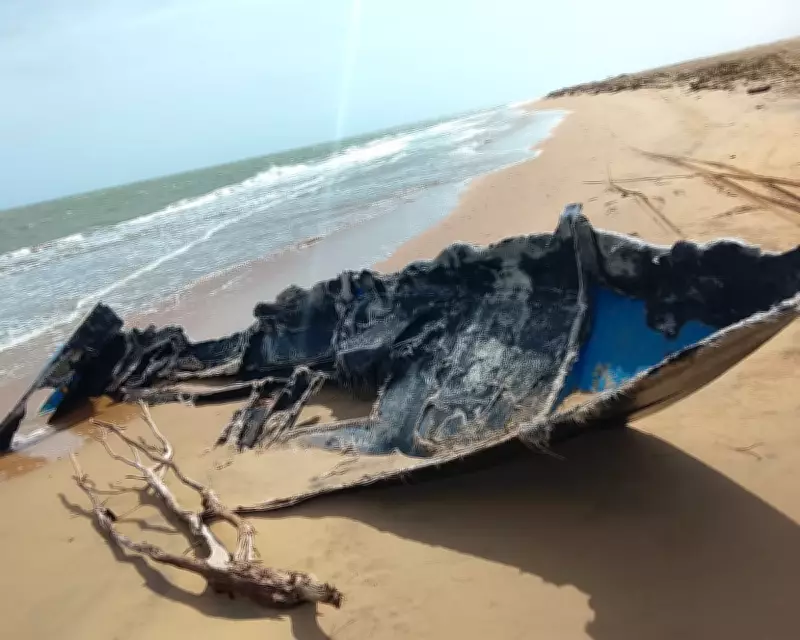
A five-month investigation has identified 13 previously unnamed victims of US military attacks on boats allegedly carrying narcotics in the Caribbean and eastern Pacific. The campaign has killed nearly 200 people, but the US has rarely identified its victims.
Investigation Reveals Victims from Impoverished Communities
The joint effort by 20 journalists, led by the Latin American Center for Investigative Journalism (CLIP), published the identities of 13 victims this week. All came from extremely poor communities across Latin America and the Caribbean, with some showing no involvement in drug trafficking.
“Despite the US claim that the strikes are fighting narco-terrorism, what is actually happening is that young people living in extremely precarious conditions, doing whatever work they can to support their families, are being targeted,” said María Teresa Ronderos, director and co-founder of CLIP. “The US is not taking down any Pablo Escobar or Joaquín ‘El Chapo’ Guzmán.”
Impact on Communities
The investigation highlights that the strikes have not reduced drug flow to the US but have devastated communities. “There are communities where they stopped fishing for several weeks – and if they do that, people go hungry – because they were terrified of being bombed,” Ronderos noted.
Of the 16 victims now identified, eight are Venezuelans, three Colombians, two Ecuadorians, two Trinidadians, and one from Saint Lucia. Among them are Luis Ramón Amundarain and Juan Carlos Fuentes, drivers from Güiria, Venezuela, who crossed to Trinidad and Tobago seeking work at a car wash. They were offered a job on a small boat journey on October 3, which was then bombed. Their widows told CLIP neither man was involved in drug trafficking, though the report suggests they may have been about to transport illicit cargo.
In several cases, victims were fishers with no drug trade links, such as a Colombian and two Trinidadians whose families have sued the US. Even those involved in the drug trade often turned to it out of poverty.
US Response and Criticism
Since the airstrikes began, the US has provided no evidence that any of the 194 victims were involved in drug trafficking. A US Southern Command spokesperson said all strikes were “deliberate, lawful and precise, directed specifically at narco-terrorists and their enablers.”
Ronderos argued that even if all victims were transporting drugs, “there is no death penalty for cocaine trafficking. So the fact that they were killed without even having the chance to defend themselves is deeply troubling.”
Brian Finucane, a senior adviser at the International Crisis Group and former US state department lawyer, called the boat strikes “a military spectacle to give the illusion of the administration doing something ‘macho’ about drugs.” He warned the killings risk being “normalised” amid other US military actions.
Local communities bear the burden, Ronderos said: “Whether those men were doing legal or illegal work, children were left without the person who brought food home, in families that were already extremely poor.”