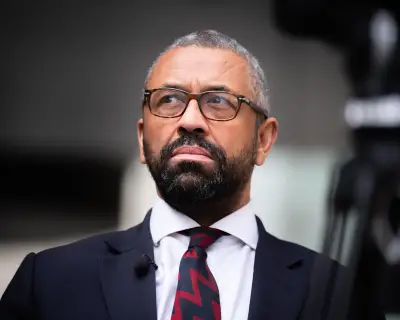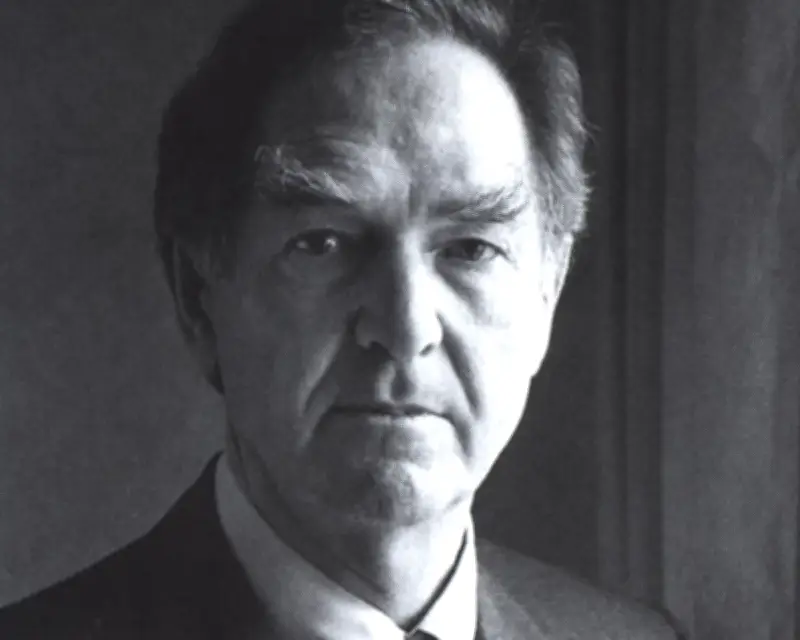
Michael Oatley, the MI6 officer who maintained a secret back channel with the Provisional IRA during the height of the Troubles, has died aged 90. His clandestine efforts, conducted over nearly two decades, are credited with helping to lay the groundwork for the peace process that culminated in the 1998 Good Friday Agreement.
Secret meetings and a pivotal encounter
Shortly before retiring in 1991, Oatley received a call from a trusted contact in Derry, businessman Brendan Duddy, who for almost two decades had kept open a secret line of communication between the British government and the IRA. Oatley, codenamed "Mountain Climber," maintained this relationship despite repeated denials by prime ministers of any talks with "terrorists."
In February 1991, Oatley traveled to Derry and, with Duddy and his wife Margo, went to a neighbor's house for dinner. The neighbor, Bernadette Mount, had previously driven IRA leaders across the border during the 1975 ceasefire. There was a knock at the back door, and in walked Martin McGuinness, the IRA's commander in the city. According to Peter Taylor's 2008 BBC documentary The Secret Peacemaker, Oatley and McGuinness talked by the fire for two hours. Oatley later described it as "rather like talking to a ranking British army officer of one of the tougher regiments, like the Paras or the SAS." He found McGuinness "a good interlocutor."

A back channel that changed history
This meeting was a pivotal moment, restarting a dialogue that eventually led to the peace process. After Oatley retired, he introduced his contacts to an MI6 successor. Oatley, who used coded language in calls with Duddy, repeatedly risked his life. At 6ft tall, erudite, and independent-minded, his appearance led some to describe him as a James Bond-type figure.
Oatley was born in London in 1935. His father, Sir Charles Oatley, was a physicist who developed radar during World War II and later pioneered electron microscopes at Cambridge University. His mother, Enid, was the daughter of the headmaster of Bedford Modern School. Michael, the younger of two sons, was educated at the Leys School and Trinity College, Cambridge. He completed national service in the Royal Navy from 1953 before graduating.
Career in MI6 and the Northern Ireland conflict
Oatley joined the Foreign Office in 1959 and was recruited into the Secret Intelligence Service (MI6), initially serving in African posts including Ghana and Uganda. Returning to Europe, he was posted to Dublin and then in 1973 to Northern Ireland at the height of the Troubles, under cover as assistant political adviser to Northern Ireland Secretary Willie Whitelaw. Oatley believed talks with the IRA leadership were more effective than violence. His predecessor, Frank Steele, had first established contacts with the IRA, leading to face-to-face talks in Chelsea in 1972, the worst year of the conflict with more than 470 deaths.
Oatley inherited Steele's network, including Duddy, a republican pacifist who became the key contact trusted by both sides. Their first success was helping deliver a longer IRA ceasefire in 1975-76, which eventually broke down after loyalist attacks. Oatley left Northern Ireland in 1975 for intelligence posts worldwide, becoming MI6 controller for the Middle East, controller for Europe, and director of counter-terrorism. The back channel was active again during the 1980-81 IRA hunger strikes in the Maze prison, despite Margaret Thatcher's public stance of no negotiations.
Post-retirement and legacy
After retiring in 1991, Oatley worked in private security with Kroll Associates, specializing in asset recovery, and led the hunt for Saddam Hussein's wealth. He also co-founded Ciex Ltd with another former MI6 officer, employed by the South African government in 1997 to recover misappropriated funds from the apartheid era. Oatley retained a keen interest in Northern Ireland. When the peace process faltered over IRA decommissioning in 1999, he wrote in the Sunday Times: "I have no doubt at all of [Gerry Adams's and Martin McGuinness's] commitment to finding a political way forwards ... Decommissioning is [portrayed] as the central issue. It is not. The true issue is politics or violence."

After Sinn Féin entered power-sharing government with the DUP in 2007, Oatley said he was "delighted" and "a happy man" to witness McGuinness become deputy first minister. Oatley was appointed OBE in 1975 and CMG in 1991. In 2017, he attended Duddy's funeral in Derry. He remained close to the Duddy family, serving as a director of their hotel company. He was a member of the Chelsea Arts Club and lived in Nunney, Somerset. He is survived by his second wife, Mary Jane Laurens, and his children from his first marriage to Pippa Howden.