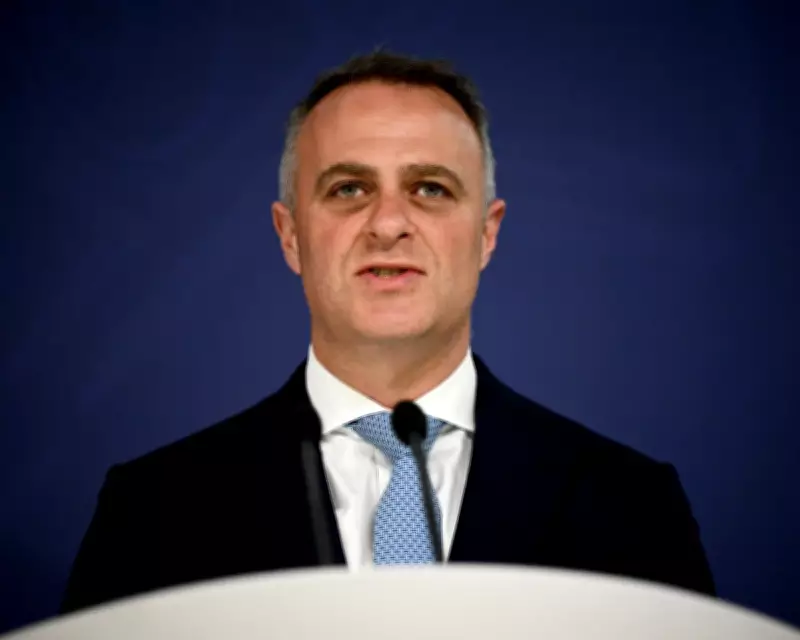
Shadow Treasurer Tim Wilson Stirs Controversy Over RBA's Inflation Strategy
In a bold move that has ignited fierce political debate, newly appointed shadow treasurer Tim Wilson has publicly criticized the Reserve Bank of Australia (RBA) for what he perceives as an insufficient emphasis on curbing inflation. Wilson's comments, made just two days into his role, have drawn sharp rebukes from government officials and union leaders, who accuse him of promoting an extreme economic ideology that could lead to higher interest rates and increased unemployment.
Wilson's Call for RBA Mandate Review Sparks Immediate Backlash
Tim Wilson signaled to media outlets that the opposition might review the RBA's legislated dual mandate, which requires the bank to balance two key objectives: maintaining inflation within a 2% to 3% target band and achieving full employment. Wilson argued that the RBA's "core purpose" should be to lower inflation, especially after an unexpected surge in price growth prompted the bank to hike interest rates earlier this month for the first time in two years.
Treasurer Jim Chalmers and Australian Council of Trade Unions secretary Sally McManus were quick to condemn Wilson's stance. Chalmers labeled it a "radical departure" from longstanding bipartisan support for the dual mandate, warning that it reflects an "extreme ideology" that could result in more job losses if implemented. McManus echoed these concerns, describing Wilson's suggestion as "disgraceful" and accusing it of aligning with big business interests that seek to suppress wages by maintaining a large pool of unemployed workers.

Wilson Clarifies Position, Insists on Supporting Dual Mandate
In response to the backlash, Tim Wilson clarified his position in an interview, stating that he "certainly supports the dual mandate." However, he maintained that the RBA is failing to deliver on this mandate by not placing enough emphasis on inflation control. Wilson pointed to the headline monthly inflation rate, which rose to 3.8% in the year to December from a low of 1.9% in June of the previous year, as evidence of the bank's missteps.
"They have got it wrong, and I think they've got it wrong in multiple periods where we've ended up in a situation where we've got inflation that has been led to be out of control," Wilson asserted. "Australia, to be blunt, doesn't have an unemployment problem presently. They've clearly misread inflation, so they're clearly not putting enough emphasis on inflation."
Economic Context and Broader Policy Implications
The unemployment rate remained steady at 4.1% in January, according to recent Australian Bureau of Statistics data. Opposition leader Angus Taylor, while not directly addressing whether the dual mandate should be scrapped, backed Wilson's argument that inflation is too high. Taylor emphasized the need for a strong focus from both the RBA and the government to reduce inflation and restore living standards.
In a separate development, Wilson also commented on tax policy, describing the 47% top marginal tax rate as "punitive" and a disincentive to work. He called for a "robust conversation" about tax settings to encourage risk-taking, such as starting small businesses, suggesting that lower taxes could incentivize positive economic behavior.
This controversy highlights the ongoing tensions in Australian economic policy, with Wilson's remarks sparking a broader discussion about the RBA's role and the balance between inflation control and employment goals. As the debate unfolds, stakeholders across the political spectrum are closely watching how these positions might shape future economic strategies and legislative actions.