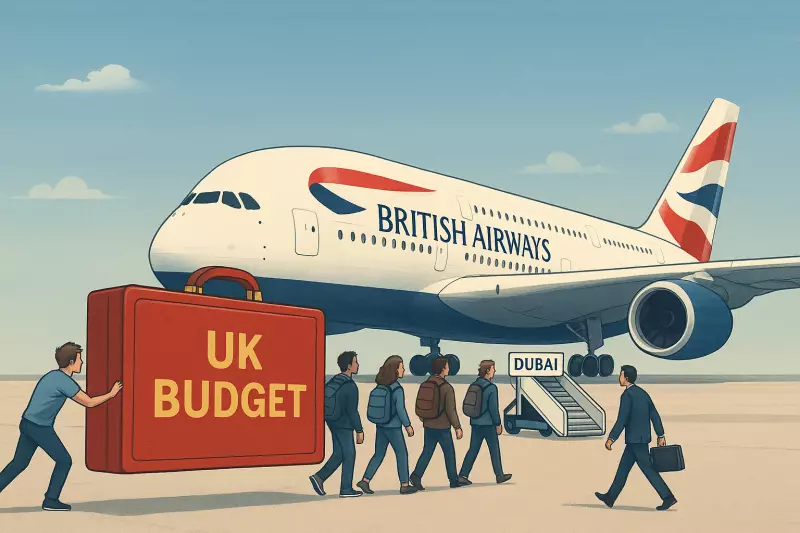
Britain is witnessing an unprecedented flight of wealth and talent, branded 'REXIT', in the wake of Chancellor Rachel Reeves's historic budget, which has raised taxes by billions and driven a record number of people and capital overseas.
The Budget That Sparked the Exodus
Chancellor Rachel Reeves's latest budget, delivered in late 2025, has been characterised by critics as a direct assault on workers and businesses. The fiscal package introduced a series of steep tax increases, including a new 'mansion tax' on properties valued over £2 million and an extension of the income tax threshold freeze for three years.
The budget also implemented caps on ISA and pension contributions made through salary sacrifice, alongside 2p rises on dividend, property, and savings taxes. The total tax hike amounted to £26 billion, purportedly to fund the removal of the two-child benefit cap—a policy the Labour Party previously deemed unaffordable.

A Historic Flight of Capital and People
The economic fallout has been swift and severe. According to data from Henley & Partners, 2025 has seen the largest single-year wealth exodus from the UK ever recorded, with an estimated $91.8 billion (approximately £73 billion) taken out of the country. Nations like the UAE, USA, Italy, Switzerland, and Saudi Arabia are the top beneficiaries.
This capital flight, dubbed 'REXIT' (Reeves' Exit), is mirrored by a dramatic surge in emigration. The Office for National Statistics estimates that long-term emigration for the year ending June 2025 reached 693,000. Crucially, this is not just a story of millionaires leaving.
Two-thirds of those emigrating are under the age of 35, with a net figure of 111,000 British nationals aged 16-34 leaving the country. High-profile figures like billionaire Lakshmi Mittal, Revolut founder Nik Storonsky, and Pimlico Plumbers' Charlie Mullins have relocated to more tax-friendly jurisdictions.
Economic Consequences and a Warning from History
The economic indicators following the budget paint a grim picture. Job vacancies have fallen by 115,000, and the unemployment rate has climbed to five percent. The Centre for Policy Studies warns that upcoming increases to the National Living Wage will significantly raise employment costs for businesses, with much of the increase being clawed back through taxation.
Opposition leader Kemi Badenoch has criticised the Chancellor's approach, contrasting it with the legacy of former Chancellor Nigel Lawson, who advocated for lower, simpler taxes. The income tax threshold freeze alone is projected to drag 920,000 more people into the higher tax rate by 2031, meaning one in four taxpayers will be paying at that level.
Critics argue that the Chancellor's strategy ignores the foundational economic principle, noted by Arthur Laffer, that beyond a certain point, higher tax rates actually reduce government revenue by stifling growth and encouraging avoidance.
The combined effect is a dual crisis: a drain of experienced wealth creators and a loss of the country's young, skilled workforce. As one entrepreneur noted, the damage is twofold—it's about both those leaving and those who now would not consider coming to the UK. The 'REXIT' phenomenon poses a fundamental challenge to the UK's future economic growth and competitiveness.