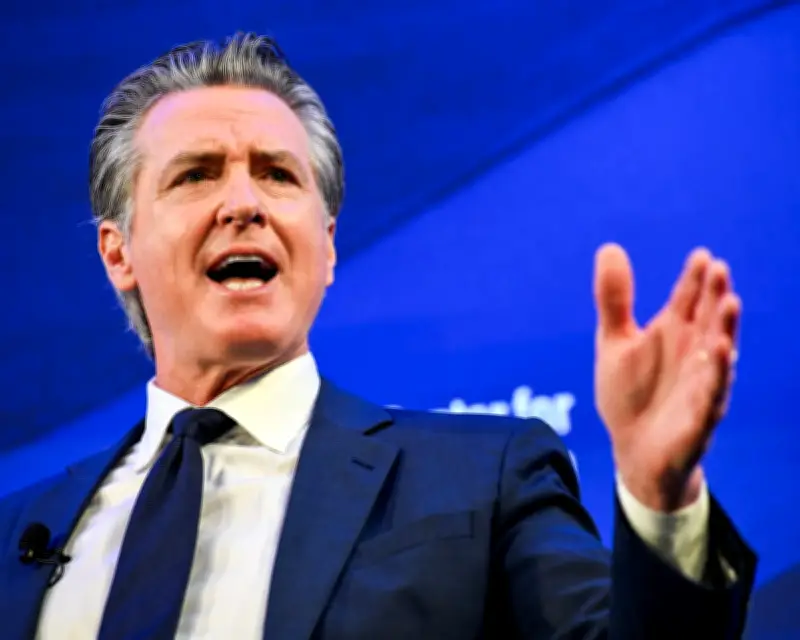
California Governor Gavin Newsom called for a national billionaires tax on Friday, proposing a federal minimum tax on individuals with a net worth above $100 million, while simultaneously opposing a similar ballot measure in his home state. Speaking at the Center for American Progress Ideas conference in Washington DC, Newsom also suggested the US government should own a stake in artificial intelligence companies.
Newsom's federal tax proposal
In a Substack post published on Friday, Newsom outlined a counterproposal to the California Billionaire Tax Act, a state ballot measure that would levy a one-time 5% tax on residents worth more than $1 billion. The state measure, backed by the Service Employees International Union-United Healthcare Workers West (SEIU-UHW), has garnered over 1.55 million signatures and aims to fund healthcare, education, and food assistance programs. However, Newsom argues that a state-level tax would be easily avoided by wealthy individuals who can relocate their assets to lower-tax states like Texas or Florida.
“Wealth is movable, and it shops for the state with the lowest taxes. The fight belongs at the federal level, where this broken system was created in the first place,” Newsom wrote. He emphasized that billionaires can “pick up and move” to shelter their income, making a state tax ineffective.

Opposition to California billionaire tax
Newsom strongly opposes the California Billionaire Tax Act, which has faced pushback from the state's richest residents and several prominent labor unions. “I understand the anxiety driving the wealth tax proposal in California. But I’m voting no because this measure dedicates almost all of the revenue it raises to a single category of state spending,” he wrote. Critics, including Google co-founder Larry Page, have threatened to leave California or cut ties with the state in response to the proposal.
The ballot measure was certified by California officials a day before Newsom's announcement, setting the stage for a contentious campaign. Newsom argued that a state-level tax would harm California's economy and drive away wealthy residents, undermining the very programs it aims to fund.
Broader economic vision
Newsom's federal proposal includes several key elements: a minimum tax on net worth above $100 million, making it illegal for the wealthy to borrow against stock portfolios tax-free, new inheritance tax rules to prevent a “permanent American aristocracy,” and raising corporate tax rates to pre-Trump levels. He also advocated for the US government to own a stake in AI companies, echoing a policy pushed by Senator Bernie Sanders.
“We need to ensure every American owns a stake in the future being built by AI through a national public equity fund that takes a major stake in the new economy,” Newsom wrote. Revenue from these measures could be used to retrain workers, fund universal childcare, make college free, and increase healthcare funding.
Political implications
Newsom, a potential 2028 presidential candidate, is positioning himself as a national leader on economic inequality. His proposals align with the Democratic party's populist left, marking a shift from his moderate stance on tax policy. The embrace of a wealth tax contrasts with Senator Elizabeth Warren's 2020 campaign, which struggled to gain traction with a 2% wealth tax proposal.
“Money buys influence, and influence rewrites the rules. Those rewritten rules funnel even more wealth to the few. Under this weight, democracy itself starts to buckle,” Newsom wrote. He called for an “economic reset for America,” emphasizing the urgency as artificial intelligence threatens to displace workers and concentrate wealth.