You could draw two seemingly contradictory conclusions from historian David Turner's new book on disability in the UK. First, that alarmingly little has changed for disabled people since the dawn of the modern era. The opening stories of 17th-century individuals having to prove their disability to receive parish aid to avoid starvation will resonate with anyone who has navigated the personal independence payment system. Second, that everything has transformed—from the closure of asylums to the rise of prosthetics to the eventual, belated codification of disability rights into law.
Reconciling Two Narratives
However, the central thesis of Disability weaves these two narratives into a coherent whole. Turner, a professor at Swansea University, demonstrates that while public and political attitudes toward disability have remained poor, disabled people have consistently challenged them, wresting progress from even the most adverse circumstances. This is not a story of rights and dignity granted from above, but of individuals and communities fighting to bring them into existence.
Incredible Personal Stories
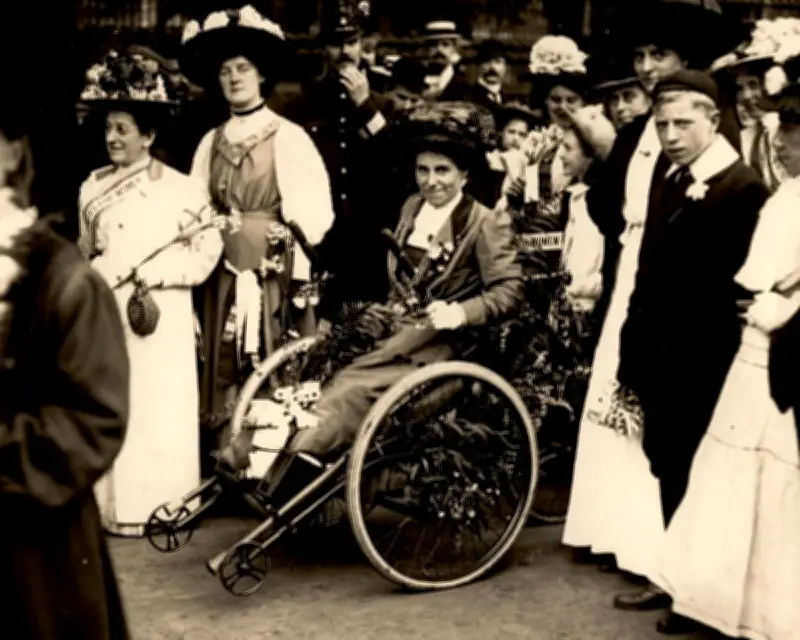
The book's sweeping perspective is anchored by remarkable personal accounts. We meet Duncan Campbell, an 18th-century aristocrat who became a sensation as a deaf psychic, leveraging myths about his disability to boost his fame at a time when deafness was equated with childishness and ineducability. Two centuries later, May Billinghurst, the infamous "cripple suffragette," used her custom hand-operated tricycle to break through police lines and commit acts of civil disobedience. Then there is Megan du Boisson, a 1960s housewife who campaigned for the first disability benefits awarded solely based on impairment, as existing schemes only covered those injured at work or in war, excluding nearly all disabled women.

What these individuals, and many others in the book, share is that they not only resisted the material limitations society imposed but also rejected the accompanying assumptions. The cumulative picture is not of a downtrodden minority but of a group defined by ingenuity, determination, and grit. This may be a new perspective for many nondisabled readers, but members of the disability community will recognize the attributes of themselves and their friends in people who lived centuries ago. It is refreshing to see this understanding of disability so well articulated in a book for a general audience.
Forgotten Heroes of Disability Activism
One sign of the devaluation of disability activism and history is that none of the personalities in the book are household names. May Billinghurst surely deserves to be mentioned alongside the Pankhursts. We should also know that it was Vic Finkelstein, an anti-apartheid activist who applied lessons from South Africa to the UK disability rights movement, who first articulated what became the social model of disability in the early 1970s, paving the way for activism that went far beyond demands for better financial support.
We should also know the name of 18th-century MP William Hay, whom Turner describes as the first person to write about disability as a personal identity. Similarly, Barbara Lisicki and Alan Holdsworth, the punk couple who launched the successful 1980s and 1990s campaign for the UK's first comprehensive disability rights law, deserve recognition. All fought loud battles with governments and societies that wanted them to remain silent. Hopefully, this book goes some way toward giving them the status and voice they deserve.
A Rejection of False Narratives
By showing how disabled people throughout history have rejected the narratives forced upon them, Turner also rejects another false narrative: that disabled people are passive recipients of both discrimination and help. This book tells a different, truer story: that we have always resisted and always fought to make things better.
Disability: A History of Resistance by David Turner is published by Bodley Head (£25).