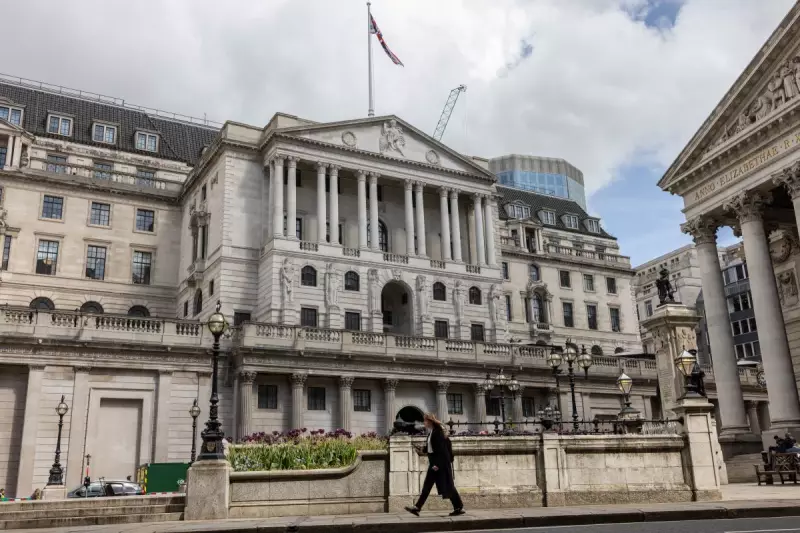
British consumers increased their borrowing significantly in November, brushing aside widespread speculation about potential tax rises in the upcoming Budget, according to new data from the Bank of England.
Credit Growth Defies Gloomy Forecasts
Official figures released on Monday, 5th January 2026, showed a notable jump in consumer credit. The total reached £2.1 billion in November, up from a revised £1.7 billion in October. This increase came as a surprise to many economists, who had predicted that weeks of uncertainty surrounding the Chancellor's tax plans would dampen sentiment and curb borrowing.
Forecasters had expected a rise of only around £1.1 billion, anticipating that low consumer confidence would lead households to postpone spending. The breakdown of the November figure shows that £1 billion was borrowed through credit cards, while other forms of credit, such as motor finance and personal loans, accounted for £1.1 billion.

Mixed Signals from the Housing Market
The Bank's money and lending report presented a nuanced picture for the property sector. While the number of mortgage approvals for house purchases experienced a slight dip, falling from 65,010 to 64,530, the net borrowing of mortgage debt actually increased to £4.5 billion.
Analysts at Capital Economics interpreted this data as pointing towards a potential acceleration in annual house price growth. They suggested it could rise from 0.6% in December to just below 5% within a few months, although they cautioned that high interest rates might temper the pace of any increase.
Limited Scope for a Spending Spree in 2026
Despite the stronger-than-expected borrowing figures, economists are not forecasting a major consumer boom in the year ahead. Alex Kerr, a UK economist at Capital Economics, stated that the data "suggests there isn’t much scope for a pick-up in consumer spending in 2026."
The consultancy forecasts that growth in real household disposable income will slow, leading to only marginal movement in consumer spending growth—from 0.8% in 2025 to 0.7% in 2026.
Elliott Jordan-Doak of Pantheon Macroeconomics offered a more optimistic view on the housing market, suggesting that "broader economic activity" would benefit from the clarity provided by the Chancellor's outlined tax measures. He also noted that the Bank of England's interest rate cut in December should support mortgage approvals going into 2026, pointing to a potential recovery for the housing market.
The data also indicated resilience in business lending. Total bank lending to firms grew by 5.3% year-on-year in November, a slight increase from October's 5.1% rate. Lending to larger businesses remained higher than for smaller firms, although lending to small businesses reached its highest level since July 2021.