
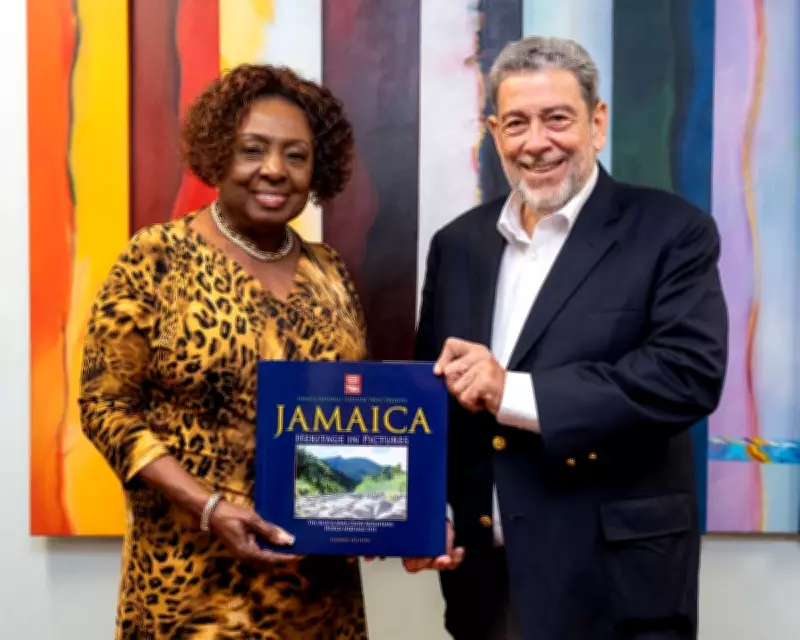
Ralph Gonsalves, the former prime minister of St Vincent and the Grenadines, has stated that it is “inconceivable” that reparatory justice from Britain for the transatlantic trade of enslaved Africans will not be “front and centre” of the next Commonwealth leaders’ meeting. Gonsalves was in Jamaica to discuss the next steps of the “alive and growing” movement advocating for reparations for centuries of chattel slavery.
Repair Campaign Leadership
The opposition leader recently became an elder and adviser for the Repair Campaign, a social movement for reparatory justice founded by Irish telecoms tycoon Denis O’Brien. Gonsalves was instrumental in establishing the Caribbean Community’s (Caricom) reparations commission, which supports Caribbean governments’ calls for recognition of colonialism’s lasting legacy and for reparative justice from former colonisers.
Growing Momentum
He emphasised that leaders of the 56-country Commonwealth grouping, which includes 33 Caribbean and African nations, cannot ignore the strong momentum towards a reparations resolution. Between the 15th and 19th centuries, over 12.5 million Africans were kidnapped, forcibly transported to the Americas, and sold into slavery. The issue dominated headlines during the last Commonwealth heads of government meeting (Chogm) in October 2024, when UK Prime Minister Keir Starmer resisted pressure to include reparations in the summit’s agenda.
Gonsalves said: “In the light of what transpired last time at Chogm, and the progress which has been made since then, and the activist agenda for the reparations movement, both in the Caribbean and Africa … it would be absolutely inconceivable that you wouldn’t have this being front and centre of the summit.”
International Developments
In March this year, the UK abstained from voting for a UN General Assembly landmark resolution that described chattel slavery as the gravest crime against humanity. The resolution passed with an overwhelming majority of 123 nations voting in favour; only the US, Israel, and Argentina voted against it. Before the Commonwealth meeting in Antigua and Barbuda in November, milestone events will be held across the Caribbean, Africa, and the UK, Gonsalves noted.
Upcoming Conferences
Ghana, which led the March UN resolution, will host a reparations conference in June to coordinate next steps for the global movement. In the run-up to a Caribbean leaders’ meeting in St Lucia in July, the prime ministerial reparations subcommittee, chaired by Barbados Prime Minister Mia Mottley, is likely to meet to update Caricom’s 10-point plan for reparatory justice. Gonsalves said there is strong regional commitment to addressing the legacies of colonialism.
Regional Actions
On Saturday, Trinidad and Tobago Prime Minister Kamla Persad-Bissessar, who played a key role in setting up Caricom’s reparatory commission, announced she would rename Nelson Island in honour of indentured immigrants from India sent there by Britain between 1866 and 1917, describing it as an “unjust and inhumane system” of human trafficking. Gonsalves praised Persad-Bissessar for her “very good work” during her first term, noting she supported the reparatory justice initiative when it was first brought to Caricom heads in 2013 and 2014.
During his visit to Jamaica, Gonsalves met Culture and Gender Minister Olivia “Babsy” Grange, who is leading Jamaica’s reparation movement. Last year, Caricom backed Jamaica’s decision to petition King Charles, its head of state, to request legal advice on reparations from the judicial committee of the privy council, the final court of appeal for UK overseas territories and some Commonwealth nations.
King Charles’ Role
Gonsalves expressed hope that the king would support the Caribbean and Africa, quoting King Charles: “this issue, reparations, is one whose time has come for a serious conversation.” He added, “I don’t know what side of the conversation he would end up on. Knowing him, I am satisfied that he would come [down] on the side of the conversation which is in the interest of the bulk of the people in the Commonwealth, and which will be a progressive direction.”




