
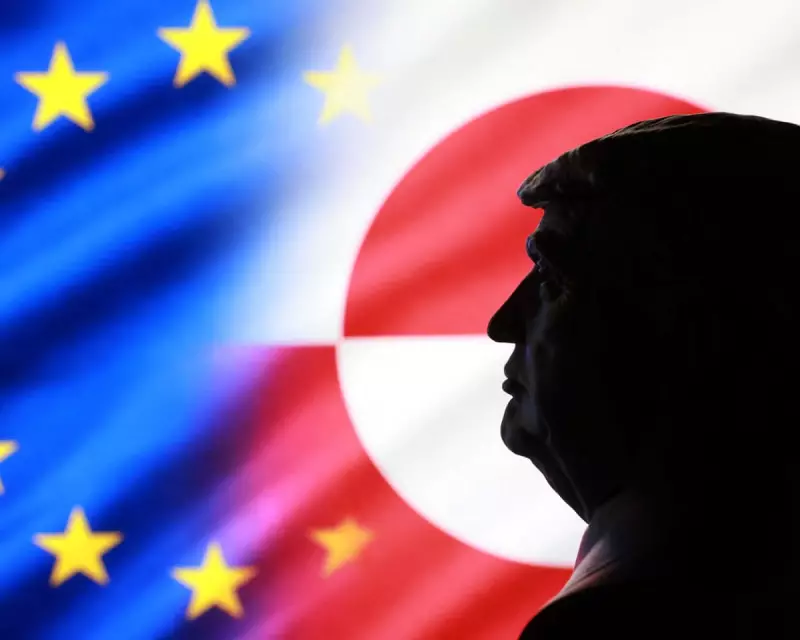
The spectre of economic disruption has returned as former US President Donald Trump threatens to impose steep new tariffs on European allies, a move analysts warn could be more damaging through the uncertainty it creates than the duties themselves.
The High Cost of Uncertainty
As the International Monetary Fund (IMF) has consistently highlighted, the unpredictable nature of Trump's trade policy inflicts its own unique toll. IMF Managing Director Kristalina Georgieva noted in October that under Trump, 'uncertainty is the new normal'. This environment directly discourages business investment, a painful lesson the UK learned during the prolonged Brexit negotiations following the 2016 referendum.
This latest threat emerges at a particularly sensitive time. Businesses across the UK and European Union had just begun to plan with a degree of confidence after high-profile trade deals with the US were ceremoniously signed last summer. The proposed tariffs would start at 10% in February, escalating to a punitive 25% by 1 June.
Threats to Growth and Stability
The potential economic fallout is severe and widespread. For the UK's Chancellor, Rachel Reeves, the timing is disastrous, threatening to undermine hopes for a modest economic recovery after a difficult year. The situation is equally precarious in Europe, with France grappling with a budgetary crisis and Germany hoping for growth after stagnation in 2025.
A critical domestic risk for the US is the threat of resurgent inflation. While the existing tariffs are already the highest since the Second World War, inflation has remained relatively contained. However, analysts warn that as pre-tariff stockpiles dwindle, companies will have less capacity to absorb costs, potentially forcing consumer prices upwards.
Higher inflation could halt further interest rate cuts by the Federal Reserve, directly contradicting one of Trump's primary economic objectives and undermining his prolonged pressure on Fed Chair Jerome Powell.
Market Jitters and the 'Taco' Effect
Financial markets now face a fresh test. Last year's threat of broad 'reciprocal' tariffs caused dramatic swings, leading to a significant policy reversal and the birth of the market acronym 'Taco' – 'Trump Always Chickens Out'. Since then, investors, particularly in equities, have appeared largely unmoved by Trump's volatile economic decisions.
While the AI boom continues to propel stock indices, there are signs of a 'flight to safety', including a significant rally in gold and silver prices. The central question is whether markets will again assume a 'Taco' outcome or finally price in the long-term costs of using tariffs as a geopolitical weapon against major allies, which could include structurally higher interest rates. As Georgieva succinctly warned, the advice for all is to 'buckle up'.




