
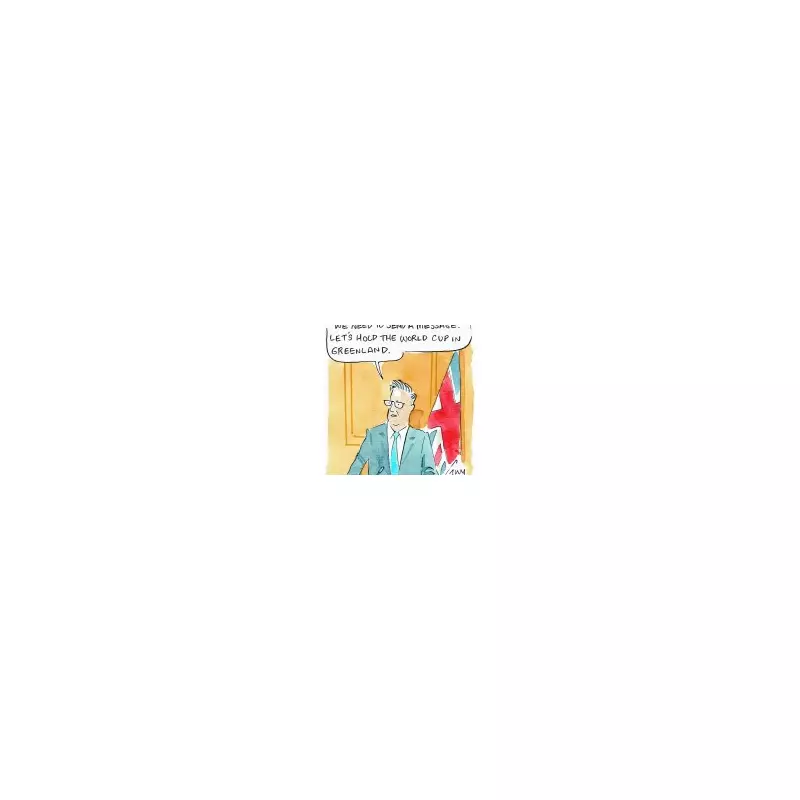
Labour leader Sir Keir Starmer has publicly challenged former US President Donald Trump over a contentious tariff threat involving Greenland, a move directly linked to concerns over the UK's cost of living. The political standoff, highlighted in a recent Metro daily cartoon by Guy Venables on January 19, 2026, underscores the international pressures facing British households.
The Political Cartoon and the Dispute
The situation was brought to public attention through Guy Venables's illustrative commentary in the Metro newspaper. The cartoon, published on that Tuesday evening, visually encapsulated the growing diplomatic tension. It followed reports that Starmer had directly questioned how to prevent the escalating row over Greenland from adversely impacting the financial pressures already felt by families across the United Kingdom.
Starmer's Stance Against Trump
In a firm demonstration of leadership, Keir Starmer has taken a stand against the economic policies threatened by Donald Trump. The core of the dispute centres on potential tariffs related to Greenland, which analysts fear could trigger a chain reaction affecting global trade and, consequently, domestic prices in the UK. Starmer's intervention focuses on pre-emptive damage control, seeking to insulate the British public from further economic strain.
The Labour leader's approach signals a proactive engagement in foreign affairs where they intersect with everyday economic security. By confronting the tariff threat head-on, he aims to position himself as a defender of national interests against volatile international manoeuvres.
Implications for the UK Cost of Living
This diplomatic row carries significant real-world consequences. Any imposition of tariffs in the fragile post-2020s economic landscape could disrupt supply chains and increase the cost of imported goods. For British consumers already grappling with high energy and food bills, such an external shock could be deeply felt.
Keir Starmer's central question—how to stop this dispute from hitting the UK cost of living—remains the critical issue. His public stance is likely an attempt to apply political pressure and advocate for stable, fair trade agreements that protect household budgets. The outcome of this confrontation could set a precedent for how future UK governments handle similar transnational economic threats.
As the situation develops, the interplay between international diplomacy and domestic fiscal policy will be closely watched. The Metro's cartoon serves as a poignant reminder of how global political events can swiftly translate into local economic concerns for millions of people.




