
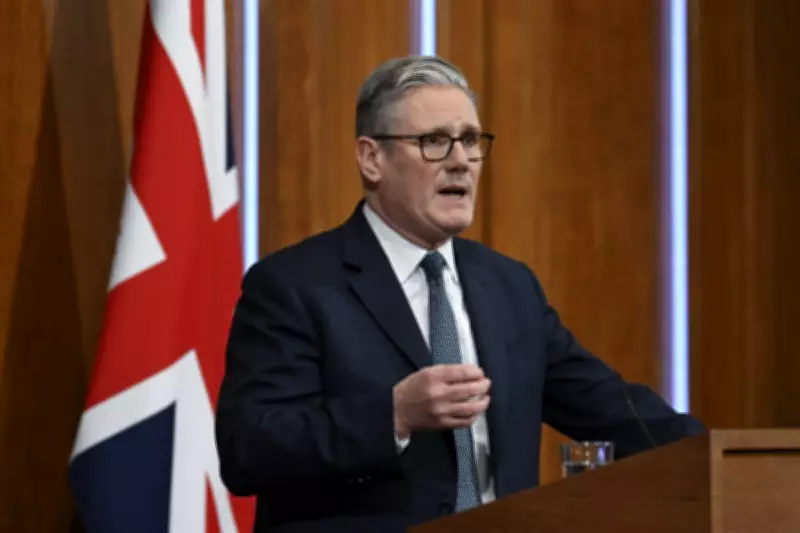
Sir Keir Starmer has publicly defended Labour's controversial proposal to enable the UK government to adopt new European Union single market rules without requiring parliamentary approval, stating unequivocally that this approach is in the "UK's best interest." This significant legislative move, set to be introduced after May, would utilize secondary legislation—often referred to as Henry VIII clauses—to implement fresh "Brexit reset" agreements swiftly, bypassing the typically lengthy parliamentary scrutiny process.
Opposition Outcry and Political Backlash
Tory and Reform UK officials have launched fierce criticism against the plans, branding them a "betrayal" of Brexit principles. Reform UK's Nigel Farage condemned the idea as "a backdoor attempt to drag Britain back under European Union control," while Shadow Business Secretary Andrew Griffith warned that parliament would be "reduced to a spectator," allowing the EU to dictate rules on behalf of the UK. Griffith further accused Starmer of seeking refuge in Brussels to divert attention from Labour's economic management failures.
Starmer's Rationale for Closer EU Ties
In response to the backlash, Sir Keir Starmer emphasized the necessity of a stronger, closer relationship with Europe in the face of global conflicts and economic uncertainty. He highlighted key areas such as defence, security, energy, and the economy, arguing that facilitating trade with the EU would reduce burdens on businesses and ultimately lead to lower prices, particularly for food and agricultural products. "Whatever we could do to get those prices down is a step in the right direction," Starmer asserted, positioning the proposal as a forward-looking measure a decade after the Brexit referendum.
Legislative Framework and Implementation Details
The new bill, scheduled for presentation after the King's Speech next month, will outline the initial agreements struck last year between the Labour government and the EU, covering food and drinks standards as well as energy markets. By enabling the use of secondary legislation, the government would gain the authority to agree on additional areas of single market access without undergoing parliamentary scrutiny for each individual decision. Starmer clarified that while the proposal must first receive parliamentary backing, the overarching goal is to streamline UK-EU relations and enhance trade efficiency.
Broader Implications for UK-EU Relations
This development marks a pivotal shift in post-Brexit dynamics, as Labour seeks to reset the relationship with the EU through expedited regulatory alignment. Proponents argue that it will bolster economic stability and competitiveness, while critics fear it undermines democratic accountability and sovereignty. The debate underscores the ongoing tensions between pragmatic economic integration and the political legacy of Brexit, setting the stage for intense parliamentary battles in the coming months.




