
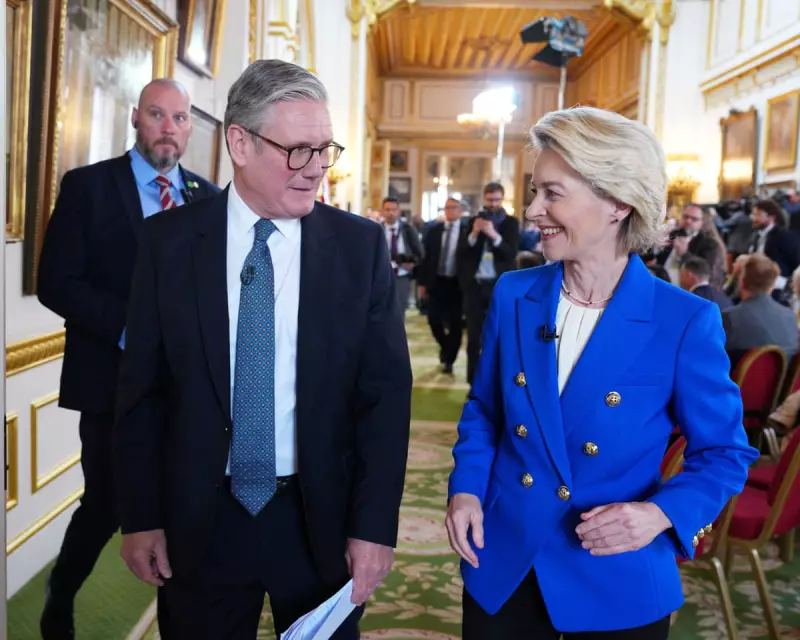
Prime Minister Keir Starmer is seizing a historic chance to reshape Britain's fractured relationship with the European Union, with a new legislative push offering the first concrete steps to mend the economic damage of Brexit.
The Legislative Foundation for Change
Reports indicate the government is preparing a bill that would grant ministers the power to align UK trade rules with those of the EU. This legislation, with both practical and symbolic weight, is designed to implement long-trailed agreements. Nearly three years after proposals were first outlined by the cross-party UK Trade and Business Commission, this move signals implementation is finally within reach.
The most immediate targets are a deal on food standards and animal welfare, known as an SPS agreement, and an energy trading pact. The SPS deal could ease pressure on supermarket prices, while closer energy cooperation might lower bills by allowing more efficient trade in volatile markets. Despite commitments made at the UK-EU summit in May 2024, progress on these fronts has been glacial.
Beyond the Basics: The Next Phase of Cooperation
While food and energy agreements are crucial, they alone will not define success. The promised return to the Erasmus+ student exchange scheme in 2027 is welcome, but experts argue a broader youth mobility scheme is still needed. More urgent, however, is the question of UK access to the EU's €150bn rearmament fund, known as Safe.
At a time of heightened geopolitical tension, with war in Ukraine and uncertainty over US commitment, the failure to agree on closer defence investment cooperation is seen by many as absurd. Securing clear timelines on these four pillars—food, energy, youth mobility, and defence—would mark a successful end to the initial phase of Labour's post-Brexit reset.
The Case for Deeper Economic Alignment
Starmer has hinted his ambitions extend beyond these initial fixes, dismissing a customs union as insufficiently transformative. Research by Frontier Economics for the campaign group Best for Britain suggests the real economic prize lies in deeper alignment.
Proposals for mutual recognition of industrial standards and professional qualifications, alongside UK accession to the pan-Euro-Mediterranean convention, could boost GDP growth by around 2%. Notably, this growth would be felt most strongly outside London and the south-east, particularly in the Midlands, Yorkshire, and the north-east.
Critics will argue about the cost of closer ties, but proponents point to the heavy price of the status quo. The House of Commons Library estimates Brexit has wiped approximately £90bn a year from the public finances. The meeting between Starmer and European Commission President Ursula von der Leyen at Lancaster House on 19 May 2025 underscored the shared political will to move forward.
The path charted by Starmer's government acknowledges that any closer cooperation requires accepting shared rules in agreed areas, akin to Switzerland's model. Yet, as global tensions rise and the economic toll of divergence becomes ever clearer, the argument is shifting. For many, closer UK-EU cooperation is no longer just a possibility but an urgent economic and security necessity.




