
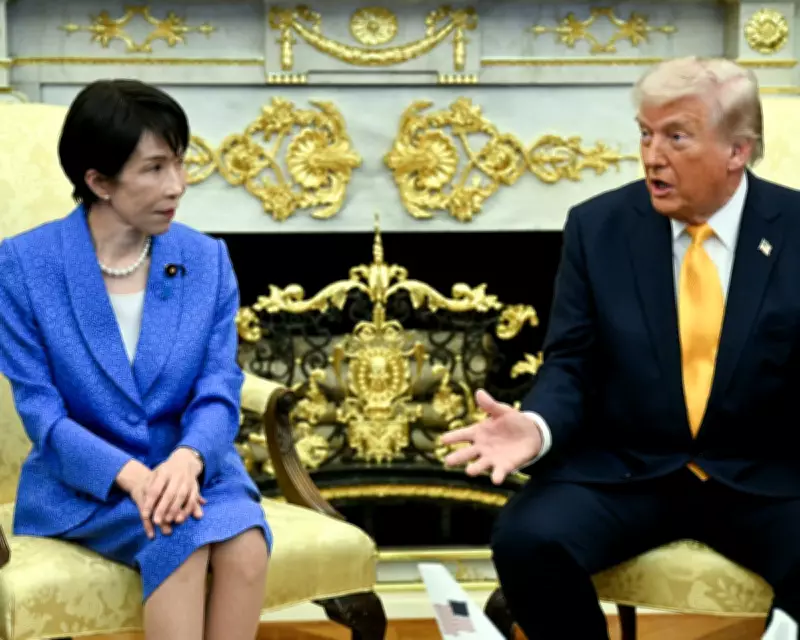
When Donald Trump hosted Japanese Prime Minister Sanae Takaichi last month, he made a gratuitous reference to Pearl Harbor, underscoring his tendency to undermine longstanding alliances. The US president has done more than anyone to demolish the postwar global order, a trend that is accelerating as other nations adapt to a shifting strategic environment.
Signs of Alliance Strain
This week alone, Polish Prime Minister Donald Tusk questioned whether the US would remain loyal to Nato if Russia attacked. A Pentagon memo reportedly suggested suspending Spain from Nato and reviewing support for the British claim to the Falkland Islands. Additionally, a report indicated that US officials believe munitions have been depleted so rapidly in Iran that it jeopardizes contingency plans to defend Taiwan against a Chinese invasion.
Germany's Military Shift
Germany has published its first military strategy since the end of World War II, outlining plans for significant rearmament and recruitment. While the country emphasizes taking on more responsibility within Nato, it is also defining its national interests more clearly. Nato was famously intended to keep the Americans in, the Russians out, and the Germans down. Now, with the US threatening exit and Russia at the door, allies are urging Germany to step up, despite concerns over the popularity of the Alternative for Germany party and its sympathy for Moscow.
Japan's Defense Evolution
Japan has relaxed its export rules for lethal weapons, a move seen as a direct challenge to its postwar pacifism. Conservatives have long sought revision of the 1947 constitution, and Prime Minister Takaichi has seized the opportunity. Japan is already becoming more like a normal military power, committed to doubling its arms spending to 2% of GDP by 2027. Major protests reflect domestic concern over this shift, as well as fears of being drawn into US wars. China and South Korea have expressed anger, believing Japan has not adequately atoned for wartime atrocities. However, Takaichi and South Korean President Lee Jae Myung have continued a bilateral thaw, as both nations depend heavily on US security and watch China's growing might and North Korea's nuclear expansion.
Broader Implications
As World War II fades from living memory, the fear of new conflict looms. While Trump hammers relationships, other leaders seek to strengthen partnerships. Tusk, visiting Tokyo and Seoul, described South Korea as Poland's most important ally after the US. Politicians recognize that security must be built on diplomacy as well as defense budgets, but acting on that insight, especially with neighbors, remains challenging.




