
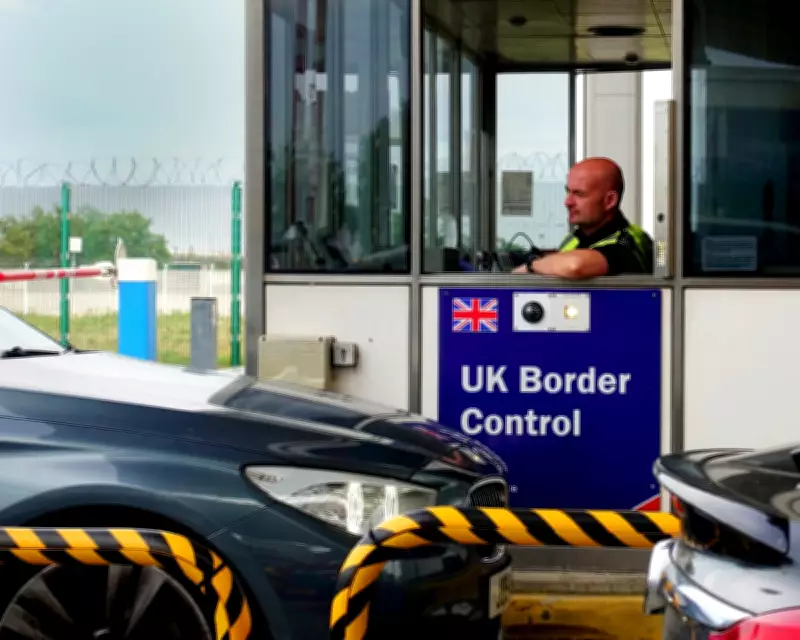
Dual Nationals Confront £589 UK Entry Fee Under New Home Office Rules
In a controversial move that has sparked widespread criticism, dual nationals traveling to the United Kingdom without a British passport will now be required to pay a hefty £589 for a "certificate of entitlement" to gain entry. This policy, set to take effect from 25 February, has been denounced as exploitative and poorly conceived, with many arguing it unfairly targets individuals who hold citizenship in multiple countries.
Personal Stories Highlight Policy Flaws
Prof Carine Ronsmans, a Belgian citizen who has worked in the UK for 32 years, exemplifies the unintended consequences of this rule. After obtaining British citizenship post-Brexit to secure her residency rights and voting privileges, she now faces a significant financial burden. Without a British passport, she must apply for the costly certificate to visit her ailing 96-year-old father in Brussels, a requirement that would not apply if she had remained solely a Belgian national.
"Who would have thought that obtaining British citizenship would prevent me from travelling freely between the UK and Belgium?" Ronsmans lamented, highlighting the irony of a policy that penalizes those who sought to integrate more fully into British society.
Comparative Costs and Bureaucratic Inconsistencies
The new fee has drawn sharp comparisons to international standards. For instance, while a French national can obtain an Electronic Travel Authorisation (ETA) for £16 to enter the UK, a Franco-British dual national without a UK passport is barred from this cheaper option and must instead pay the £589 certificate. This discrepancy has been labeled as nonsensical by critics like Michael Bulley, who resides in France and points out that dual nationals are legally entitled to the same rights as single nationals.
Further criticism comes from Dr Peter R King in Calgary, who notes that similar systems in countries like Canada charge only C$7 (approximately £4) for equivalent authorizations, making the UK's £589 fee appear exorbitant and unjustified.
Financial and Logistical Burdens on Citizens
For individuals like Reini Schühle, a German national living in the UK since the 1970s, the policy adds insult to injury. After paying £1,300 for British citizenship, Schühle now faces an additional £589 fee for the certificate, which is only valid for the duration of her current German passport. This has led many to question the logic behind the pricing, with Dr Michael Paraskos of London accusing the Home Office of profiteering, given that a paper passport costs only £94.50 to process.
The rule change forces dual nationals into a difficult choice: incur high costs for the certificate or apply for a British passport, which may require surrendering their other passport temporarily, disrupting travel plans and personal connections.
Broader Implications and Public Dissatisfaction
This policy is seen as part of a broader trend of restrictive immigration measures post-Brexit, contributing to what some describe as an "unthinking, mean-minded" approach by the Home Office. The requirement not only impacts travel but also undermines the benefits of dual citizenship, potentially deterring future applications and fostering dissatisfaction among residents.
As the implementation date approaches, affected individuals and advocacy groups are calling for a reevaluation of the fee structure and greater transparency in policy-making to avoid further alienation of dual nationals who contribute significantly to British society.




