
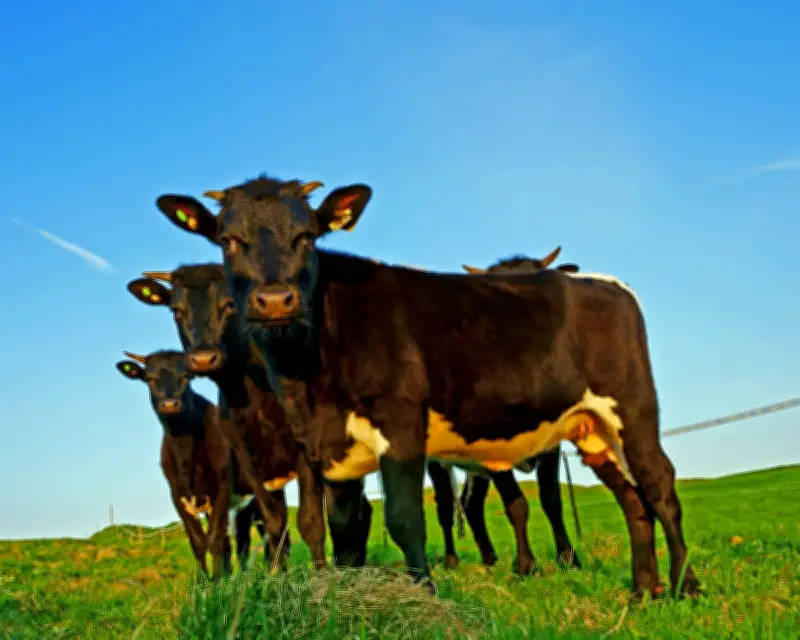
British farmers are warning that domestic food production could become a niche product for the wealthy as post-Brexit trade deals and rising costs push their incomes to the brink. Liz Webster, who farms 647 hectares in Wiltshire, says the price for her beef cattle has dropped by about £400 per animal due to a flood of cheaper meat from Australia, a result of new trade deals signed since the UK left the European Union. With input costs for feed, energy, and fertiliser soaring, farmers are struggling to compete.
“It’s just inevitable that if it continues, British food will disappear, unless it’s niche, appealing to a particular wealthy market, because in the mainstream supermarkets British food won’t be able to compete,” Webster said.
Brexit's Impact on Farm Exports and Incomes
A study published last year found that UK farm exports to the EU, the largest market, fell by nearly half (47%) in quantity and 35% in value, with the variety of exports also reducing by a third. Separate analysis by the National Farmers’ Union (NFU) earlier this year showed poultry exports down 38%, beef exports down 24%, lamb exports down 14%, and dairy exports down 16%. A 2023 study estimated Brexit added £7bn to UK food prices.
Tom Bradshaw, president of the NFU, said: “There’s been so many global challenges, to try and decipher how much is down to leaving the EU and how much down to global turmoil is difficult. But we always warned that [the issue with Brexit] wasn’t going to be the immediate impact, it was sort of a death by a thousand cuts, a slow burn, and that’s exactly what we’re now seeing.”
Three Major Changes from Brexit
Brexit brought three massive changes to British farming: withdrawal from the EU’s Common Agricultural Policy (CAP), which provided subsidies since the mid-1970s; new trade policies allowing imports produced to lower standards; and trade friction with the EU, the UK’s biggest food export market. Additional challenges include changes to environmental and animal welfare regulations, visa difficulties for seasonal workers, and increased paperwork.
Webster, who founded the campaign group Save British Food, called Brexit “the ultimate in shooting ourselves in the foot.” She said: “It’s dire for farms, but it’s mostly dire for the British people because it means they’re being forced to eat food which is bad for their health and it leaves us exposed in terms of national [food] security.”
Government Response and Subsidy Reforms
The government says 65% of food eaten in the UK is still grown domestically. Farming Minister Stephen Morgan said: “Brexit has been terrible for farming and even the Tories admit they made it worse by selling farmers down the river in bad trade deals. This Labour government is backing British farmers: cutting millions in red tape through a new EU agreement, securing a landmark £800m Gulf trade deal, and delivering a record £11.8bn farming budget.”
The most tangible effect has been the reform of subsidies, replacing CAP land-based payments with Environmental Land Management Schemes (ELMS), which require farmers to protect nature, maintain air and water quality, and provide wildlife habitats. However, delays, revisions, and frequent ministerial changes have hampered implementation. The farm budget for England alone is about £2.3bn per year, roughly the same as before Brexit, but not adjusted for inflation. Only about half of English farmers currently receive payments.
Trade Friction and Environmental Concerns
Trade friction with the EU has hit small producers hard. Tom Lancaster, head of land, food and farming at the Energy and Climate Intelligence Unit, said: “It’s been more significant for farming and food than for other sectors, particularly those wanting to trade livestock products from the UK into the EU market. It’s become much harder, particularly for smaller producers who can’t really afford the sort of haulage costs of having to send a small load.”
Exports of seed potatoes were banned, shellfish sales suspended, and the market for bull semen dried up. The Labour government’s promised reset may ease some issues, but Lancaster noted: “There’s a live debate at the moment over who the winners and losers will be from the realignment with the EU.”
The Wildlife Trusts this week reported that the promised “green Brexit” has not materialized. Matthew Browne, head of public affairs at the Wildlife Trusts, said: “We were promised a green Brexit, but what we got was a greyer UK. Brexit freedoms have been used to attack the laws that help nature and people flourish.” Vicki Hird, strategic lead on agriculture at The Royal Society of Wildlife Trusts, added: “We are importing more organic food than ever, instead of growing it – that’s a bit mad.”




