
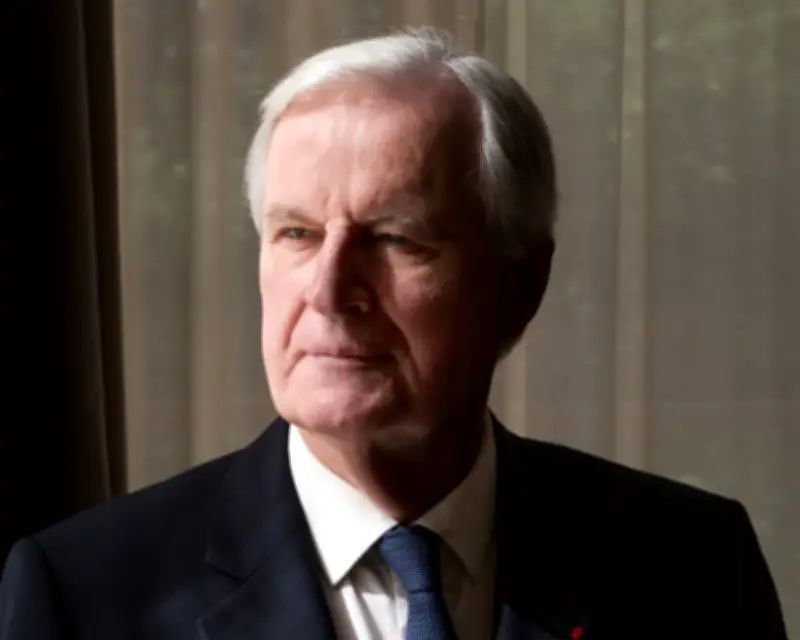
Michel Barnier, the EU's former chief Brexit negotiator, has stated that the United Kingdom could retain its special pre-Brexit terms if it decided to rejoin the European Union. In an exclusive interview, Barnier claimed it was becoming increasingly evident to the British public that they would be stronger within Europe.
Special Terms Possible
Speaking ahead of the 10th anniversary of the Brexit referendum, Barnier said he saw no obstacle to the UK keeping the pound sterling and remaining outside the Schengen passport-free travel area upon rejoining. This directly contradicts suggestions from some authoritative figures, including Poland's foreign minister, that the UK might face stricter conditions for re-entry.
Barnier's comments are likely to bolster campaigners advocating for the UK's return to the EU. Polling indicates that support for rejoining is higher when the previous terms are preserved.
EU Treaty Obligations
Under EU treaties, all member states are expected to adopt the euro, except Denmark, which has a permanent opt-out. New members are also legally required to join the Schengen area once they meet technical and security criteria. However, Barnier argued that the UK could secure exemptions, citing existing precedents.
He stated: "I am speaking about Schengen, I am speaking about the single currency: there are other member states who are not in them. It is perfectly possible to have opt-outs in these fields."
Five of the 13 countries that joined the EU since 2004 have yet to adopt the euro, and the treaties do not set a specific timeline for euro adoption. Ireland is the only EU member with an official opt-out from Schengen.
Rebate and Negotiations
Barnier declined to comment on whether the UK could retain the rebate negotiated by Margaret Thatcher, which reduced Britain's budget contributions. He emphasized: "The DNA of the EU is solidarity that the more developed country helps the other… We will see if the UK decides to ask to join the EU. It will be a choice and it will be open to negotiation."
Barnier is scheduled to attend a conference in London on Tuesday marking a decade since the Brexit vote. The next round of UK-EU "reset" talks is set for 22 July in Brussels, following delays.
Brexit's Impact
Senior EU diplomats have warned that momentum is waning in the talks, with the UK resisting calls to restore lower pre-Brexit tuition fees for EU students as part of a youth exchange deal. Barnier, who led four years of negotiations culminating in the 2020 trade deal, remains convinced that leaving the EU was a mistake, with evidence mounting daily.
Referring to the UK's sluggish economic growth and contentious immigration debate, Barnier said: "It would not be fair to say that the problems of the UK today are due to Brexit but what I am sure of is that all these problems are more difficult because of Brexit."
He noted that the government's aim for closer economic ties with Europe outside the EU remains problematic due to the rejection of free movement of people.
Far-Right Concerns
With France facing a potential far-right president in the next election, Barnier said the EU cannot offer flexibility on frictionless trade for fear of emboldening nationalists elsewhere. When asked if deeper trade relations were possible given Keir Starmer's red line on free movement, he replied: "Never give any argument to the far right in France or elsewhere."
On the question of whether the UK would rejoin within his lifetime, the 75-year-old said: "I don't know the length of my life. I think day after day the British people will see in the current world, that it is more dangerous, more fragile, more unstable, that we cannot be alone."
Polling Data
Recent YouGov polling shows 57% of Britons believe leaving the EU was wrong, including 23% of Leave voters. While 55% support rejoining, that drops to 35% if the UK must accept standard terms, with 43% opposed.
Barnier, who may run for the French presidency as a centrist unity candidate, proposed a new European council for defence and security that would include the UK, Ukraine, and Norway. This body would cooperate on military initiatives and disruptive technologies, potentially with joint borrowing.




