
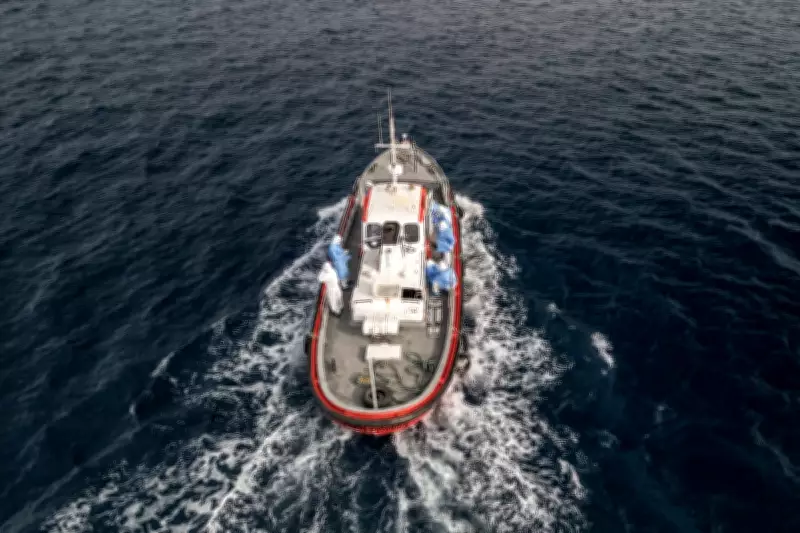
Crew members wearing hazmat suits were seen on a boat heading toward the port from the cruise ship MV Hondius off Cape Verde on Wednesday. The outbreak of hantavirus on the Dutch cruise ship has exposed major gaps in the US public health system, experts warn, signaling a worrying trend for stopping this outbreak quickly and preparing for a potential pandemic of a more widespread pathogen in the coming years.
Risk to the General Public Remains Low
Passengers and their close contacts are at risk of hantavirus and need to follow public health guidance, but the danger for most people is near zero, officials and scientists say. Experts expect more cases in this outbreak to be identified, but they emphasize that a hantavirus pandemic is highly unlikely. Maria Van Kerkhove, director of epidemic and pandemic management at the World Health Organization (WHO), stated at a briefing on Thursday: "This is not Covid, this is not influenza. It spreads very, very differently."
WHO Response Hampered by US Absence
The WHO has been coordinating a response with several countries, but the US, under President Trump, pulled out of the organization soon after taking office. US leadership has been conspicuously absent in the global hantavirus response, experts say. While hantavirus does not have pandemic potential, it serves as a warning sign that cuts to US capacity have severely limited the ability of officials and scientists to track and understand pathogens, with troubling implications for rare outbreaks and pandemic preparedness.
Current Case Numbers and Transmission
There are now three suspected and five confirmed cases of Andes virus, a type of hantavirus typically spread by rodents but sometimes transmitted through close, intimate contact. Three people have died, and three have been hospitalized, including in intensive care, though those patients are showing signs of improvement. One patient, a Dutch flight attendant, has tested negative for Andes virus, according to Inside Medicine.
Misinformation and Lack of Communication
In the absence of trusted information, misinformation about the outbreak is swirling, including fears of another pandemic. The "radio silence" from officials is one of the most concerning aspects for Boghuma Titanji, an infectious disease physician at Emory School of Medicine, because it fuels public anxiety. The US Centers for Disease Control and Prevention (CDC) has not held a briefing or created a public resource page for hantavirus, a significant departure from typical US outbreak communication, Titanji said.
CDC Response and Staffing Cuts
On Friday afternoon, CNN reported that the CDC was dispatching staffers to meet the ship in the Canary Islands and had made plans to escort American passengers back to the US aboard a charter flight. A separate CDC team was sent to Nebraska for quarantine. However, the US Department of State is now leading the US response, according to the first and only CDC press release on the issue, sent on Wednesday evening. This move is highly unusual, as the CDC typically leads health coordination. The CDC has suffered body blows under Trump, with staff layoffs, key posts left vacant, and research heavily politicized and slashed.
Laboratory Capacity Concerns
Lab staff have been gutted, and it is unclear if the US has tests and lab capacity for hantaviruses. States cannot send samples to the CDC for orthopoxvirus testing because that division has been temporarily paused, and labs can no longer test for leishmaniasis. In April, rabies testing at the CDC was also temporarily halted. Research on virology has come under intense political scrutiny, with an executive order to curb research on viruses and sweeping cuts by the National Institutes of Health.
Global Coordination and Lessons from Argentina
The WHO is focusing on human-to-human transmission in this outbreak, which remains limited to close contacts. In late 2018 and early 2019, a similar outbreak in Argentina saw 34 positive cases and 11 deaths. Abdirahman Mahamud, infection prevention control specialist at WHO, said: "If we follow public health measures and the lesson we learned from Argentina, we can break this chain of transmission." Passengers from 12 countries, including the US, disembarked before the outbreak was discovered, making aggressive contact tracing critical.
Public Trust and Future Preparedness
Given misinformation and mistrust in officials, it remains to be seen how closely people will follow health guidance and how willing authorities will be to implement measures after the Covid backlash. Bill Hanage, professor of epidemiology at Harvard, said: "Everything we know indicates this is controllable, but how long it takes depends on the appetite for control." The WHO's director-general, Tedros Adhanom Ghebreyesus, expressed hope that the US and Argentina would reconsider leaving the organization, stating: "Any vacuum gives advantage to the virus. The best immunity we have is solidarity."




