
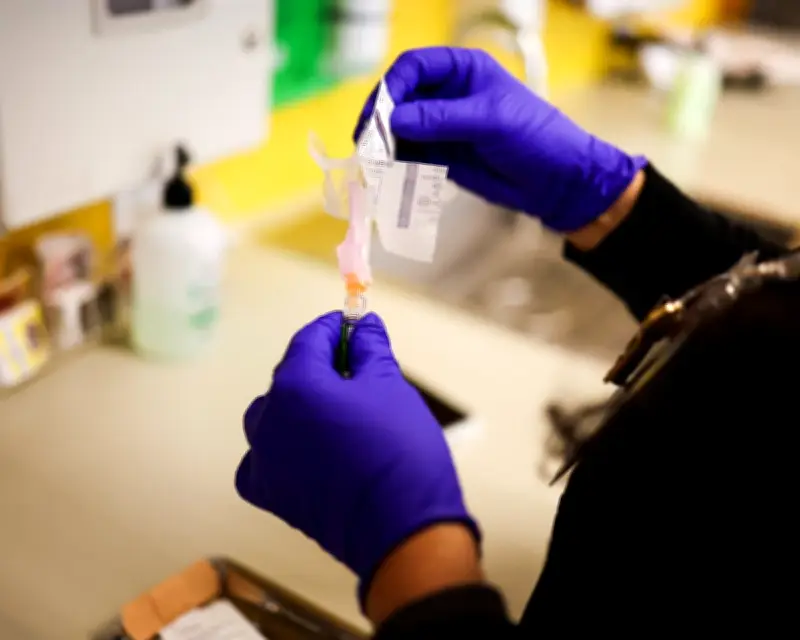
US health advisers are debating a new type of flu vaccine on Thursday, the first made with the same mRNA technology that was crucial in ending the Covid-19 pandemic. Moderna is seeking approval from the Food and Drug Administration (FDA) for its new shot, named mFlusiva, as an option for individuals aged 50 and older. The FDA advisory committee meeting is a step toward a final decision ahead of the winter flu season.
Study Results and Efficacy
In a study involving 40,000 people aged 50 and older, Moderna's mRNA vaccine reduced flu cases by approximately 27% compared to those given another routinely used vaccine brand. The FDA published a favorable review of this data and reported no safety concerns prior to the meeting.
Approval Process
Moderna is seeking full approval for the vaccine's use in the 50- to 64-year-old population, along with authorization for those 65 and older while additional testing is conducted. Tens of thousands of Americans die from influenza each year, with older adults being among the most vulnerable. Various flu vaccines are already available in the US, including three specifically recommended for people 65 and older.
Advantages of mRNA Technology
Vaccines made with the Nobel Prize-winning mRNA technology are faster to manufacture than other types. Experts suggest this could be beneficial if the flu virus mutates in a way that requires quickly producing new doses to match.
Previous Dispute
Earlier this year, Moderna's data was at the center of a highly unusual public dispute when a then-top FDA official blocked the company's application for its first-of-its-kind shot. Dr. Vinay Prasad, the embattled vaccine chief at the time, argued that the company should have compared its shot to a high-dose flu vaccine recommended for seniors rather than a standard-dose brand. This reflected the FDA's heightened vaccine scrutiny under Health Secretary Robert F. Kennedy Jr.
Moderna challenged that decision, noting that FDA staff had approved the main study's design and citing a separate, smaller study comparing the mRNA shot with a high-dose vaccine for seniors. Days after the dispute, the FDA accepted Moderna's application.
Additional Considerations
The expert panel will also assess the smaller study, which found that Moderna's shot generated flu-fighting antibodies similarly to a high-dose senior shot. However, the FDA's initial review noted that the new vaccine lacks data on very frail older adults and those with weak immune systems.




