Toxicologist Details Medication Levels in Lindsay Clancy's Blood
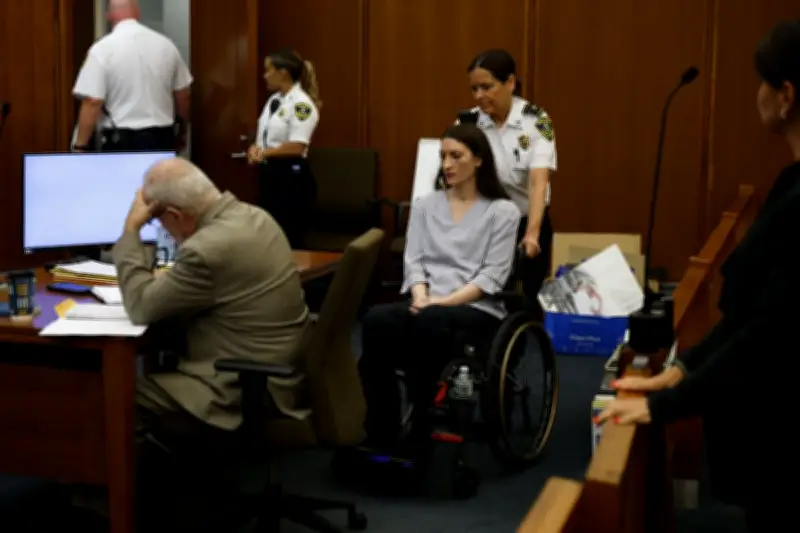
In the ongoing murder trial of Lindsay Clancy, the Massachusetts mother accused of strangling her three children in January 2023, a forensic toxicologist testified on Wednesday about the variety and concentration of medications found in the defendant's blood. Justin Brower, a forensic toxicologist with NMS Laboratories, stated that his lab examined the levels of four psychiatric medications detected in Clancy's blood after the alleged killings and her subsequent suicide attempt.
The drugs identified included the antidepressant mirtazapine, the mood stabilizer lamotrigine, the antidepressant trazodone, and quetiapine, which is used to treat schizophrenia, bipolar disorder, and major depressive disorder. Brower noted that quetiapine could also be prescribed in low doses for insomnia.
Quetiapine Levels Slightly Elevated, Not Toxic
When asked if the concentrations of each drug differed from what was prescribed, Brower said that only quetiapine appeared slightly elevated, but it was not at a 'toxic concentration' or 'suicidal concentration.' He explained, 'Usually people take handfuls of pills when they're trying to harm themselves and take their own life, and this is not consistent with that.' Under questioning from Clancy's defense attorney, Brower later acknowledged that the toxicology results 'don't tell the entire story.'
Prosecution and Defense Arguments
Prosecutors argue that Clancy acted intentionally when she killed her children: Callan, eight months old; Dawson, three years old; and Cora, five years old. Her defense team contends she was a loving mother overcome by postpartum psychosis, with undiagnosed bipolar disorder and problematic medications. The court has heard from numerous prosecution experts, with testimony occasionally halted when witnesses, including Clancy's ex-husband Patrick Clancy or the defendant herself, became overwhelmed.
If convicted, Clancy faces life in prison without parole. A not-guilty verdict by reason of lack of criminal responsibility could lead to commitment to a state mental health facility.
Journal Entries Reveal Mental Struggles
On Monday, jurors heard excerpts from Clancy's journals that revealed her mental struggles, including suicidal thoughts and feeling overwhelmed by motherhood. She wrote about difficulties getting her newborn to sleep, returning to work as a labor and delivery nurse, inability to breastfeed, and feeling disconnected from her children and husband. In an entry dated 18 November 2022, she wrote: 'I'm so desperate to get a mental break from taking care of everyone that my mind is trying to find something physically wrong with me.'
The trial has highlighted significant gaps in the diagnosis and treatment of postpartum psychosis and postpartum depression. Clancy's attorneys say her condition worsened with an ever-shifting lineup of psychiatric prescriptions. In the three months before the killings, various clinicians prescribed antidepressants, sleep aids, an antipsychotic, and other medications while she reported profound insomnia, anxiety, despair, and confusion about reality, according to a civil lawsuit filed against caregivers.
Clancy's Desperate Pleas for Help
In her diaries, Clancy wrote, 'I want help. I want to be well,' and described feeling 'incredibly sad and guilty' about not breastfeeding. She also wrote that she was 'obsessed' with managing Callan's sleep schedule. Another undated entry read: 'I have crazy brain fog. I feel like I can't make a plan. I live moment to moment waiting for the next nap time. I'm terrified of Cal getting overtired now because I feel can't help him.' She added, 'Hearing him cry for 1 plus hours and not intervening just about killed me,' and that she told her husband, 'I want to die.'
Clancy first sought help from a postpartum depression program in late December 2022. She later checked herself into a psychiatric hospital and told a psychiatrist she heard a 'man's voice' telling her to 'kill the children so you can kill yourself.' Nineteen days after discharge, she carried out the killings.
Aftermath and Testimony
The defendant is now paralyzed from her suicide attempt. When she woke in the hospital, a forensic psychologist asked how she felt; she responded, 'Horrified.' Dr. Jhilam Biswas of Brigham and Women's Hospital testified that Clancy asked about visitors and where her family was.
Patrick Clancy testified about the medications his former wife was taking, her health, and her destructive thoughts. He has forgiven Lindsay and believes the killings were motivated purely by her mental health. Jurors heard the anguished 911 call Patrick made on the night of the killings, with several members holding back tears. He described returning home to find the house 'quiet,' finding the bedroom door locked, and breaking in to find blood and an open window. His wife was lying on the ground below, saying she had tried to take her own life. When asked where the children were, she said they were in the basement. Emergency services found the three children with exercise resistance bands around their necks. Duxbury police officer Brian Josephine testified he heard Patrick scream, 'She killed the fucking kids.'