Major Study Questions Link Between Parenthood and Happiness
A comprehensive new study published in Evolutionary Psychology has delivered surprising findings about the emotional impact of having children. The research, involving more than 5,000 participants across 10 countries including Britain, found no strong evidence that becoming a parent leads to measurable increases in positive emotions or overall happiness.
Examining Two Types of Wellbeing
Led by Menelaos Apostolou of the University of Nicosia, researchers examined both hedonic wellbeing (day-to-day emotional states like joy, sadness, and loneliness) and eudaimonic wellbeing (feelings of purpose and meaning in life). The results showed that, with the single exception of mothers in Greece who reported greater purpose, there was no statistically significant difference between parents and non-parents in either category.
"This suggests that becoming a parent leaves your emotional wellbeing largely unchanged," the study concluded, challenging widespread assumptions about family life and personal fulfillment.
The Complexity Beyond Statistics
While the data presents a clear picture, many parents argue the reality is far more nuanced. "I love my son and being his mother has given my life great joy and meaning," one mother explained, "but that doesn't mean my life has more joy and meaning than someone without children."
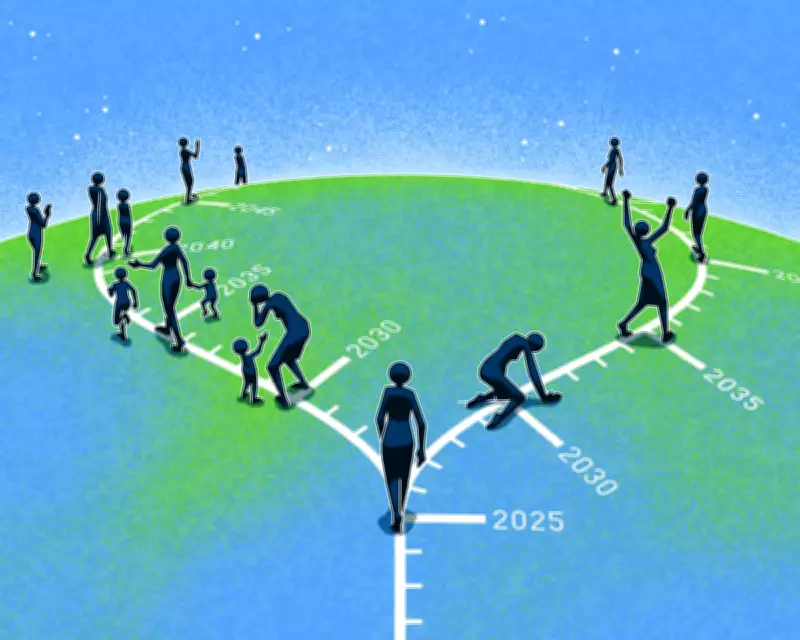
The fundamental challenge lies in measurement. As the parent noted, "The only way you could truly get the data would be by having access to two timelines - one where you had children, and one where you didn't." Even then, such comparisons might miss the essence of parental experience.
Love, Vulnerability, and the Human Condition
"You might as well ask: does loving people make you happy?" the parent continued. "The answer would be: sometimes, yes, but at other times, it causes great pain. That is the human condition."
Parenthood represents an expansion of this emotional landscape. "In choosing to have children, you are essentially widening the cluster of people whom you love fiercely, whose sorrows are your sorrows, and whose death or absence would destroy you," they described. "When this is your child, those feelings are more potent than you ever could have imagined."
This intensity creates what many parents describe as a new vulnerability. As one grandmother put it: "Once you have a child, you are forever vulnerable." A caregiver expressed it differently: "There he is, your heart outside of your body."
The Reality of Care Work and Social Support
The discussion extends beyond emotional states to practical realities. "I don't think society is honest about the reality of care work," the parent observed. "The old lie is that care work is wholly fulfilling, when of course it isn't, even when you love the recipient of that care more fiercely than all others."
This acknowledgment highlights the tension between love and labor in parenting. "We have such trouble detaching care from love, or admitting that care work is hard work," they noted, emphasizing that parenting involves "many, many years, possibly a lifetime, of care work."
The study's findings might reflect modern parenting conditions rather than inherent qualities of parenthood. "I can't help but feel the study's results would be very different if the participants were all given back the village that humans are historically supposed to have," the parent suggested. This could explain why Greek mothers reported greater purpose - potentially indicating stronger community support systems.
Parenthood as Emotional Spectrum
Rather than a sustained emotional state, many describe parenthood as "a series of intense highs and lows." While the study suggested parents experience higher emotional spikes, both positive and negative, what makes difficult feelings manageable is often simple: "fun" and "having a support system."
The parent reflected on their own experience: "My son was very much wanted. I didn't have him to 'complete' me or to make me happy, but having him certainly prevented me from becoming terribly unhappy, at least for a time."
This nuanced perspective suggests that while parenthood may not increase baseline happiness according to statistical measures, it transforms emotional experience in ways that defy simple quantification. The study provides important data, but parents insist the full picture requires acknowledging both the profound joys and the significant challenges that define family life.