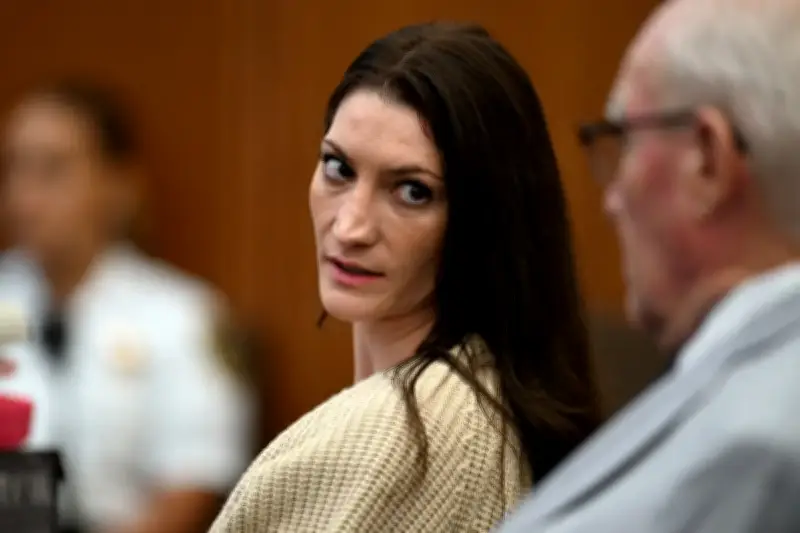
Defense lawyers for Lindsay Clancy rested their case on Friday after presenting testimony about her mental state, setting the stage for closing arguments as early as Monday in the Massachusetts murder trial. The prosecution then began its rebuttal case, calling three witnesses, a standard move in insanity defense cases.
Defense rests after psychiatric testimony
The defense concluded more quickly than some anticipated, given that the prosecution had rested its case the previous Monday. A key witness for the defense was forensic psychiatrist Dr Phillip Resnick, who previously testified in the Andrea Yates murder trial. In 2001, Yates drowned her five children in Texas and was found not guilty by reason of insanity in 2006 after a retrial. Medical professionals, including Resnick, testified that Yates suffered from severe postpartum psychosis.
Clancy's lawyers have not disputed that she fatally strangled her children, but they argue she should not be held criminally responsible due to postpartum psychosis. Prosecutors contend that Clancy, 36, intentionally killed her children Callan, Dawson, and Cora, who were eight months, three years, and five years old, respectively. They also allege that Clancy faked a suicide attempt after the killings.
Prosecution rebuttal witnesses testify
The first rebuttal witness was forensic psychiatrist Dr Avram Mack, who said that when he spoke to Clancy in April, “she described feeling miserable, not wanting to be alive”. Assistant district attorney Shanan Buckingham asked if, in Mack's opinion, Clancy retained the ability to conform her behavior to the law and be aware of the wrongfulness of her acts.
“[Clancy] had retained that capacity,” Mack said. He later noted that while Clancy likely suffered from a major depressive episode and anxiety, he did not see evidence that she was ever bipolar in a manic state. “I can appreciate that she felt side effects and a degree of change from the medications that she took. I don’t know that that feeling or belief is necessary psychotic,” Mack testified.
During cross-examination, Kevin Reddington, Clancy's defense lawyer, became contentious with Mack. Reddington criticized Mack for relying solely on Clancy's own account, gathered while she was medicated in a psychiatric hospital, without interviewing others from her life.
Asked about Clancy's condition after the birth of Callan, Mack testified that she had been anxious about returning to work and having a nanny. “There was some degree of wanting to be able to handle the children on her own,” Mack said. “She felt very positively about her ability to take care the children, but also some ambivalence about other people being able to take care of the children.”
Trial timeline and potential sentences
Judge William F Sullivan said that if all testimony concludes by the end of the day on Friday, closing arguments will likely be held on Monday. If testimony continues until Monday, closings would likely be held Tuesday.
Clancy faces a sentence of life in prison without parole if convicted of first-degree murder. Should jurors decide that she was not criminally responsible, she would be held in a state psychiatric facility.
Broader implications for maternal health care
The trial has become a flashpoint in the US's approach to maternal health care, especially after birth. The case has rekindled discourse about the under-diagnosis of postpartum depression and the much rarer condition of postpartum psychosis.
Researchers have estimated that postpartum psychosis affects roughly one to two women per 1,000 after giving birth, per the Cleveland Clinic. The condition “affects a person’s sense of reality, causing hallucinations, delusions, paranoia or other behavior changes”. In severe cases, “people with PPP may attempt to harm themselves or their newborn”, the clinic notes.
Hundreds of women gathered outside the courthouse on Thursday in support of Clancy, with many wearing pink clothing bearing statements such as “She Needed Help”. “Women are being dismissed, neglected and ignored when we speak up,” said April Vincent, who was in attendance. “We’re scared because nobody takes us seriously.”