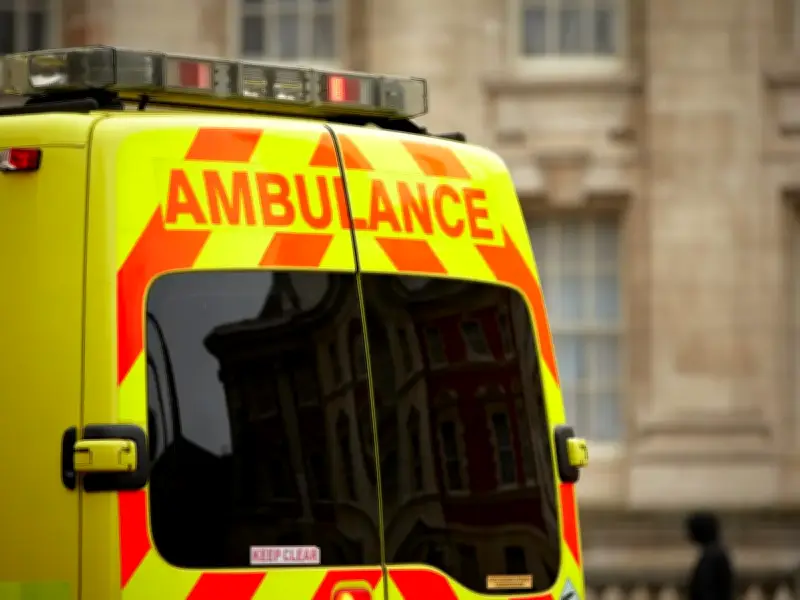
A 78-year-old grandmother died after London Ambulance Service (LAS) paramedics discharged her at home despite an abnormal electrocardiogram (ECG) reading, instead of taking her to hospital. HM Senior Coroner Andrew Walker ruled that her death could have been prevented.
Coroner finds delayed treatment led to preventable death
Prabhabai Cangi, a West London grandmother, died at Harefield Hospital on August 12, 2025, from a cardiac arrest arising from the late presentation of a serious heart attack. The coroner concluded that Mrs Cangi died as a consequence of delayed hospital treatment.
An ambulance attended Mrs Cangi's home on August 7, 2025, five days before her death. She had been experiencing burning chest pains for several days and was breathless, particularly when climbing stairs. At the scene, LAS clinicians performed an ECG and found an abnormal pattern known as ST elevation, an indicator of a severe type of heart attack where a coronary artery supplying blood to the heart muscle is completely or significantly blocked.
Paramedics discharged patient despite serious symptoms
Instead of being taken immediately to A&E, clinicians discharged Mrs Cangi at the scene and advised her to contact her GP. Five days later, the grandmother was transferred to Harefield Hospital in an emergency state after her condition had deteriorated. Despite receiving expert care, Mrs Cangi passed away on the same day.
In his report, the coroner stated: “Had Mrs Cangi been taken to hospital, rather than being discharged to see her own doctor, it is likely that Mrs Cangi would not have died when she did.”
Coroner identifies systemic failures in ambulance service
The coroner for North London identified several key concerns requiring immediate action by the London Ambulance Service. He found that paramedics had no standardised process to consult a specialist doctor for advice when they decided not to transport Mrs Cangi to hospital after her abnormal ECG readings. Serious symptoms did not result in an emergency hospital admission. There was no clear instruction requiring paramedics to tell Mrs Cangi to bring a copy of her abnormal ECG to her GP. Additionally, there was a lack of standards or rules to ensure that photos of ECG records uploaded to official patient attendance logs were clear and readable to future care providers.
Dr Fenella Wrigley, Chief Medical Officer at London Ambulance Service, said: “We offer our sincere condolences to the family of Mrs Cangi and apologise for the delay in taking her to an emergency department for further assessment. London Ambulance Service is committed to continuously improving the care we provide and will reinforce guidance and best practice in relation to patients with similar symptoms.”
LAS acknowledges shortcomings and outlines action plan
Training in the use of an ECG is a core component of paramedic education, including recognition of features consistent with a heart attack. In response, the LAS noted that the ECG taken in Mrs Cangi’s home did not meet the specific criteria for direct transfer to a specialist Heart Attack Centre, but acknowledged that she should have been taken to A&E due to her persistent symptoms consistent with Acute Coronary Syndrome (ACS), an umbrella term for conditions suddenly stopping blood flow to the heart.
The LAS has several key systems in place to ensure that clinicians can correctly interpret ECGs and share these with patients and healthcare professionals, however on this occasion fell short. The LAS formally responded to the Coroner on August 4, 2026, outlining several operational changes and improvements. To address the Coroner’s concerns, the LAS is implementing several measures: actively reinforcing guidance and training on ACS presentations, particularly when symptoms such as chest pain and breathlessness are intermittent, through mandatory annual training and e-learning packages; later this year, launching a pilot programme to share ECGs directly from the scene to specialist Heart Attack Centre clinicians; and during the 2026/27 financial year, launching a procurement process for new ECG monitoring equipment which will enable the direct upload of ECG data to the electronic patient record.
The LAS reaffirmed that standard policy requires leaving a physical copy of an ECG with patients, advising them to contact their GP. In this case, Mrs Cangi’s grandson confirmed that a copy was left with Mrs Cangi.