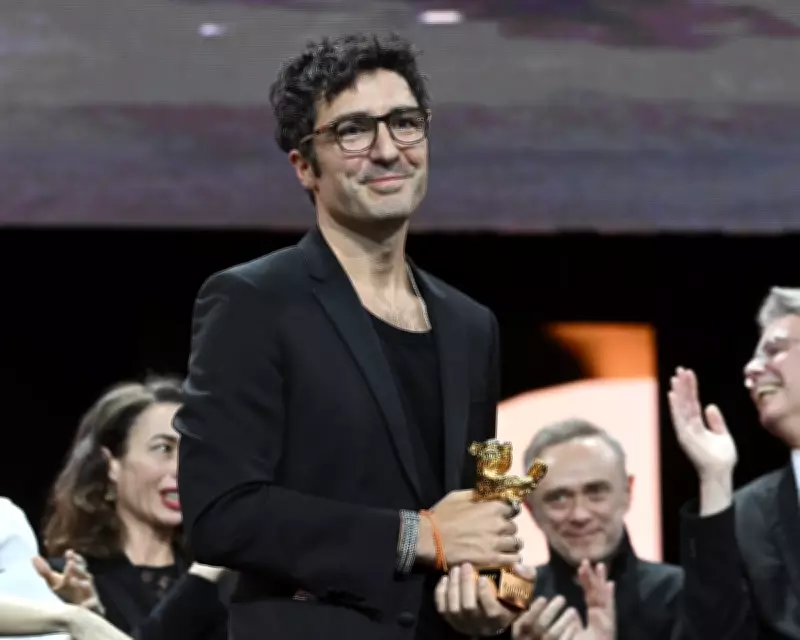
Turkish Drama 'Yellow Letters' Claims Top Prize at Berlin Film Festival
German director İlker Çatak's politically charged drama Yellow Letters has captured the prestigious Golden Bear award at the 76th Berlin International Film Festival. The film, which explores themes of creeping authoritarianism in Turkey, emerged victorious after a ten-day event marked by intense debates about politics in cinema.
A Story of Political Persecution and Personal Strain
Yellow Letters tells the compelling story of two celebrated figures from Ankara's theatre scene whose lives unravel when they lose their government positions after falling out of political favor. The film's title derives from the color of official dismissal notices that upend their careers and place tremendous strain on their marriage.
Jury president Wim Wenders, the acclaimed German filmmaker, described how the feature gave jurors "chills" with its powerful warning about "signs of despotism" and the threat of repression that could potentially manifest in any society. "This film will be understood worldwide, I promise you," Wenders declared during the awards ceremony.
Production Decisions and Universal Themes
Interestingly, Yellow Letters was filmed entirely in Germany despite its Turkish setting, with Berlin standing in for Ankara and Hamburg representing Istanbul. Producers emphasized this decision was not motivated by fear of reprisal from Turkish authorities but rather to underscore the film's universal themes about power, repression, and personal resilience.
Çatak, who was born in Berlin to Turkish immigrant parents and previously earned an Oscar nomination for his 2023 drama The Teachers' Lounge, expressed profound gratitude to Wenders during his acceptance speech. "You are one of my teachers so it's such an incredible thing to accept this from you," the director told the jury president.
Additional Award Winners and Notable Recognitions
The festival's runner-up Grand Jury award went to Turkish director Emin Alper for Salvation, a gripping drama about a decades-long land dispute in the Turkish mountains. Meanwhile, the third-place jury prize was awarded to American director Lance Hammer for Queen at Sea, a wrenching London-based dementia drama featuring French actress Juliette Binoche.
Other significant awards included:
- The Silver Bear for Best Director to Britain's Grant Gee for Everybody Digs Bill Evans, exploring the jazz pianist's addiction struggles
- Best Performance to German star Sandra Hüller for her role in Rose, about a 17th-century woman soldier disguising herself as a man
- Best Supporting Performance shared by British actors Anna Calder-Marshall and Tom Courtenay for their work in Queen at Sea
- Best Screenplay to Canadian filmmaker Geneviève Dulude-De Celles for immigration drama Nina Roza
Political Controversy Overshadows Festival Proceedings
The Berlinale, traditionally considered Europe's most politically engaged major film festival alongside Cannes and Venice, found itself embroiled in controversy throughout the event. The conflict erupted when Wenders responded to questions about the German government's support for Israel—which provides approximately 40% of the festival's funding—and cinema's civic responsibilities.
Wenders initially stated that filmmakers "have to stay out of politics because if we make movies that are dedicatedly political, we enter the field of politics," while simultaneously insisting that "movies can change the world" through artistic rather than policy means. These remarks sparked immediate outrage online and prompted Indian author Arundhati Roy to withdraw from the festival, calling Wenders's comments "jaw-dropping" and "unconscionable."
Industry Backlash and Festival Leadership Response
Days later, dozens of film industry luminaries including Javier Bardem, Tilda Swinton, and Adam McKay signed an open letter condemning the festival's perceived "silence" on Gaza and accusing organizers of censoring critics of Israel's military actions. While many celebrities avoided direct political questions during press conferences, several prize winners used the awards ceremony platform to criticize Israel and rising far-right movements in Western nations.
Wenders addressed the controversy during the ceremony, describing the dispute as a social-media-driven "artificial discrepancy" between art and activism. He quoted Swinton's previous festival statement that "being for something does not ever imply being anti-anyone else," while acknowledging that activists and artists share common humanitarian causes.
Berlinale chief Tricia Tuttle, the American-born former director of the London Film Festival, strongly rejected allegations of censorship as "incredibly damaging" and based on targeted "misinformation." She expressed understanding for attendees arriving with "grief and anger and some urgency about the world," asserting that the festival's emotional intensity represented cinema fulfilling its essential role in society.
The 76th Berlinale ultimately demonstrated how film festivals continue to serve as crucial platforms for artistic expression, political discourse, and cultural exchange, even as they navigate increasingly complex geopolitical landscapes and competing expectations about art's relationship to activism.