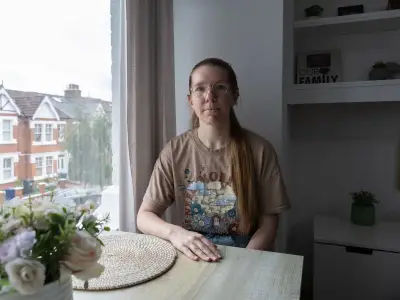
Disabled Londoners living in high-rise flats continue to fear for their safety in the event of a fire, according to a leading campaigner. Adam Gabsi, Co-Chair of Inclusion London, told the London Assembly Fire Committee in June that many disabled social housing residents, including himself, feel unsafe in their homes.
Grenfell legacy and current regulations
Fifteen of the 37 disabled residents living in Grenfell Tower at the time of the 2017 blaze lost their lives – equivalent to 41 per cent. Five years later, the inquiry into the tragedy recommended that personalised evacuation plans be issued to residents of tower blocks with disabilities or reduced mobility.
These recommendations eventually came into force in April, meaning disabled Londoners in specific residential buildings have been able to request tailored emergency escape support from their landlords or housing providers. However, campaigners have raised concerns over the regulations, which mean disabled residents will only be eligible for a Residential Personal Emergency Evacuation Plan (RPEEP) if they live in buildings over 18 metres or seven storeys, or buildings between 11 and 18 metres tall with a ‘simultaneous’ evacuation strategy. Those in buildings under 11 metres tall are not entitled to a plan under the rules.
Campaigner’s personal experience
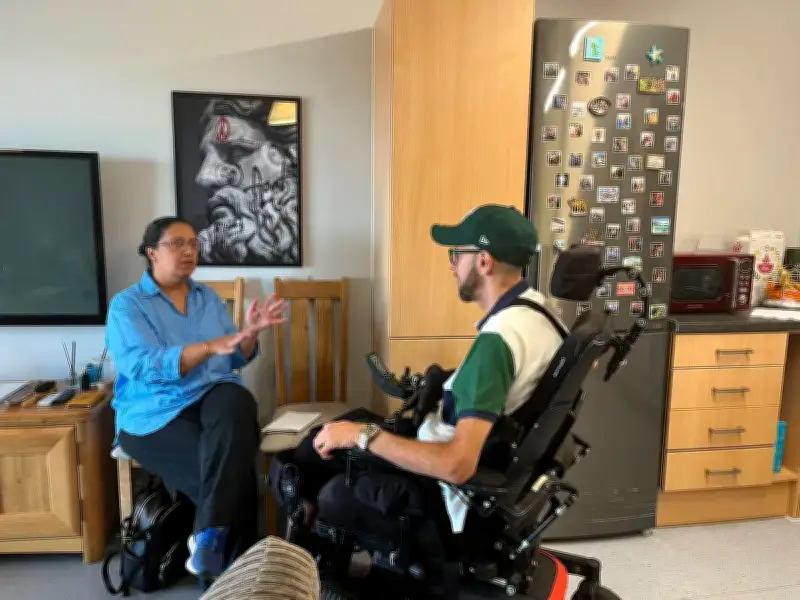
On a visit to Mr Gabsi's flat in Harrow, North West London, the Local Democracy Reporting Service (LDRS) identified several major concerns, including damp, mould, and – crucial in any evacuation – broken lifts. Mr Gabsi, who lives on the sixth floor of Trident Point, said he has little confidence that he would make it out alive if there was a fire in the block, which is run by Metropolitan Thames Valley Housing (MTVH).
“If the fire alarm was to ring here, I would have a serious issue with getting outside,” he said. “Previously, I found the evacuation chair to be locked behind a cupboard of which I don't have the code, which kind of negates the purpose for it. I've also been told that it can only be used by firefighters, which again doesn't amount to equal evacuation processes. There is a fire safe lift – however, that lift is not working. So what is the point? There is total negligence by the housing provider and housing association. There aren't arrangements [for a fire]. At this point, I'm going to say a prayer and just stay in my house, to be honest.”
Mr Gabsi also said: “Smoke does not discriminate based on height. If smoke was to rise to the seventh floor, it is not going to stop, and likewise, a fire does not discriminate based on where you are. If someone is disabled on the ground floor, the first floor, the second floor, they are still disabled. What are we waiting for, my building, me to burn? What are we waiting for here?”
Assembly members’ response
Last month the Fire Committee wrote to the Mayor to demand more engagement between social housing landlords and residents. Chair Anne Clarke, a Labour Assembly Member, said: “Nine years after the Grenfell Tower fire, we heard compelling evidence that many social housing residents continue to feel unsafe in their homes. No Londoner should live in fear of fire safety.”
Deputy Chair Hina Bokhari, a Liberal Democrat Assembly Member, said the current situation was “outrageous”. She told the LDRS: “What Adam and the residents in this building having to deal with – I'm close to tears. If there is a fire here, if something terrible happened here, do we see another Grenfell? Yes – that is my blunt and honest opinion. Everybody who lives in high rise flats are at risk. And when it comes to disabled residents, I'm actually really depressed. I feel as if they're signing a death wish by living here in a high rise flat now. Things haven't moved on since Grenfell – it is absolutely outrageous that we're in this situation. We still haven't got accessible housing that is affordable for disabled Londoners. The Mayor is not doing his job.”
Mr Gabsi added: “He is pandering to developers rather than really thinking about Londoners – the safety of disabled people should be paramount. We not a fringe group, we're not a small group, and we are the one marginalised group that anyone could join at any time. The fact that this is not being taken seriously is very disappointing.”
Mayor’s office and housing provider respond
City Hall plans to publish a Disability Action Plan next month. The document will make a series of commitments on housing, employment, transport, community safety and accessing services. A spokesperson for the Mayor said: “For many years the Mayor strongly lobbied the previous Government to introduce legislation for RPEEPs and welcomed the introduction of this law in April this year. He has continued to encourage the Government to widen the scope of the new legislation to incorporate all residential blocks and for there to be central funding to pay for them, as well as pushing building owners and landlords to implement these plans as soon as possible. It is vital that Ministers continue to work with deaf and disabled groups to ensure the legislation and guidance is as effective as it can be, and to monitor how these plans are being implemented across the country. The Mayor is also committed to working with the London Fire Brigade and local authorities to ensure disabled Londoners have safe evacuation routes and appropriate support during emergencies.”
An MTVH housing association spokesperson said: “We understand the concerns raised by residents with regards to the issues they have experienced at Trident Point. Their safety and wellbeing is our top priority and we are working closely with them to identify appropriate support to ensure effective arrangements are in place in the event of an emergency evacuation. At Trident Point, Personal Emergency Evacuation Plans are in place for residents with identified evacuation needs. We are currently reviewing and updating these plans with residents to ensure they reflect new legal requirements. We recognise that there have been intermittent reliability issues with the lifts installed at Trident Point in 2022 and 2023. We continue to work with the lift contractor, landlords and the building's managing agents, Y&Y and Orbit, to deliver a long-term solution. Whenever a lift outage occurs, we proactively contact affected residents to review support arrangements and determine whether any additional measures are required. Leaks, which resulted in water damage, have been resolved. We are now working with Y&Y to complete remedial works and address any remaining damage.”