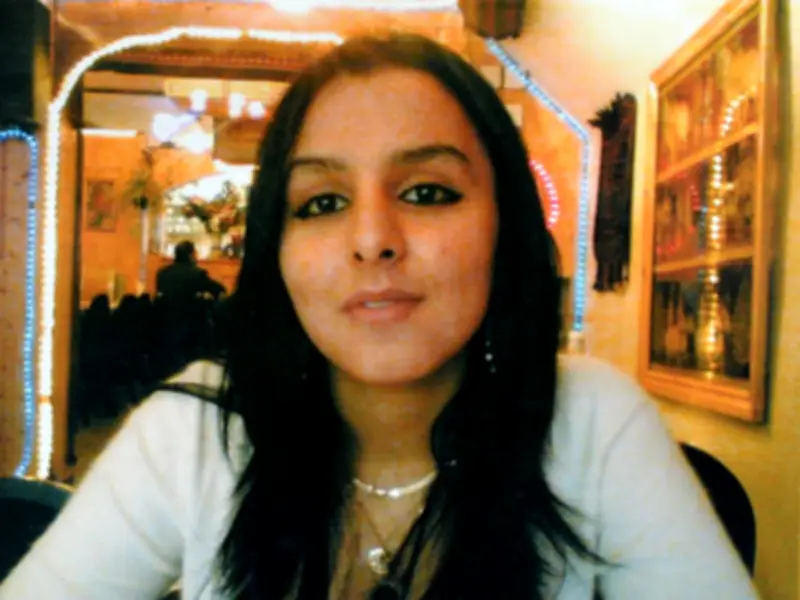
Bekhal Mahmod, a woman living under witness protection after testifying against her own family, has revealed the devastating final moments she shared with her sister Banaz, who was murdered in a so-called 'honour killing' in Mitcham, south London, in 2006. Banaz was just 20 years old when she was killed, and Bekhal has now spoken publicly about the case, two decades on, to campaign for 'Banaz's Law' to make honour abuse a statutory aggravating factor in sentencing.
Last Meeting: A Sister's Despair
Bekhal described her last meeting with Banaz, saying: "Not good. Her face was drawn in. You could see her cheekbones sticking out. Her eye sockets was sunk in. She looked drained. She looked like she was being held against her will, basically." At the time, Banaz had been forced into an arranged marriage with a man 10 years her senior, and was frequently beaten and raped by him. Bekhal recalled being treated like a "slave" in the family home, where both sisters were severely restricted in what they could say, witness, and wear.
The Murder Plot
Banaz had fled the abusive marriage and fallen in love with a man of her own choosing, which her family believed brought "shame" upon their name. In response, her father, Mahmod Babakir Mahmod, and uncle, Ari Agha Mahmod, orchestrated her murder to restore their "honour" within the Kurdish community. The killing took place on the morning of January 24, 2006, at the family residence in Mitcham.
Mohamad Hama was contracted to carry out the killing, and Banaz endured two-and-a-half hours of torment. According to harrowing accounts, Hama bragged about raping her and claimed he stamped on her head to "get her soul out". After the attack, Banaz was strangled with a bootlace, and her body was placed into a suitcase. Hama, along with Banaz's cousins Mohammed Saleh Ali and Omar Hussain, then travelled to Birmingham to bury her remains.
Family Betrayal and Justice
Bekhal recalled the chilling details: "They marked who was going to do who, who had what part to play, who was going to get paid, they did what they did to her. They strangled her, they did horrific things to her and they took her life in my family's home." She added: "The very same people that were meant to protect her, they left home willing to let these people come into the house and take her and her life, stuff her into a suitcase and take her away in a hired car miles away to be buried in an abandoned home like she was trash that just got taken out."
Banaz's remains were undiscovered for three months, but her father and uncle were taken into custody after Banaz's boyfriend, Rahmet Sulemani, who tragically took his own life in 2016, reported her missing. In court, her father was handed a life sentence with a minimum term of 20 years for murder, while her uncle received an identical sentence but with a minimum term of 23 years. Her cousins were likewise convicted of murder, with Hussain and Ali receiving minimum terms of 22 years and 21 years respectively.
Life in Witness Protection
Bekhal, who now champions Banaz's Law in the UK, spoke of her ongoing trauma: "I wish it was more. I wish they wouldn't see a day of light outside the prison again because that's how I feel. I feel like I'm in a prison. I'm left with the grief I feel for my sister." Reflecting on testifying against her own family, she revealed: "I feared for my life like I had never before. But every time I wanted to back out, I thought of Banaz. She is not here. Who is defending her? I couldn't sit there and live with myself knowing that Banaz's life was taken and I knew who was responsible."
Offering a deeply harrowing glimpse into her current existence, she described it as "very isolating". She went on: "Hearing people talking in my language makes me tense up. It makes me abandon my shopping. I look at people walking down the street, two, three generations together, and I envy that. I don't have that. It's, yeah, it's not easy."
Campaign for Banaz's Law
Bekhal is now campaigning for 'Banaz's Law' to ensure that honour abuse is treated as a statutory aggravating factor in sentencing, so that perpetrators face longer sentences. Her efforts come as part of a broader movement to tackle honour-based violence in the UK, which affects an estimated 500 cases a year, according to the Crown Prosecution Service. Bekhal's testimony, along with her sister's tragic story, has become a symbol of the fight against such crimes.