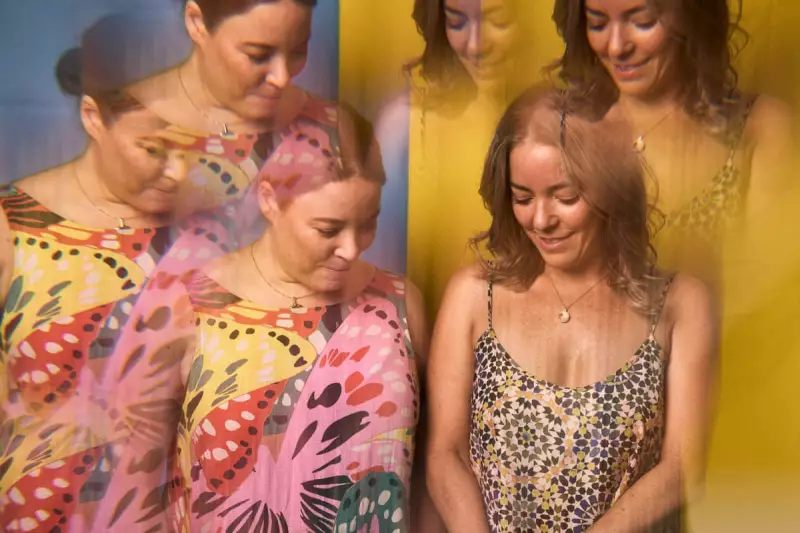
Helen Besgrove and Kirsty Neal are identical twins who share a fascinating neurological condition known as synaesthesia. This rare phenomenon causes them to experience vivid visual elements, such as colours and textures, in their mind's eye when exposed to typically unrelated stimuli like letters, numbers, or words. For these sisters, the world is painted with an extra layer of sensory perception that most people never encounter.
Divergent Perceptions in Shared Experiences
While both twins experience synaesthesia in similar ways—transforming sounds, tastes, smells, and words into visual sensations—their specific perceptions often differ dramatically. Helen describes drinking chardonnay as creating swirls of custardy oil, whereas Kirsty might perceive the same wine as fuzzy or blobby. This divergence extends to how they view people's personalities, which both visualise as coloured and textured auras surrounding individuals.
Helen notes that her best friend Jenn's personality appears as poo brown, a description Jenn understandably dislikes. Kirsty, however, sees Jenn's personality as yellow and blue with a brown stripe through the middle. These contrasting perceptions have led to lively debates since childhood, particularly during family car trips where they would argue about the colours of words like Queensland and apple.
Discovering the Scientific Explanation
The twins were nineteen when they first learned there was a scientific term for their experiences. Helen discovered this during a university radio production class when she heard someone describe music as silver, while she perceived it as strong yellow. The program explained this was synaesthesia, a genetic neurological condition rather than something gender-specific as they had previously assumed.
This revelation connected them with cognitive neuroscientist Anina Rich at Macquarie University, who was conducting research into synaesthesia and was particularly interested in studying twins. Through this research, Helen and Kirsty discovered they possessed more than just auditory-visual synaesthesia, uncovering additional layers to their sensory blending.
Practical Applications and Daily Discoveries
Both women have found their synaesthesia influences various aspects of their lives and careers. Helen, a marketing executive, accidentally won a national blind coffee taste test competition while working at Nespresso, attributing her success to the extra sensory stimuli her condition provides. She continues to make new discoveries about her perceptions, recently realising during wine tasting that not everyone experiences certain wines as spiky.
Kirsty, a general practitioner, finds her synaesthesia enhances her medical practice through improved memory recall and unique empathetic connections. She possesses mirror-touch synaesthesia, allowing her to visualise and sometimes physically feel patients' pain or symptoms. This condition helps her recall medical information vividly, as she can mentally see textbook pages and lecture notes in their original highlighted colours.
Challenges and Normalisation
The twins do encounter occasional challenges due to their synaesthesia. Both struggle with distinguishing left from right because the concepts and words have different colours in their minds. Kirsty also confuses people named Michael and William since both names appear as dark reddy brown to her. However, these minor inconveniences are outweighed by the richness their condition adds to their perception of the world.
After nearly two decades of understanding their condition scientifically, Helen and Kirsty continue to explore its nuances. Kirsty wonders whether some associations, like vinegar tasting like a floaty purple cloud, might stem from childhood memories such as purple salt and vinegar chip packets. This curiosity reflects the ongoing journey of understanding how their brains create these unique sensory connections.
Living with Synaesthesia as Normal Experience
When asked what it's like to have synaesthesia, both twins compare it to being asked what it's like to be a twin—they simply don't know any different. The condition has become their normal way of experiencing the world, potentially providing advantages in certain areas without their conscious realisation. As Kirsty explains, synaesthesia is similar to sitting on a chair; you don't actively process the sensation unless you deliberately focus on it.
Their story offers a compelling glimpse into how neurological variations can create entirely different ways of perceiving reality while highlighting the shared human experience of adapting to whatever sensory reality we inhabit.